Thousands turn out to smash life-saving CPR world record
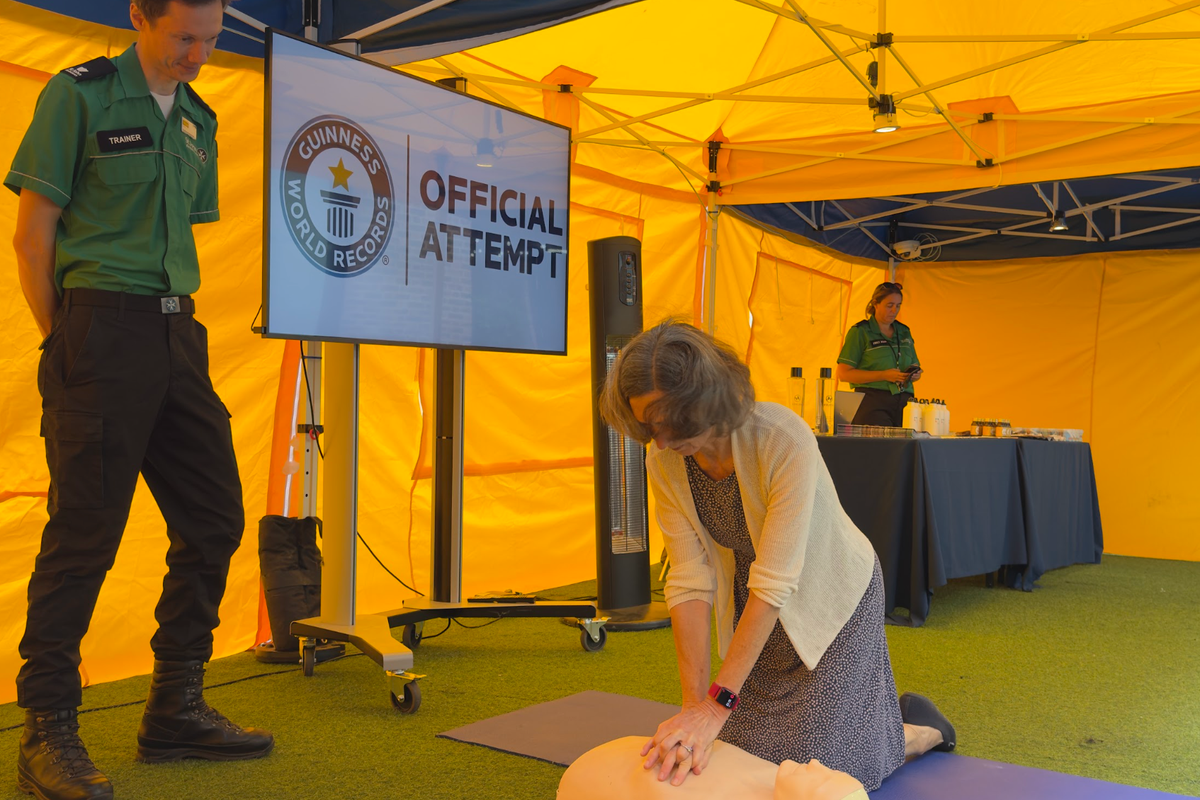
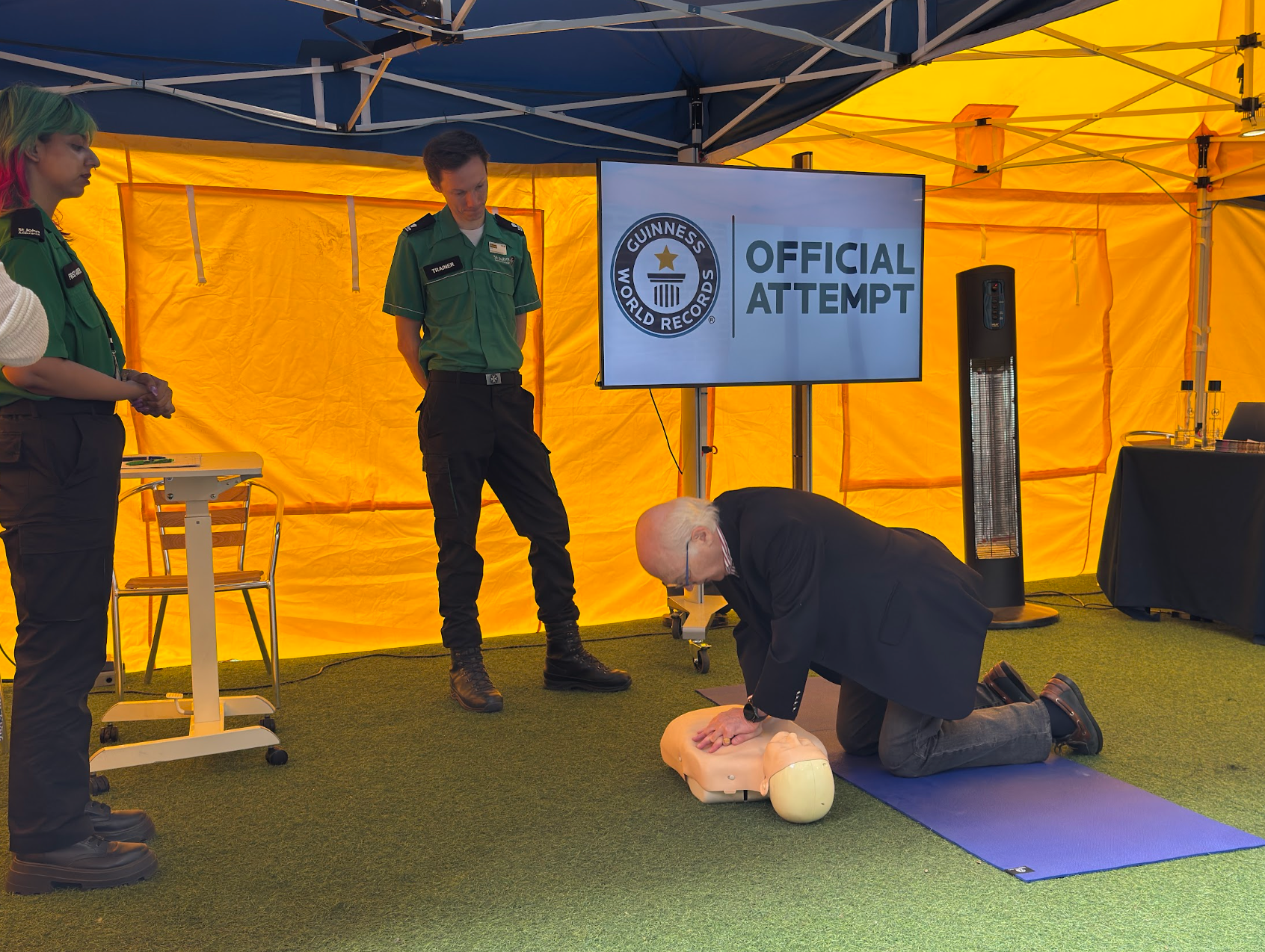
Some 4,000 people are taking part in a bold attempt to smash a world record this week in the hopes of saving thousands of lives across the UK.
With the backing of The Independent, Central London Alliance is drawing people to the capital on 22 and 23 September to break the Guinness World Record for the most people participating in a cardiopulmonary resuscitation (CPR) relay.
The initiative aims to spread awareness about the vital lifesaving technique and teach people the skills to intervene during cardiac arrest.
Nadia Perrier, the director of Central London Alliance, told The Independent that the ripple effect of the campaign will have a massive impact. One participant she trained ahead of the record-breaking event has already performed CPR for someone who went into cardiac arrest.
The cause is especially important to Ms Perrier, after her husband Michael suffered a sudden cardiac arrest when he was just 32 years old.
“I was pregnant at the time, and I will be forever grateful for that person who knew how to do CPR,” she said. “They are genuinely the only reason why he survived, and why I can have my husband, and my daughter can have her father.
“They were able to know what to do, to step in, and they were able to keep that person alive until the ambulance came.”
Someone dies from cardiac arrest every three minutes in the UK, and the chance of survival outside of a hospital is less than one in 10.
If a bystander performs CPR within two minutes, survival chances rise by 81 per cent, and the risk of serious brain damage drops by 95 per cent.
Emma Hammett has been teaching people CPR for decades and launched the emergency training school First Aid for Life after her sister got into a car accident.
“She was unresponsive in the car, and nobody knew what to do... and consequently she was seriously brain damaged and never recovered,” Ms Hammett said.
“I would like people to have the confidence to step in and help, to have the knowledge to know what to do and how to do it properly and save lives as a result.”
She said one of the biggest myths about CPR is that it can make the situation worse. “If you come along and find somebody unresponsive and not breathing normally and you walk away and leave them, they are guaranteed to die. If you do something, you have a really good chance of saving their life.
“As a result of this campaign, I would like more people to step forward and have the confidence to go and help if somebody has collapsed. I would like them to feel empowered and skilled, and very pleased to go and learn these skills and put them into action when it’s necessary.”
Tony Matharu, the founder and chairman of Central London Alliance, said he had been “absolutely overwhelmed” by the massive turnout and support for the initiative.
He said he wanted the campaign main to spread more awareness and teach people vital skills above anything else.
“It’s really important that people have the confidence and the knowledge when there is a situation that could be a heart attack, and one in four people in the UK die because of heart disease, so it’s a particularly relevant thing,” he said.

“We are one trying to break the world record, but our ulterior motive is to get thousands of people certified and capable and confident to be able to perform CPR.
“So whether we break the world record or not is much less relevant than the people that are getting trained and will have the confidence to go out and perform it if needed.”
Richard Salter, a volunteer trainer at St John Ambulance, said: “CPR is like a numbers game; the more people that know CPR, the more chance you will have of surviving cardiac arrest.
“Not enough people know CPR. It won’t be enough until every single person knows. We want everyone to know CPR so there's someone there that can help if they are needed.
“The biggest myth about CPR is that people think it’s complicated and it’s difficult and it’s someone else’s job to get involved...everyone should have the confidence to get involved and not rely on someone else knowing what to do in that situation.”
How to conduct CPR
• Assess the situation. In order to check whether or not a person is in need of CPR, the first thing you need to do is to gently shake their shoulders while simultaneously asking if they’re alright. You also need to be aware of your surroundings, as you may be in an environment that’s putting you and the unresponsive individual in danger.
• Check they’re breathing. If a person has suffered a cardiac arrest, then they will either not be breathing normally or not be breathing at all. To check whether they're breathing, keep an eye on their chest to see if you can spot any movement while keeping their head tilted back. Listen intently to see if you can hear their breath, and place your face near their mouth to see if you can feel any breath on your cheek.
• Perform chest compressions. Kneel beside the unconscious individual with your knees level with their chest. Place the heel of one of your hands on the centre of their chest, and your other hand on top and interlocking your fingers. Make sure that your shoulders are above your hands before pressing down hard on their chest, straightening your arms and using your entire body weight. The BHF recommends trying to push down by at least five to six centimetres, before releasing and pushing down again. The organisation states that you should aim to give 30 chest compressions at a speed of 100 to 120 chest compressions per minute, which is around two per second.
• Rescue breaths. After carrying out 30 chest compressions, you’ll need to give two rescue breaths if the individual is showing no signs of breathing. Open their airway by placing one hand on their forehead and two fingers under their chin. Then, gently tilt their head back while lifting their chin at the same time. Pinch the soft part of their nose closed, inhale as normal, then, place your mouth on top of theirs and breathe out. Once you’ve done this once, remove your mouth from theirs and carry out the same process again.
• Repeat. Keep repeating the chest compressions and rescue breaths until an ambulance arrives or until the person starts regaining consciousness or breathing properly.
KioskNews shows a cleaned-up reading view extracted from the publisher’s page — the original always lives on their site, not ours.