10 Fantasy Books To Read Before Kicking the Bucket

Diego Pineda has been a devout storyteller his whole life. He has self-published a fantasy novel and a book of short stories, and is actively working on publishing his second novel.
A lifelong fan of watching movies and talking about them endlessly, he writes reviews and analyses on his Instagram page dedicated to cinema, and occasionally on his blog. His favorite filmmakers are Andrei Tarkovsky and Charlie Chaplin. He loves modern Mexican cinema and thinks it's tragically underappreciated.
Other interests of Diego's include reading, gaming, roller coasters, writing reviews on his Letterboxd account (username: DPP_reviews), and going down rabbit holes of whatever topic he's interested in at any given point.
Sign in to your Collider account
There are great fantasy books, and then there are essential fantasy books. These are the works that have come to completely redefine and revolutionize the genre as the years have passed, the kind of books that anyone interested in understanding and appreciating "The Big Picture" of fantasy literature should read at least once before they kick the bucket.
These are books which are all among the greatest ever written, but this isn't necessarily a list of the best fantasy books of all time. Rather, it's a conversation all about works that are undeniable cornerstones of the genre, works whose literary quality and pop-cultural significance are right at the same echelon, works which no one who would say they love fantasy can go to their grave without experiencing.
'The Name of the Wind' (2007)
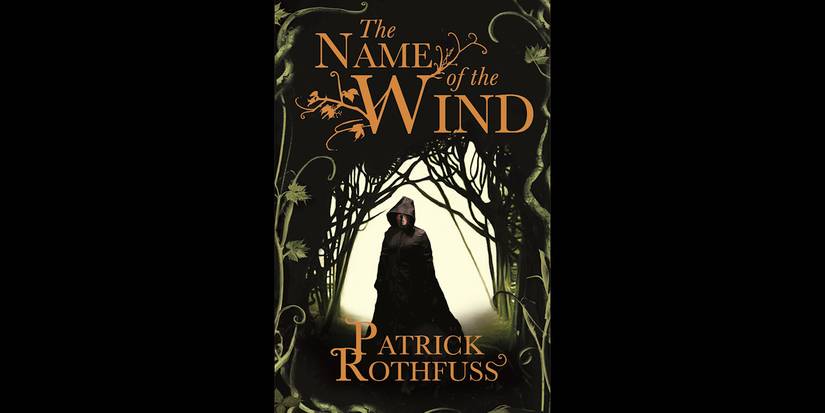
Patrick Rothfuss began working on The Name of the Wind as he was working on his Bachelor of Arts in English, wanting specifically to write a novel that went directly against the usual tropes and characteristics of old-school heroic fantasy and epic fantasy. It just so happens that he wrote one of the best heroic fantasy books of all time, following a gifted young musician recounting the dramatic story of his rise to legend, his struggle for survival, and his quest for vengeance against those who killed his family.
Built on the foundation provided by some of the most beautifully lyrical and poetic prose the fantasy genre has seen in decades, prose praised by artists of the caliber of Ursula K. Le Guin and Lin-Manuel Miranda, Name of the Wind broke new ground in modern high fantasy with its world-building, character writing, and strong thematic core. The only downside? After 15 years of waiting, it seems like many fans may kick the bucket before the third installment in The Kingkiller Chronicles hits bookstore shelves.
'A Game of Thrones' (1996)
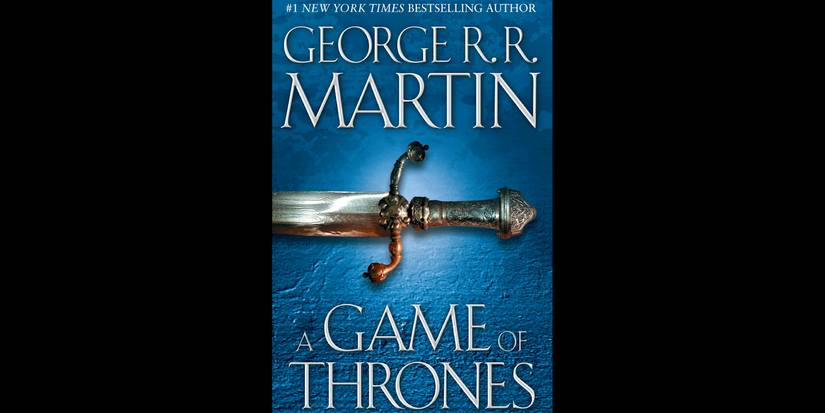
By this point, with A Song of Ice and Fire being one of the biggest multimedia franchises in the history of fantasy, it seems like there's no longer much of a need to introduce George R. R. Martin's A Game of Thrones. One of the best epic fantasy books of all time, it follows an honest Lord whose investigation into a mysterious death triggers a catastrophic power struggle for the Iron Throne of Westeros.
Before A Game of Thrones was published, epic high fantasy was still largely living in the shadow of J. R. R. Tolkien's Legendarium. Martin was one of the most prominent authors to prove that it was possible to tell fantasy stories that were darker, grittier, and more mature than what readers had grown accustomed to for decades. A Game of Thrones is a masterclass in how to subvert tried-and-true genre traditions while still feeling perfectly original.
'Night Watch' (2002)

Terry Pratchett was one of the most prominent and beloved satirists in the history of speculative fiction, and his expansive Discworld series features 41 main novels that are among the greatest works of comic fantasy in the history of literature. Case in point: Night Watch, the 29th book in the series, about a City Watch commander sent 30 years into the past, having to lead a bloody city-wide rebellion through the night.
It's one of the best high fantasy books of all time, and it can thankfully be read as a standalone novel—much like many other installments in the Discworld series, a must-read book series for fantasy fans. Its sharp satirical sense of humor works perfectly, but this is also a surprisingly dark and tense novel, making it a potentially perfect introduction to both Discworld specifically and comic fantasy as a whole.
'A Wizard of Earthsea' (1968)

Ursula K. Le Guin is one of the greatest and most important authors in the history of speculative fiction, perhaps best known for her groundbreaking Earthsea Cycle. The one that started it all was A Wizard of Earthsea, which follows an arrogant young mage who accidentally unleashes a dark shadow from the spirit world, having to travel across the islands of Earthsea to confront it.
Never before had fantasy literature fans seen a book quite as psychologically deep and artistically complex as A Wizard of Earthsea, making this one of those books that are a masterclass in high fantasy writing. Published at a time when most fantasy books were either Tolkien imitations or just pulpy adventures, Wizard of Earthsea showed just how thematically nuanced the genre could be when authors were willing to subvert its conventions.
Collider Exclusive · Game of Thrones Personality Quiz Which Game of Thrones House Do You Belong To? Stark · Lannister · Targaryen · Baratheon · Tyrell
Five great houses. Five completely different answers to the same question: how do you hold power in a world that will take it from you the moment you stop paying attention? Eight questions will determine where your loyalties — and your nature — truly lie.
🐺Stark
🦁Lannister
🐉Targaryen
🦌Baratheon
🌹Tyrell
01
Someone powerful is acting dishonourably and everyone knows it. What do you do? In Westeros, the answer to this question has ended more than one great house.
02
What is the source of your power? Every house endures because of something. What is it for yours?
03
Who do you truly fight for? Strip away the banners and the words. The honest answer tells you everything.
04
How do you deal with your enemies? A house's method reveals its character as clearly as its words ever could.
05
What kind of ruler do you believe in? Westeros is full of answers to this question. Most of them end badly.
06
You suffer a devastating loss. How does your house respond? How a house handles defeat tells you more about it than how it handles victory.
07
Which of these truths about Westeros do you most believe? Every house has a philosophy. This is yours.
08
The Iron Throne is within reach. What do you do? The answer reveals not just your ambition — but your character.
The Maester Has Spoken Your House Is…
Your answers point to the great house whose words, values, and way of surviving in Westeros match your own. Bend the knee — or don't. That's very much up to you.
🐺 House Stark
Winter is Coming — and you have always known it. You prepare not out of fear but out of duty, because the people who depend on you deserve someone who takes the long view.
- You lead with honour even when it costs you, because you understand that a reputation built on integrity is the only one worth having.
- Your loyalty to family and people runs deep — not as sentiment but as a code that doesn't bend when things get difficult.
- The North endures because Starks endure — not by being the cleverest players in the game, but by being the kind of people others are willing to follow into the cold.
- You are that kind of person. The pack survives. The lone wolf dies. You already know which one you are.
🦁 House Lannister
You understand the game — its rules, its exceptions, and exactly when the rules become the exception. You play it without illusions and without apology.
- You are sharper than most people realise, and you have learned to use that gap to your advantage.
- A Lannister always pays their debts — and you always keep your word, because your word is an instrument of power, and instruments must be kept in working order.
- You love your family with a ferocity that sometimes blinds you, and you know it, and you do it anyway.
- The lion doesn't concern itself with the opinion of sheep. Neither, in the end, do you.
🐉 House Targaryen
You carry a sense of destiny that is difficult to explain and impossible to ignore — the feeling that you are not simply participating in the world but meant to reshape it.
- You are capable of extraordinary things, and you know it, and that knowledge is both your greatest strength and your most dangerous quality.
- Fire and blood are not just words to you — they are a philosophy about what change requires and what it costs.
- The Targaryens at their best were transformative rulers who broke chains and defied the limits of what anyone thought possible.
- At your best, so are you. The dragon has three heads. You are one of them.
🦌 House Baratheon
You are a force — direct, powerful, and difficult to ignore when you enter a room or a conflict. You do not negotiate with challenges. You meet them.
- Ours is the fury — and yours is a kind of intensity that commands attention, respect, and occasionally fear from those who underestimate what's behind it.
- You value strength and straight dealing. You'd rather know where you stand in a fight than navigate a web of courtly whispers.
- The Baratheons built their house on the back of one of the greatest military victories in Westerosi history — and then struggled with what came after.
- The lesson of your house is that winning is not the end of the story. Governing is. You are learning that too.
🌹 House Tyrell
You understand that power does not always announce itself — that sometimes it arrives with flowers, good wine, and a smile that doesn't quite reach the eyes.
- Growing strong is your house's motto, and you live it: patiently, strategically, always investing in the relationships and resources that will matter most when it counts.
- You are charming by choice and calculating by nature — a combination that makes you one of the most effective players in any room you enter.
- The Tyrells fed King's Landing and shaped its politics without ever sitting on the Iron Throne — and they were arguably more powerful for it.
- You know that the person who controls the food controls the kingdom. And you always know where the food is.
'The Lion, the Witch and the Wardrobe' (1950)
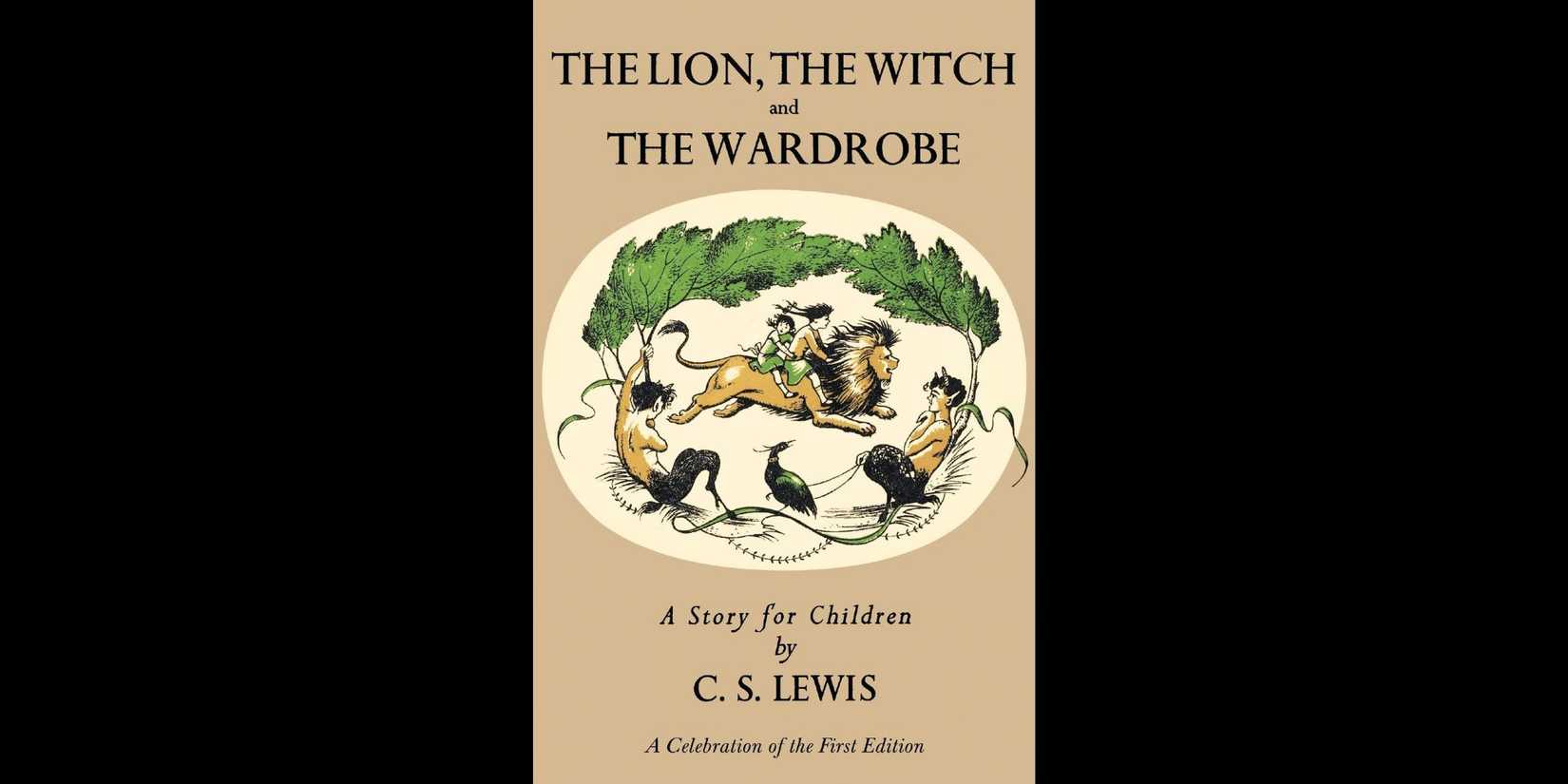
Author, literary scholar, and Anglican lay theologian, C. S. Lewis is another one of the most important authors in the history of fantasy literature, largely thanks to the series that continues to make him a household name: Narnia. The series' first published novel was The Lion, the Witch and the Wardrobe, following four siblings who step through a portal into the mythical land of Narnia as evacuees during WWII.
The book has become such a huge cornerstone of modern pop culture that it can be easy to take it for granted and forget that it is, indeed, one of those fantasy books that are perfect from beginning to end. It's the undisputed blueprint for portal fantasy, with some of the most richly detailed world-building that children's fantasy has ever been treated to.
'Harry Potter and the Philosopher's Stone' (1997)

After being rejected by several publishers, J. K. Rowling finally published Harry Potter and the Philosopher's Stone (published in the United States as Harry Potter and the Sorcerer's Stone), the story of a young orphaned boy attending the Hogwarts School of Witchcraft and Wizardry. Controversial though Rowling's personal views may be, it's impossible to ignore the cultural impact that this '90s classic had.
Indeed, Harry Potter and the Sorcerer's Stone quickly became one of the bestselling fiction books in history, and it's still remembered by many as one of the most perfect fantasy books of all time. There is no way of fully understanding the culture-defining power of the fantasy genre without reading Sorcerer's Stone, which breathed life into children's and Young Adult fantasy that publishers probably didn't even know the genre had.
'The Eye of the World' (1990)
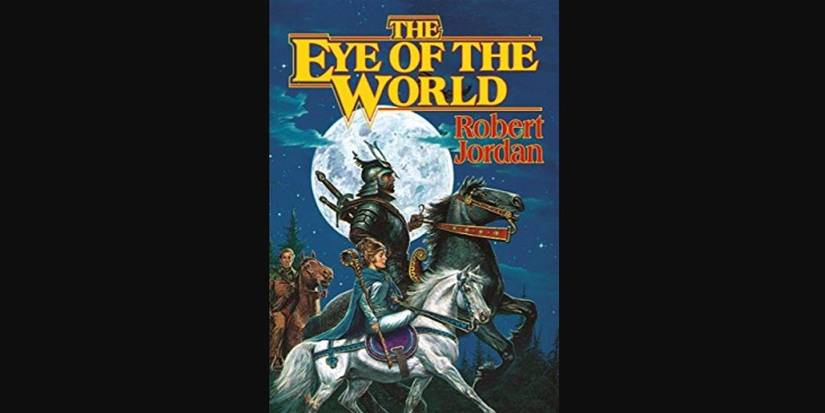
One of the most essential fantasy books of the 1990s, Robert Jordan's The Eye of the World gave birth to the Wheel of Time series, one of the most important book series in the fantasy genre's history. This opening chapter follows a young farmer and his friends, who must flee across a dangerous world to face a rising ancient evil after monster forces invade their previously quiet village.
What initially tricks readers by offering a seemingly subtle, almost Tolkienesque slice of cozy fantasy soon transforms into an epic subversion of Tolkien-inspired high fantasy. With an incredibly fun and imaginative magic system, some enrapturing world-building, and a level of depth not really seen in the genre since The Lord of the Rings, Eye of the World immediately made The Wheel of Time a must-read series.
'The Hobbit' (1937)

J. R. R. Tolkien's The Hobbit completely revolutionized fantasy literature. This story, about a hobbit swept up in an epic quest with a wizard and 13 dwarves, introduced the world to the iconic Middle-earth, laid a new blueprint for modern high and epic fantasy, and became a commercial juggernaut. To this day, it's still one of the most prominent fantasy books whose every chapter is a masterpiece.
How can one even begin to describe the essential importance of what may very reasonably be called the watershed moment that bridged the gap between old and modern high fantasy? The Hobbit re-invented the prototype of the every man fantasy hero, introduced what's perhaps the most intricate world in the history of fantasy, and is full of timeless themes that allow it to still be as fun today as it was nearly a century ago.
'The Way of Kings' (2010)
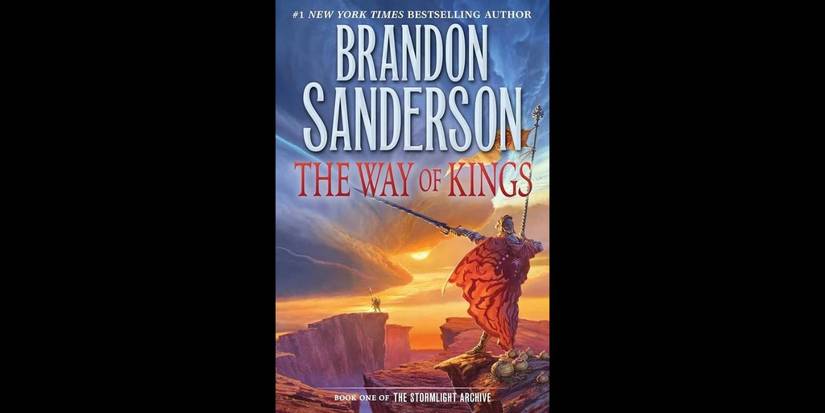
Where Tolkien defined and embodied everything that 20th-century fantasy represented, if one had to pick a 21st-century fantasy author who has enshrined himself as the era's most influential, it would probably be Brandon Sanderson. The Way of Kings is the opening volume of his Stormlight Archive series, and it's about three main characters converging on a war-torn world to revive the long-lost order of the Knights Radiant.
There are many who would argue that it's The Way of Kings' sequel, Words of Radiance, that's Sanderson's magnum opus; but there's no getting to Words of Radiance without reading Way of Kings, one of the best fantasy books published since 2010, first. Thankfully, it's easily one of the greatest fantasy masterpieces of the 21st century, a must-read for all those interested in understanding the literary output of the fantasy genre from the last 26 years.
'The Lord of the Rings' (1954–1955)

Tolkien was initially hesitant to write a direct continuation to The Hobbit, but as he started to write, the story quickly grew into one of the biggest mythologies that the fantasy genre has delivered in modern times. We are, of course, talking about The Lord of the Rings, one of the most ambitious fantasy books of all time. It follows Frodo, a hobbit who must journey across Middle-earth with a fellowship to destroy a powerful magical ring before it helps the Dark Lord Sauron conquer the world.
It's a classic set-up for a good-versus-evil story, but Lord of the Rings isn't just any old Hero's Journey: It's the definitive good-versus-evil epic of our times, and essential reading even for those who don't typically love fantasy books. Published in three volumes, it's a masterful epic novel full of enrapturing world-building, gorgeous prose, memorable characters, and scenes bound to ingrain themselves in any reader's memory permanently.
KioskNews shows a cleaned-up reading view extracted from the publisher’s page — the original always lives on their site, not ours.