‘Really terrified’: how a blood test could spare cancer patients an agonising wait
Only then, she said, were the results expedited, arriving the following day.
“My family and I were really terrified as we had no idea what was going on. The test results and various other procedures all took time,” she said.
“In the end, I couldn’t help but wonder: if we had found out earlier, would it not have progressed to stage two? Could it have been stage one instead?”
Now 26 and recovered, Kwan said she believed faster, easier and more affordable ways to detect cancer could spare patients some of that uncertainty and distress.
In one or two years, however, Hong Kong patients may be able to take a screening test that detects cancer within three to four hours – for a few thousand Hong Kong dollars.
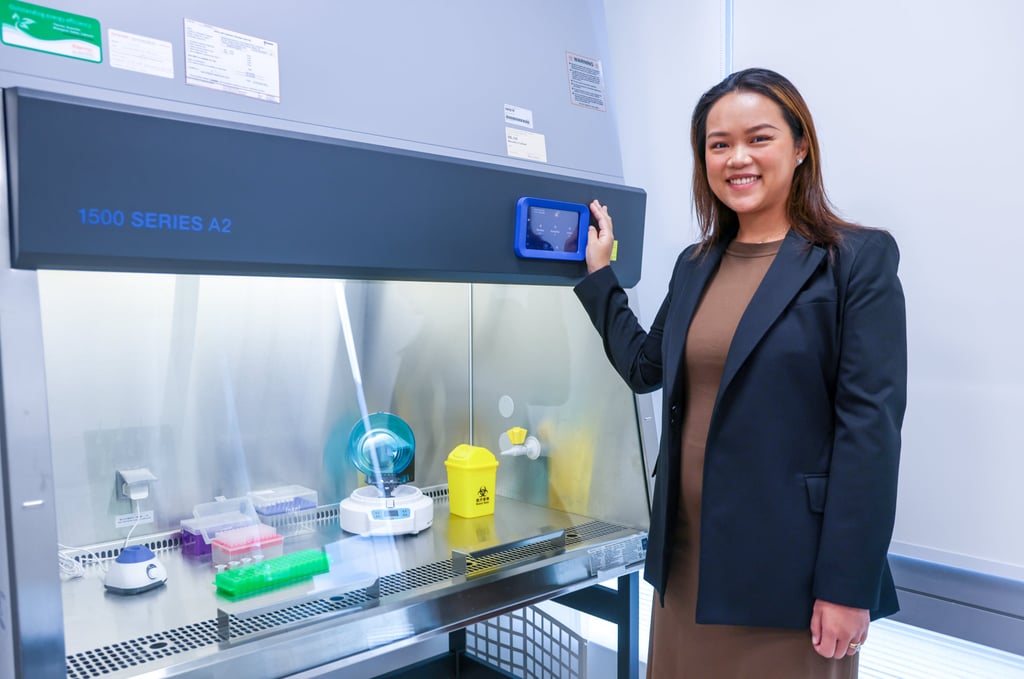
The Advanced Biomedical Instrumentation Centre at the city’s Science Park is conducting clinical trials of its newly developed fourth-generation polymerase chain reaction (PCR) system, which it says can detect cancer, infectious diseases and birth defects.
Sigrid Chen Sijie, the centre’s head of business development, said the system could offer a faster and more affordable alternative to some existing diagnostic tools.
While CT scans might miss very small tumours, genomic sequencing could take more than a week and cost tens of thousands of Hong Kong dollars, she said.
“PCR is a well-known technology that has always been a pioneer in molecular, DNA or genetic testing, appearing in our daily lives. Our fourth-generation PCR primarily focuses on increasing the amount of information it can read,” Chen said.
“We are applying a fast, affordable and, most importantly, accessible technology to a more complex medical decision-making process,” she said.
‘Fishing’ in smaller ponds
PCR is a laboratory technique used to rapidly produce millions to billions of copies of a specific segment of DNA, allowing it to be studied in greater detail.
The process uses short synthetic DNA fragments called primers to select a segment of the genome for amplification, and then uses multiple rounds of DNA synthesis to copy it.
The method became widely known during the coronavirus pandemic, when it was adopted as one of the most effective ways to detect the virus in the body.
But conventional PCR has limitations in speed, sensitivity and multiplexing – the ability to test for multiple targets at once.
The project to develop the new system began in 2021 at the centre, led by the University of Hong Kong in partnership with Harvard University.
Chen said the centre was established to turn cutting-edge scientific research into practical tools that could help doctors better assess patients’ health.
“PCR is a widely adopted technology, and everyone knows its key limitation lies in its multiplexity. That naturally has become one of the major challenges researchers in the field have been trying to tackle,” she said.
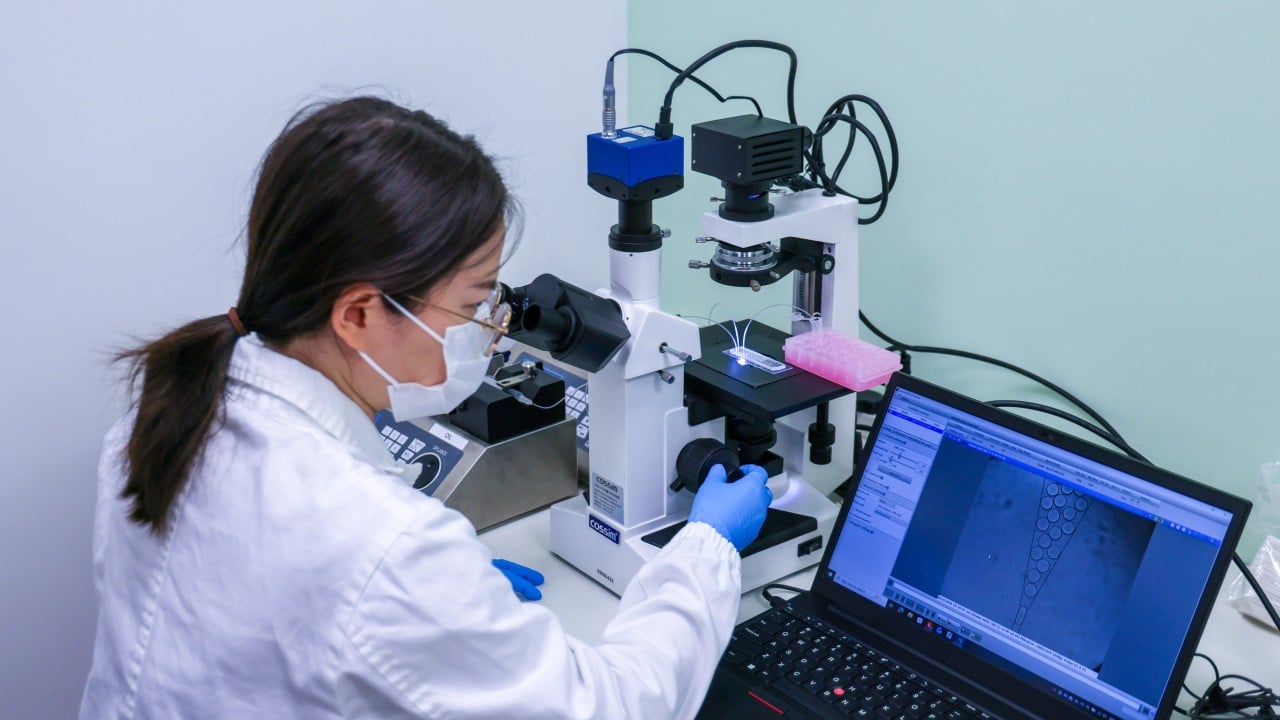
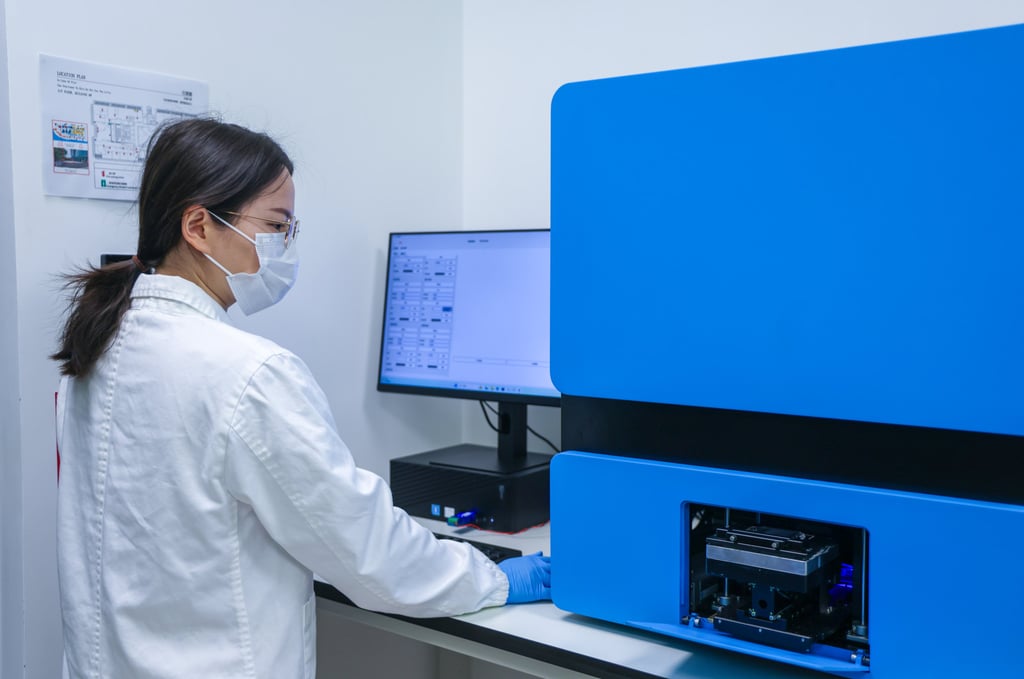
The new system combines molecular bar coding with droplet microfluidics to simultaneously detect millions of target locations in a single test.
Microfluidics is the technology of moving tiny amounts of fluid through narrow channels. Compared with conventional methods, it can enable faster reactions and analysis, as well as greater precision.
In the new procedure, DNA information was first extracted from a patient’s blood sample before being dispersed into millions of droplets using microfluidic chips, Chen said.
“We disperse samples from a large pool into individual droplets and photograph each one. This allows us to observe the processes within every droplet close up, enabling more precise target detection and enhancing sensitivity,” she said.
Chen used a fishing analogy to explain the concept.
“Suppose I know there are 10 fish in a pool and I want to catch all 10 of them. If the pool is huge, it might take five or six days without catching those 10 fish,” she said. “However, if I divide it into individual cups of water, you can easily see which cup contains a fish.”
The heightened sensitivity, she added, was crucial to detecting diseases such as cancer at an early stage.
A race against time
The test could produce a report within three to four hours of a blood sample being taken, Chen said. It is expected to be affordable, costing from a few hundred to several thousand Hong Kong dollars.
Faster results, she said, could help doctors make treatment decisions more quickly – a difference that could be critical for seriously ill patients.
“Taking sepsis as an example, the main reason our instrument is needed is its time efficiency and control,” she said. “For every hour treatment is delayed, the risk of death increases by 8 per cent.”
Current diagnosis of sepsis, a life-threatening condition in which the body’s response to an infection damages its own tissues and organs, often relies on a blood culture – a laboratory test that identifies bacteria, fungi or other micro-organisms in the bloodstream.
“Because someone in my close family actually experienced sepsis, I know first-hand how agonising it is for a family to wait for blood culture results,” Chen said.
“Blood culture means taking blood from the patient and incubating it in an environment suitable for bacterial growth. After about two to three days, once the bacteria have been cultured, a drug test is then conducted to determine which antibiotics work.
“But the patient may not be able to wait several days for a result.”
The new PCR system mainly targets three categories of diseases: cancers, infectious diseases and birth defects. Chen said more types of illness would be added later.
From prototype to patient
A ready-to-use prototype was completed in February last year. The instrument is undergoing clinical trials in Hong Kong, as well as in mainland China, the United States, Singapore and Thailand, among other places.
“As we are actually dealing with genetic information, there are slight variations across different ethnicities,” Chen explained.
She acknowledged that building the technology was only part of the challenge. The centre also had to bring together specialists from fields as varied as microfluidics, mechanics, electronics and biology, along with people experienced in turning laboratory research into market-ready products.
“The challenge now is how to get doctors to endorse this useful tool as quickly as possible, pass a series of evaluation tests and ensure patients can benefit from it at the earliest opportunity,” she said.
To build that confidence, the centre would work with its clinical partners and run the system on a larger volume of samples to demonstrate its potential.
The ultimate goal, Chen said, was to integrate the technology into the medical system and everyday treatment decisions.
She expected the testing method to be available to patients in laboratory settings within one to two years, before being introduced in hospitals.
“Hong Kong will definitely be our first pilot location, but we believe the commercial value of this technology will not be limited to Hong Kong, and we will further extend it to the rest of the world,” she said.
Turning research into remedies
Established under the government’s Health@InnoHK initiative and based at the Science Park, the centre aims to bridge the gap between academic research and healthcare by turning biomedical innovations into clinical applications.
Chen said Hong Kong’s innovation and technology sector had grown in recent years, buoyed by government support as the city sought to establish itself as an international hub for health and medical innovation.
“I graduated with a STEM background myself, and I remember that my senior schoolmates were not as fortunate when they graduated,” she said.
“Back then, if they wanted to stay in the field, there were only two paths: pursue a PhD and become a professor or join a company and sell products to hospitals.”
Now, with more start-ups emerging, there was a new route for researchers to turn innovative ideas into real products, Chen added.
“We have seen that, throughout our centre’s development over the past few years, we have attracted much overseas talent to Hong Kong to collaborate on turning local scientific research into real-world products we see in our daily lives,” she said.
To further develop the sector and support budding start-ups, Chen called on the government to play a bigger role in connecting firms with doctors, so that companies could better understand clinical needs and refine their technologies accordingly.
“We believe our platform holds infinite potential,” she said. “This includes areas such as water pollution and food safety, where reading multiple layers of information is essential and our technology is needed.”
KioskNews shows a cleaned-up reading view extracted from the publisher’s page — the original always lives on their site, not ours.