How smart will Hong Kong’s ‘AI city brain’ be?

While the top official leading the project confirmed the government was drawing lessons from mainland Chinese counterparts such as Hangzhou and Shanghai, scholars cautioned against simply copying their formulas and said Hong Kong could build a globally recognised benchmark in AI city governance.
They argued that Hong Kong should forge its own model anchored in robust data governance and a clear division between government-led AI interventions and civic engagement.
Experts also agreed that developing a well-functioning “AI city brain” required reshaping civil servants’ attitudes towards technology adoption, alongside meaningful participation from the private sector.
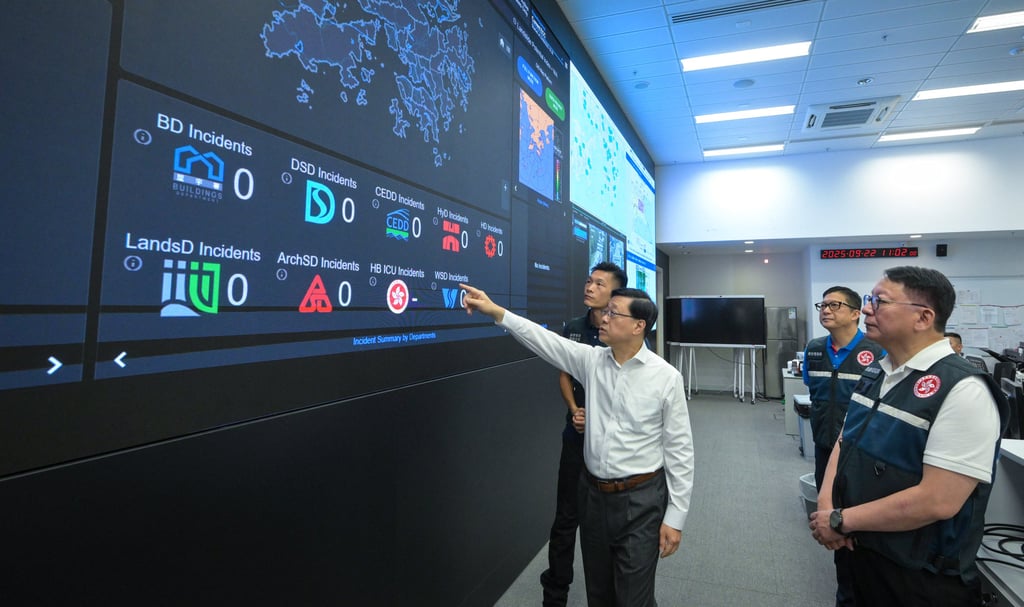
In his recent annual policy address, Chief Executive John Lee Ka-chiu said the government would build the AI city brain system to enhance city management and strengthen emergency response capabilities, consolidating data held by multiple government bodies and creating a real-time data-sharing environment to support precise decision-making.
Learning from the mainland
A task force chaired by the city’s No 2 official, Chief Secretary Eric Chan Kwok-ki, will be set up to steer the project. Chan recently told the South China Morning Post in an exclusive interview that the system could help draw a “full picture” of Hong Kong.
Chan also said the government would learn from the experiences of multiple mainland cities, including Hangzhou, Shanghai and Shenzhen.
“Based on experience in mainland China … it is proven to be very effective in city management,” he said.
“I would say it is a fully integrated hub with most, if not all, of the government departments and city governance systems integrated into one single platform.”
Chan said a pilot version of the system targeting extreme weather would be in place before the typhoon season next year.
Authorities expected to officially launch the first phase of the AI city brain in the first quarter of 2028, and would connect the database of the 1823 complaint hotline to the system in the third quarter of that year, he added.
But Chen Yun, an international relations and public affairs professor at Fudan University in Shanghai, said both Hangzhou and Shanghai had unique advantages in industrial ecosystems or the size of their application scenarios, and Hong Kong should not simply seek to replicate their success.
“Hong Kong can, by leveraging its own characteristics, create the first AI-powered city governance benchmark aligning with international privacy standards, widely engaging community stakeholders, and connecting to the international market,” she said.
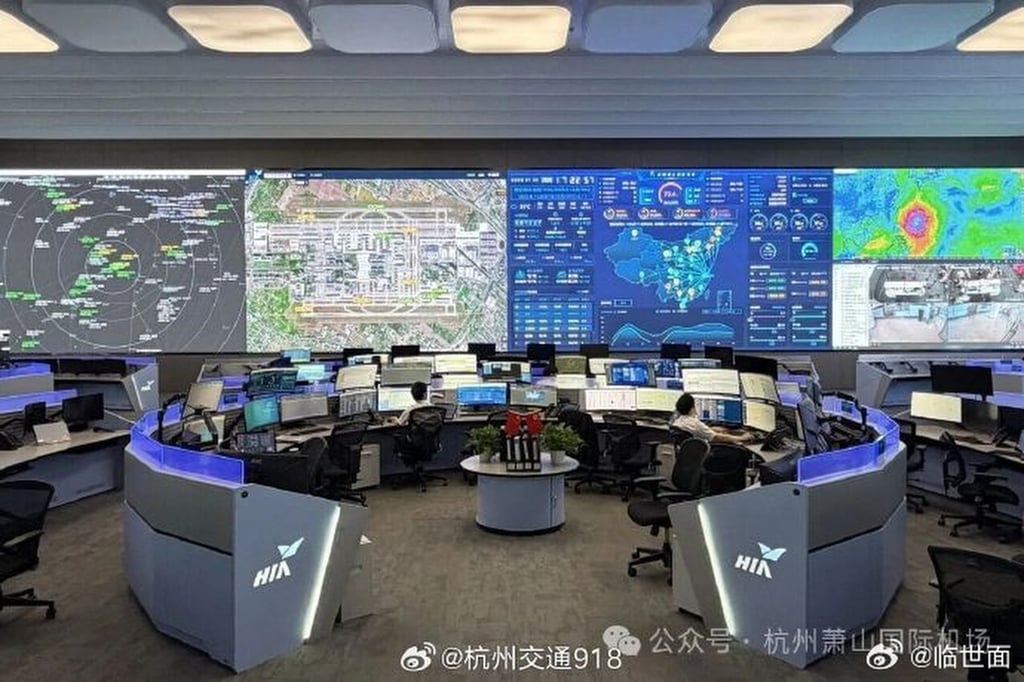
Hangzhou first piloted the idea of an AI city brain in 2016 and launched the first version, focusing on traffic management, the following year, relying on the data infrastructure of locally headquartered tech giant Alibaba, the owner of SCMP.
It is now evolving into its third generation, in which the authorities are exploring the use of AI agents, highly capable technology that can automate many tasks.
Chen said Hangzhou’s success was largely market-driven, with the government designating many scenarios for the private sector to put its technology into real-world applications.
Shanghai, in contrast, adopted a top-down approach, in which the government used its coordinating power to build large-scale infrastructure and open up massive, mega-city scenario environments, such as traffic management and autonomous driving testing involving a population of nearly 25 million, to nurture industry giants and drive regional AI integration, she added.
Chen said Hong Kong should instead focus on its advantages in the vibrancy of community organisations, international connectivity that would facilitate the diffusion of Hong Kong’s model, data protection underpinned by the Personal Data (Privacy) Ordinance and its uniqueness in cross-border data exchange within the Greater Bay Area.
She said that the robust privacy ordinance would enable Hong Kong to develop strict data-sharing rules based on the existing legal framework, reducing the costs of trial and error.
A Hong Kong model?
Professor Danny Lam Wai-fung, director of the School of Governance and Policy Science at the Chinese University of Hong Kong (CUHK), agreed that Hong Kong should explore its own pathway to AI urban management solutions.
“Hong Kong does not have to mirror the mainland because society here is more vibrant,” he said. “Hong Kong should think about whether it should go that far.”
Many jurisdictions had similar AI-enabled urban management initiatives, yet none had built systems as intrusive or far-reaching as those on the mainland, Lam said.
This restraint, he argued, stemmed from a deliberate calculation of costs that went far beyond fiscal budgets, as far-reaching AI systems could raise doubts over privacy and surveillance.
“How much privacy do we wish to sacrifice? How much trust in government are we willing to erode? Mainland cities might marvel at traffic lights that instantly fine jaywalkers, but for other societies, that trade-off is just not worth it.”
In Hangzhou, the AI city brain is also about crime-fighting. Officials take pride in police being able to identify suspicious circumstances within five minutes of an incident and apprehend suspects within 20 minutes with the help of multiple AI-powered monitoring systems.
This contrasts with the practice in many jurisdictions, where AI solutions stop short of tracking individuals.
Virtual Singapore, a 3D digital twin platform developed by the city state, simulates populations with spatial and environmental tools to test urban policy, transit changes and infrastructure projects.
Instead of tracking its residents, the platform can test transport infrastructure with agents programmed to simulate commuter flows and even run extreme weather events to stress-test drainage and evacuation systems.
In Europe, Spain is a pioneer in smart city governance and has hosted the annual Smart City Expo in Barcelona since 2011.
Spanish smart city systems combine extensive fibre-optic infrastructure with Internet of Things (IoT) sensors, open-data platforms and citizen-focused urban design.
Under European privacy laws, smart cities such as Berlin, Hamburg and Barcelona must prove their data-collection platforms serve a clear, limited public interest, maintain strict retention limits and conduct data protection impact assessments (DPIAs) before deploying new AI tools.
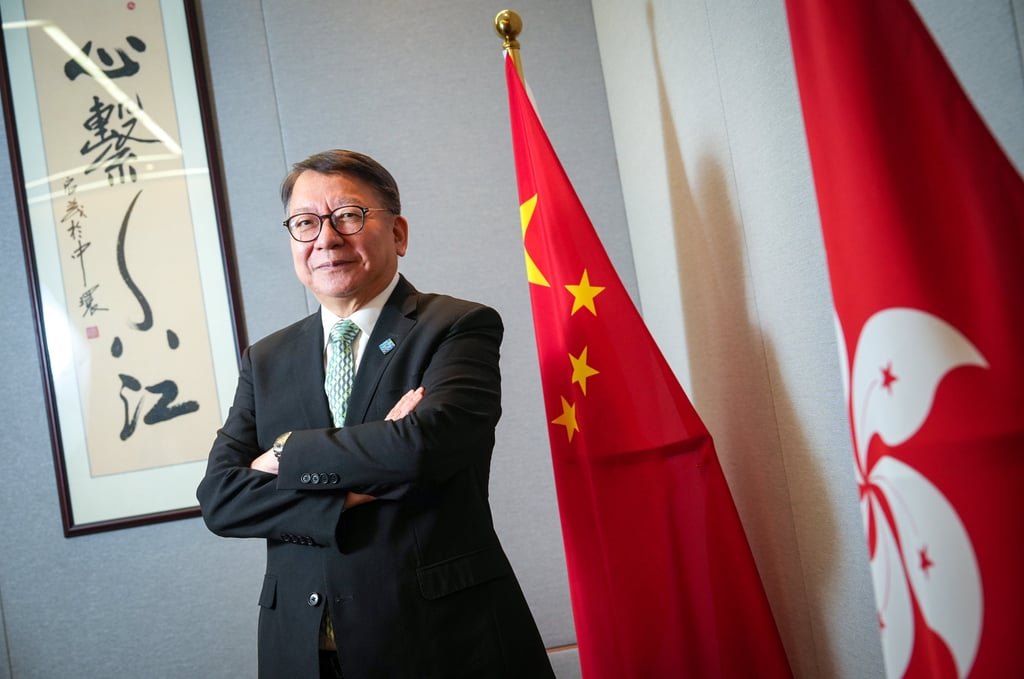
Chan, Hong Kong’s No 2 official, told the SCMP that the AI city brain would not involve any personal data and the system would not be used for surveillance purposes.
He also said the collection, storage and use of all data would be strictly governed by privacy laws.
Despite having advantages in a number of areas, Hong Kong’s ambition to build an AI city brain also faces many challenges.
For CUHK’s Lam, the bottleneck for Hong Kong in developing such a system does not lie in infrastructure or talent, but in the gap between high-level vision and bureau-level operational needs.
City leader Lee announced in his policy address that the government would create the post of commissioner for AI under the Digital Policy Office to help bureaus with AI-related tasks.
Lam said while centralised steering would be essential, knowledge of both AI and policy issues at bureau level would also be indispensable.
“A centralised commissioner cannot think thoroughly, as he or she might know AI well, but the understanding of policies and issues under each bureau could be limited,” Lam said, calling for the cultivation of talent within the civil service with knowledge of both policy and technology.
He also urged providing more incentives for bureau secretaries to implement AI-related solutions, while closer collaboration among different bureaus would also be important.
Chan, the chief secretary, said Hong Kong’s AI city brain would be hosted on the government cloud and would not engage third-party service providers, to ensure data safety.
But Lam identified the need to maintain a large group of in-house talent within the civil service as another challenge and a source of financial burden, calling on the government to engage the private sector in less-sensitive scenarios by procuring services from private companies.
“The government is very inflexible like a bus that turns slowly. Private enterprises are like sports cars. Wherever you want to go, you are much better off borrowing a sports car,” he said.
Breaking down silos
Professor Chen said Hong Kong should work towards breaking the silos among stand-alone government data sets, as well as administrative hurdles between bureaus.
While the post of AI commissioner would assist and advise bureaus on AI-related matters, Chen said it would be helpful to set up a dedicated government body to manage and coordinate data from different departments to facilitate interdisciplinary data sharing.
She added that the government should also upgrade the Emergency Monitoring and Support Centre into a unified command hub connecting all safety-related departments, streamline workflows to automate emergency responses by removing multi-tier approval processes, and facilitate the cross-border flow of compliant data.
“The government should establish a regular training mechanism on AI literacy and digital governance within the civil service to strengthen officials’ understanding of AI risks and opportunities, break reliance on traditional administrative mindsets, and provide sufficient talent support for the implementation and operation of the AI city brain,” she said.
Innovation and technology sector lawmaker Duncan Chiu, a deputy leader of the government’s AI efficiency enhancement team, said another hurdle was the capacity of the government cloud.
He said the government cloud was approaching its capacity limit, and the government might have to seek more funding from the Legislative Council to build more data centres.
The government had earmarked HK$200 million (US$25.48 million) for the first phase of the system’s development.

But Hong Kong also faces infrastructure constraints. Authorities previously noted the city’s overall supercomputing power was only five exa-floating-point operations per second (EFLOPS) as of June 2025.
In simple terms, one EFLOP represents one quintillion – or a billion billion – calculations per second. Written out, that’s 1,000,000,000,000,000,000 operations every single second.
Capacity is only expected to reach 180 EFLOPS after the Sandy Ridge data facility is completed in 2032.
In contrast, the Hangzhou government is already planning to roll out 100 EFLOPS of computing power in 2027.
“We must consider storage and cloud capacity – how much space is actually needed, where it will come from, and when it will be built. All of this needs to be mapped out in a clear road map,” Chiu said.
“I believe the final investment will go beyond the initial funding announced so far, and the government will ultimately need to return to the Legislative Council to seek additional funds,” he added, while stopping short of estimating the amount.
For Chiu, building an AI city brain aligns with the international trend, and Hong Kong has the capability to resolve all the obstacles ahead.
“It all comes down to a matter of money and time, as well as determination,” he said.
KioskNews shows a cleaned-up reading view extracted from the publisher’s page — the original always lives on their site, not ours.