Lakshmi, Mallika say no economic settlement reached in Venu Srinivasan family
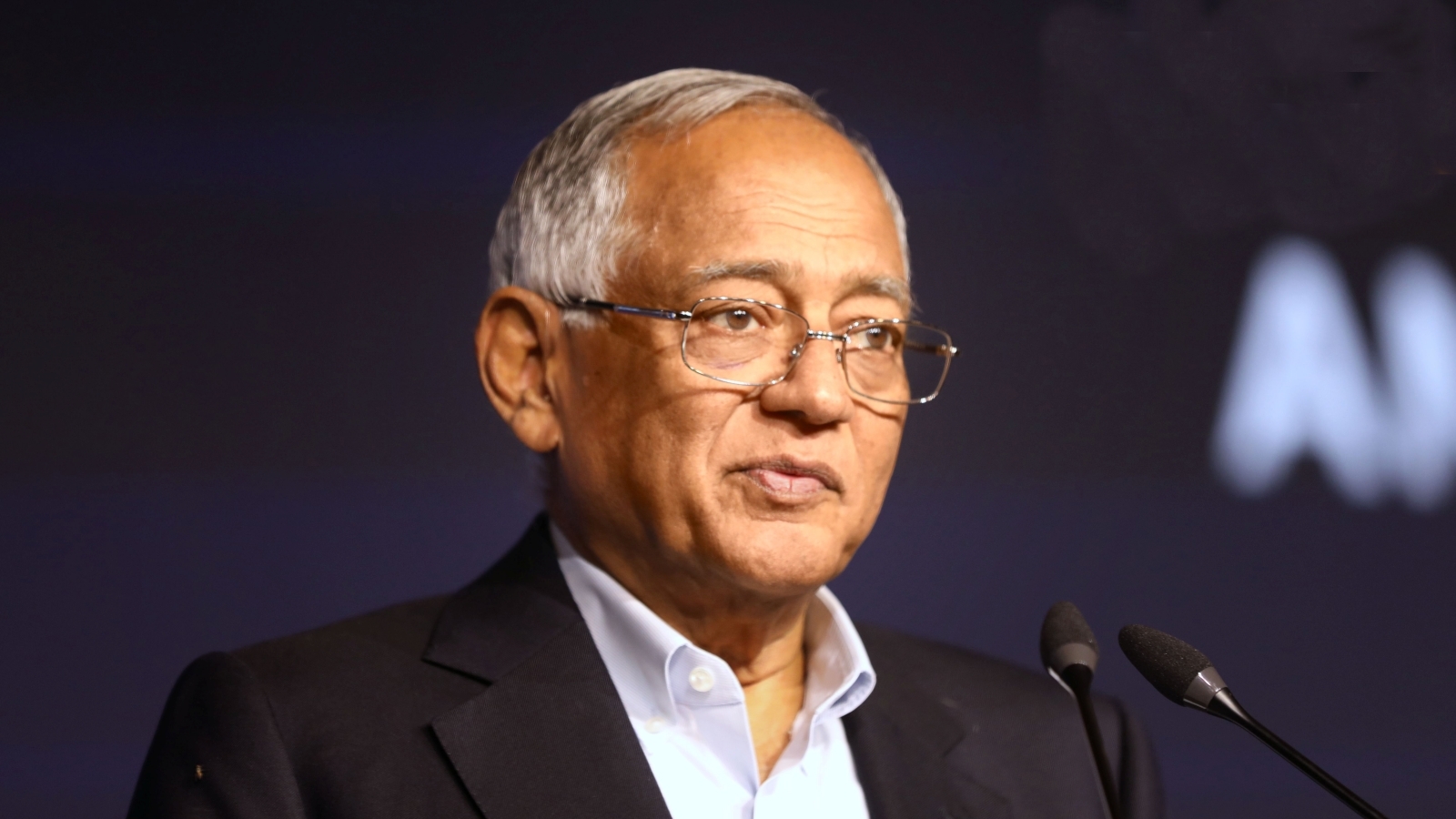
TVS Motor Chairman Emeritus Venu Srinivasan. (Express photo by Abhinav Saha)
Lakshmi Venu and Mallika Srinivasan have said no economic settlement has been reached over the ownership and division of assets within the Venu Srinivasan family, underlining continuing differences despite the completion of a broader partition within the TVS family.
The statement comes amid a dispute between TVS Motor Chairman Emeritus Venu Srinivasan and his son Sudarshan Venu on one side, and Lakshmi and Mallika on the other, over the division of economic interests within the family. Mallika is Venu Srinivasan’s wife, while Lakshmi is their daughter.
In a joint statement, Lakshmi and Mallika said the broader TVS family partition, agreed upon in 2020 and implemented subsequently, had been carried out through a process involving the relevant stakeholders. However, they said no comparable process had taken place to settle the economic interests within the Venu Srinivasan family.
“The fundamental issue is not about management positions, which have been compensated appropriately and commensurately. It is about the fair recognition of rightful economic ownership, which remains unresolved,” they said.
Mallika Srinivasan is Chairman and Managing Director of tractor maker TAFE, while Lakshmi is its Vice Chairman. Lakshmi is also Executive Director and Managing Director of Sundaram-Clayton. Sudarshan Venu is Chairman and Managing Director of TVS Motor.
The two women said the broader TVS family partition should not be construed as a settlement of assets within the Venu Srinivasan family.
“No comparable process involving transparent valuation, discussion and mutual consent has taken place concerning the economic interests within the Venu Srinivasan family. No agreement dividing these economic interests has been concluded,” they said.
Story continues below this ad
Mallika also clarified that TAFE is part of the Amalgamations Group, a separate family business group in which she is a shareholder, and has no bearing on the economic settlement within the Venu Srinivasan family.
“Presenting her longstanding association and custodial role with TAFE as evidence of an equitable distribution of economic interests within the Venu Srinivasan family is fundamentally misleading,” she said.
Lakshmi and Mallika also disputed the suggestion that all family assets belonged exclusively to one individual who could distribute them unilaterally. They said this was neither an agreed nor an established position.
They further said management responsibilities should not be confused with economic ownership, arguing that the allocation of leadership roles or opportunities to manage businesses could not substitute for a division of family assets.
Story continues below this ad
“Similarly, arrangements concerning trademarks, brand usage and non-compete obligations cannot be represented as an economic settlement when no such settlement formed part of those arrangements,” they said.
The two women said any equitable settlement must recognise the legitimate economic interests of all concerned parties and be based on transparent valuation, discussion and agreement. Arrangements made unilaterally, they added, could not be regarded as fair or consensual.
They said they remained committed to an early and amicable resolution through constructive dialogue, in the interests of the family, its businesses and their stakeholders.
“We have consistently sought an amicable resolution through family dialogue and have refrained from discussing private family matters publicly. However, given the narrative now being presented, we believe it is necessary to clarify certain fundamental facts,” they said.

George Mathew is an Associate Editor with The Indian Express, based in Mumbai. A veteran of financial journalism with nearly three decades of experience, he is one of the country’s most authoritative voices on banking, regulation, and the corporate sector. Expertise & Focus Areas Mathew’s reporting covers the nerve center of India’s economy. His specialized beats include: The Reserve Bank of India (RBI): He has tracked the central bank's policy evolution through the tenures of multiple Governors, offering deep insights into monetary policy, repo rates, and banking regulation. Banking & Insurance: Extensive coverage of public and private sector banks, non-performing assets (NPAs), and key legislative reforms like the Insurance Amendment Bills. Corporate Affairs: Mathew frequently breaks major stories related to India's largest conglomerates, with a specific focus on the Tata Group, documenting boardroom shifts and strategic decisions. Financial Markets: Reporting on the complexities of Foreign Portfolio Investors (FPIs), IPOs, and currency fluctuations. Authoritativeness & Insight With a career dating back to the late 1990s, Mathew possesses a rare institutional memory of India’s financial liberalization and market crises. His work is not limited to daily news; he frequently contributes to the "Explained" section, where he decodes complex financial legislations and market trends for a broader audience. His rigorous reporting has also been featured in scholarly platforms like the Economic and Political Weekly (EPW). Find all stories by George Mathew here ... Read More
KioskNews shows a cleaned-up reading view extracted from the publisher’s page — the original always lives on their site, not ours.