‘There could be anarchy’: Bangladesh’s garment unrest threatens economic disaster
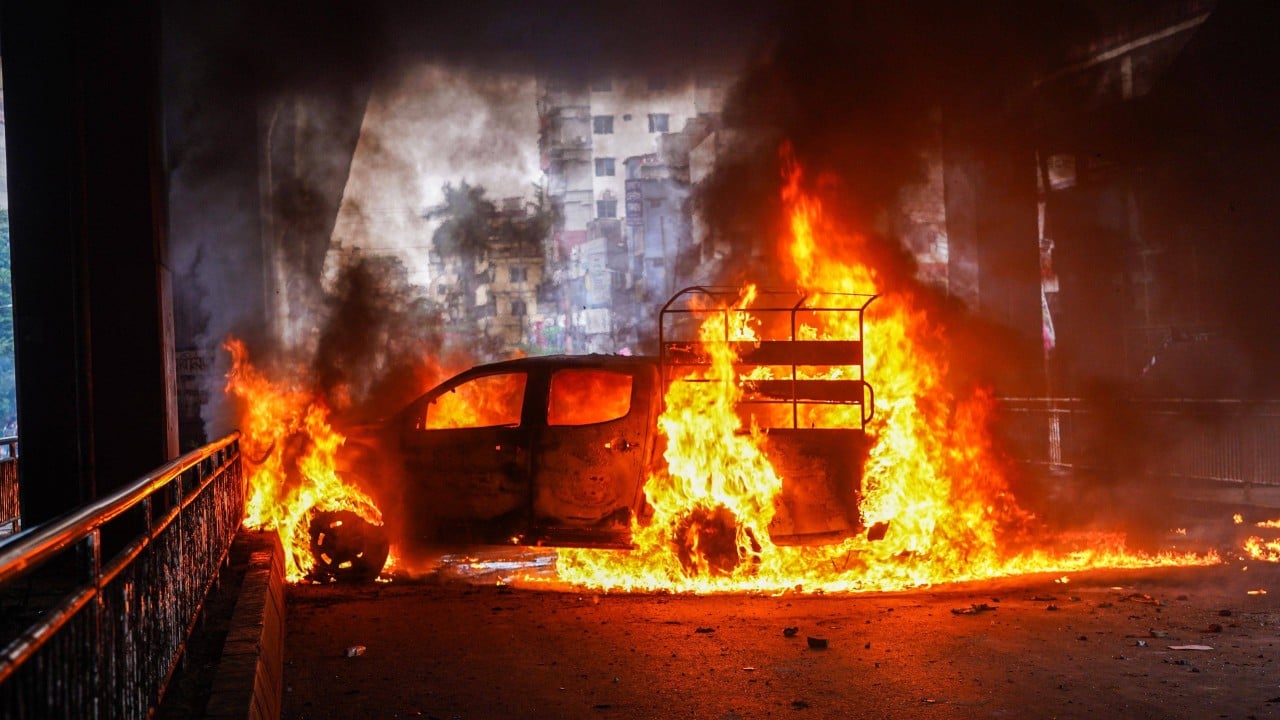
Garment workers in Bangladesh, the world’s second-largest clothing exporter after China, are demanding that their wages more than double – and their protests have brought a halt to production in factories supplying global brands including H&M, Zara and Walmart.
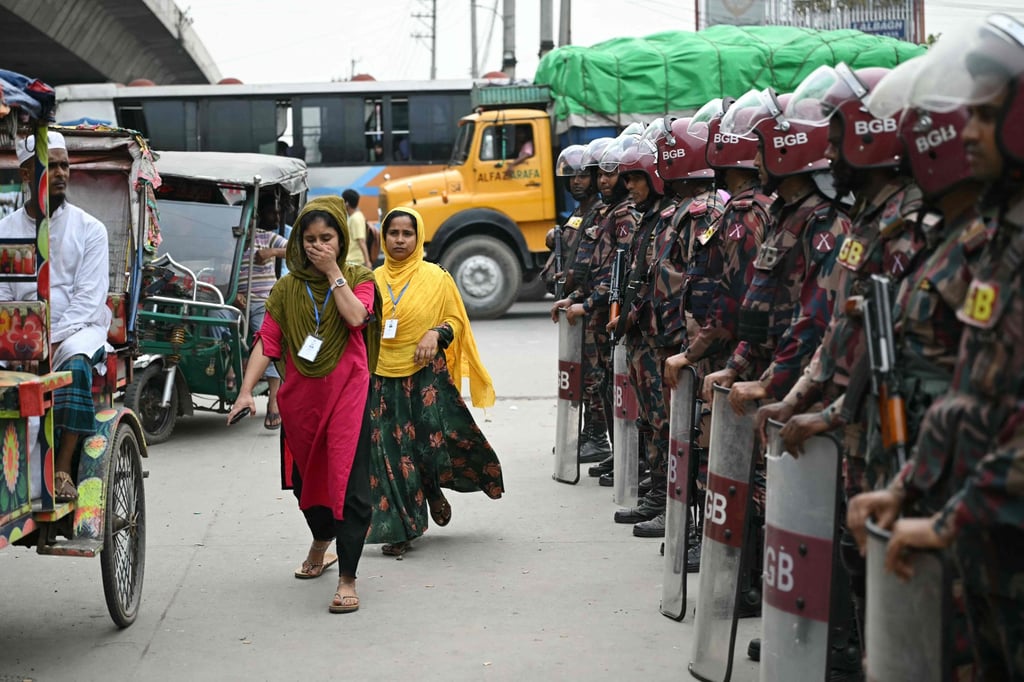
Tens of thousands of workers have marched through Dhaka and the key industrial towns of Gazipur, Ashulia and Narayanganj in recent days demanding higher pay. Protests turned violent in several hubs, with factories vandalised and roads blocked during clashes with police, forcing hundreds of plants to suspend operations.
On Wednesday, the statutory Minimum Wage Board agreed that a revised pay scale would take effect from December, but it has yet to recommend a specific figure as negotiations between factory owners and worker representatives continue. Workers want the monthly minimum wage to be raised to 30,000 taka (US$237) from 12,500 currently.
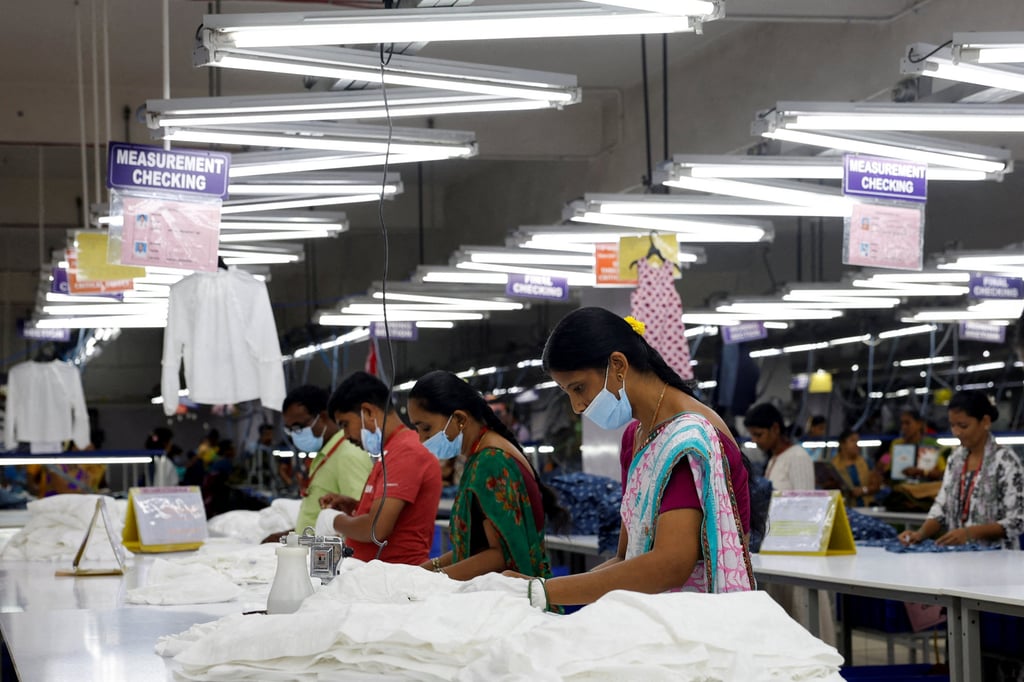
Garments account for more than 80 per cent of Bangladesh’s export earnings and 10 per cent of its economic output. The sector employs about 4 million people in the South Asian nation.
The unrest is piling pressure on Prime Minister Tarique Rahman’s government, which took office in February after his Bangladesh Nationalist Party won the first election held since student-led protests toppled the autocratic regime of Sheikh Hasina two years ago.
Stop-start production
Factory owners say their costs are rising. Shortages of electricity and gas resulting from a global energy crisis linked to the ongoing conflict in the Middle East have forced some to cut output, alter work schedules, halt operations entirely or resort to buying expensive alternative fuels.
That same energy uncertainty has also fuelled inflation worldwide and reduced demand for well-known brands, especially in key Western markets.
Benchmark Brent crude, the global oil price reference used by traders, fell back below US$100 a barrel this month after spot prices spiked to as much as US$130 in October, far above its pre-Iran war baseline of around US$70.
Priyajit Debsarkar, an independent London-based geopolitical analyst who co-authored Bangladesh on the Brink, which examines political upheaval and post-uprising social changes in the country, told This Week in Asia that rolling power cuts had repeatedly forced garment factories to halt and restart production throughout the day, driving up generator costs and forcing compulsory overtime.
The Middle East conflict has also eaten into the remittances that the millions of Bangladeshis based abroad typically send home – a vital source of foreign currency for the country second only to its ready-made garment exports.
“Multiple problems have converged,” Debsarkar said. “The government will still need to find the resources because the workers’ concerns are genuine.”
He suggested prioritising pay rises for selected groups, such as women, or granting graded increases by skill and experience.
Dhaka is also actively negotiating with the International Monetary Fund for a fresh loan package after terminating an earlier US$5.5 billion arrangement over contested reform conditions, with the new funds still expected to come with restrictions targeting improved tax collection and a reduction in bad loans within the banking sector.
Rivals circle
Bangladesh’s advantage over rival producers rests largely on labour costs, which are among the lowest of the major apparel-making nations.
Swaran Singh, a former professor at Jawaharlal Nehru University’s School of International Studies in New Delhi, said the timing of the unrest was “particularly dangerous” because Bangladesh’s garment industry was “already experiencing a simultaneous supply-side crisis”.
“Labour unrest compounds these difficulties by threatening delivery schedules and international buyers’ confidence,” he said.
It could also see Bangladesh lose ground to rival exporters such as India and Vietnam, Singh added.
01:30
Bangladesh garment workers clash with police in Dhaka as protests for pay rise spread
Debsarkar likewise warned that the garment sector protests could drive key customers away if they dragged on for too long.
“If these things continue unabated, it could undermine Western customers’ confidence in the market,” he said. “Given the current situation of Bangladesh’s foreign exchange earnings, can the Bangladesh government afford to lose this vital economic lifeline?”
Biswajit Dhar, an independent development economist and former distinguished professor at the Council for Social Development in Delhi, said the workers’ anger had been building for years.
Labour leaders, already aggrieved by rising living costs, had joined the student-led protests that forced Hasina from power in 2024, he noted.
All this pent-up frustration had to surface
“All this pent-up frustration had to surface,” Dhar said, adding that the sheer number of workers involved could make the current protests hard to contain unless the government acted quickly.
“Some kind of economic relief has to be given immediately,” he said, further noting that the promise of a higher minimum wage might not be enough if workers felt their demands were being shelved.
“This can be a serious problem for Bangladesh beyond the law and order situation,” Dhar said of the ongoing protests. “It will be an economic disaster.”
Hasina, who has been living in self-exile in India since fleeing across the border in August 2024 and was sentenced to death in absentia last year, has repeatedly said that she plans to return to Bangladesh next month, but Dhar said her arrival could cause chaos.
“There could be anarchy if Hasina returns to the country at this point,” he said, adding that members of her Awami League party have historically held large and influential stakes in the garment industry and she still “has substantial support”.
KioskNews shows a cleaned-up reading view extracted from the publisher’s page — the original always lives on their site, not ours.