Mathematicians of Asia unite: new union brings the continent’s brightest minds together
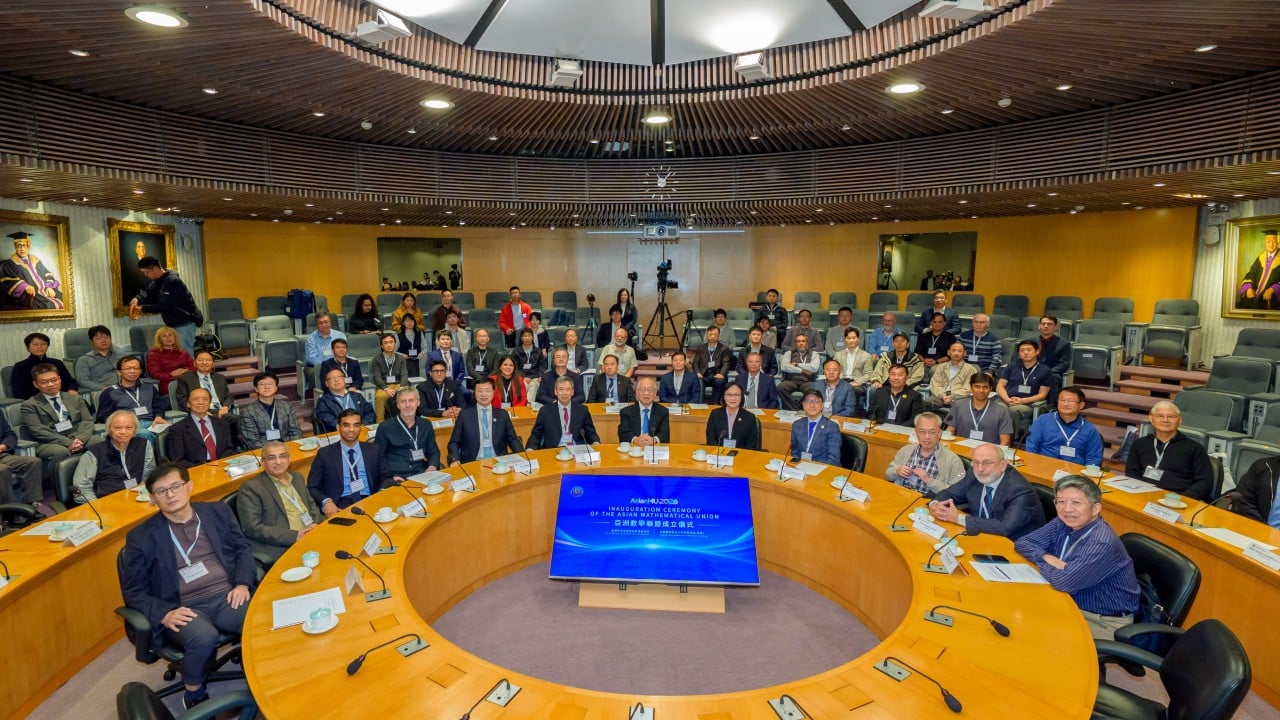
“A union together is much more powerful than each country individually,” Fields medallist Shing-Tung Yau declared after scholars from across Asia gathered in Hong Kong on Tuesday for the inauguration of the Asian Mathematical Union (AsianMU).
Participants say the initiative will unite regional talent in mathematics.
Representatives from the founding nations – China, Russia, India, Japan, South Korea and Iran – said during the ceremony that the union would help foster cross-border collaboration, nurture talent and give Asia a bigger voice on the global mathematics stage.
02:36
Chinese mathematicians Wang Hong and Deng Yu win prestigious Fields Medal
Yau, the union’s founding president, said he hoped to unify Asian countries to lead the world in mathematics.
In a video address for the ceremony, Robbert Dijkgraaf, president of the International Science Council, said Asia held “immense promise for the future of mathematics”, adding that the “centre of gravity is shifting East”.
When asked whether the union could help with this shift, Yau said “absolutely”. He noted that countries had their own individual strengths which could be enhanced when they joined together.
Part of AsianMU’s scope will be to develop open-source artificial intelligence models capable of competing with leading global models.
“We do not like the idea that mathematics, our beloved subject, is cornered by a few companies or cornered by a country only,” Yau said. “It should be open to every society that is interested in mathematics.”
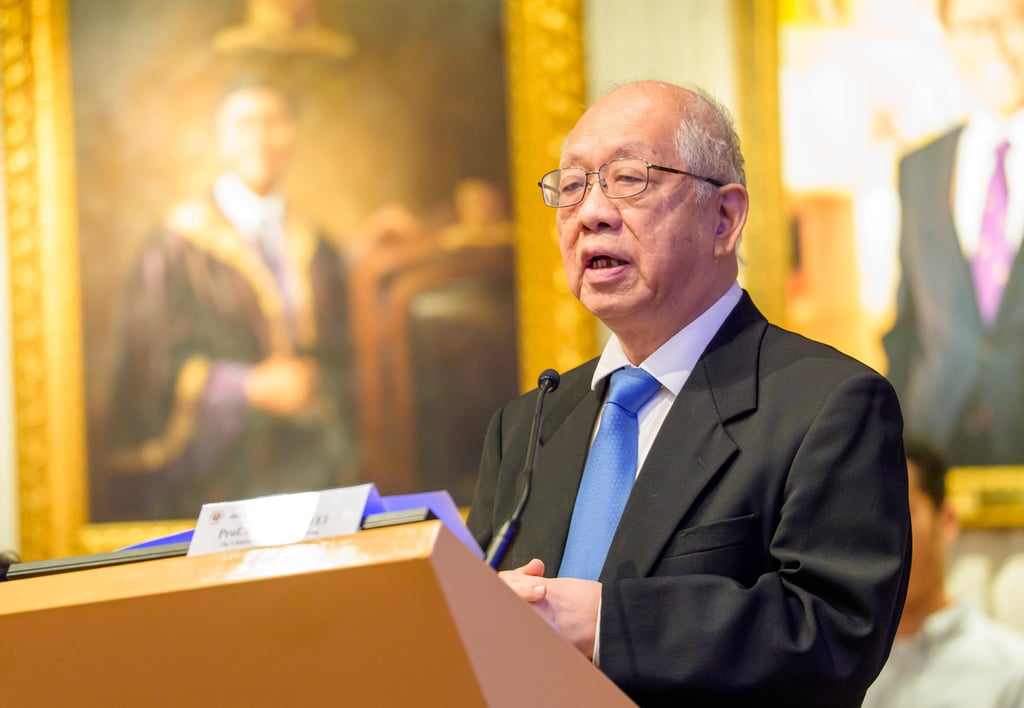
Headquartered at the Chinese University of Hong Kong, the union aims to promote cooperation among the Asian mathematical community and increase global engagement, including with bodies such as the International Mathematical Union.
Yau noted that along with the six founding nations, interest had also come from other countries, including Singapore, Vietnam, Mongolia, Georgia, Kazakhstan, Uzbekistan, Turkey and Armenia, some of which were represented at the ceremony.
The union will promote cooperation in four main areas: pure mathematics, applied mathematics, statistics and AI.
Starting next year, it will host 100 postdoctoral researchers annually, with 30 nominated by the six founding countries, 50 selected from across the region by a council of Asian countries and a further 20 spots for applicants from other continents.
Yau said that in America and Europe, the number of postdoctoral positions had been “drastically” decreasing, so the move could encourage young students in Asian countries to continue research.
The union will also establish 25 senior faculty appointments and 30 assistant professor-level appointments funded by China.
Trump rejects working with China on AI despite Xi’s recent visit
While mathematical unions exist on other continents, including Europe, the Americas and Africa, Asia has lacked a continent-wide body.
Xi Nanhua, president of the Chinese Mathematical Society, said Asia was home to about 60 per cent of the world’s population and had nurtured civilisations with outstanding mathematical achievements since ancient times.
“Yet, our current progress in mathematics is disproportionate to our population and intellectual potential, which … remains untapped,” Xi said at the ceremony, noting that one reason was the lack of a regional union.
Xi said the founding of the union could help “build bridges for regular collaborations and support coordinated development and shared prosperity of mathematics in Asia”.
Van Ha Vu, a Vietnamese professor and chair of mathematics at the University of Hong Kong, said: “Asia stands at the crossroads of both worlds: home to extraordinary strengths in pure and applied mathematics, and to some of the world’s fastest-moving hubs of computing and AI research.
“[AsianMU] has a rare opportunity to help those two worlds speak the same language, ensuring that fast-moving technology stays anchored in rigour, and that foundational mathematics thrives in its own intrinsic beauty.”
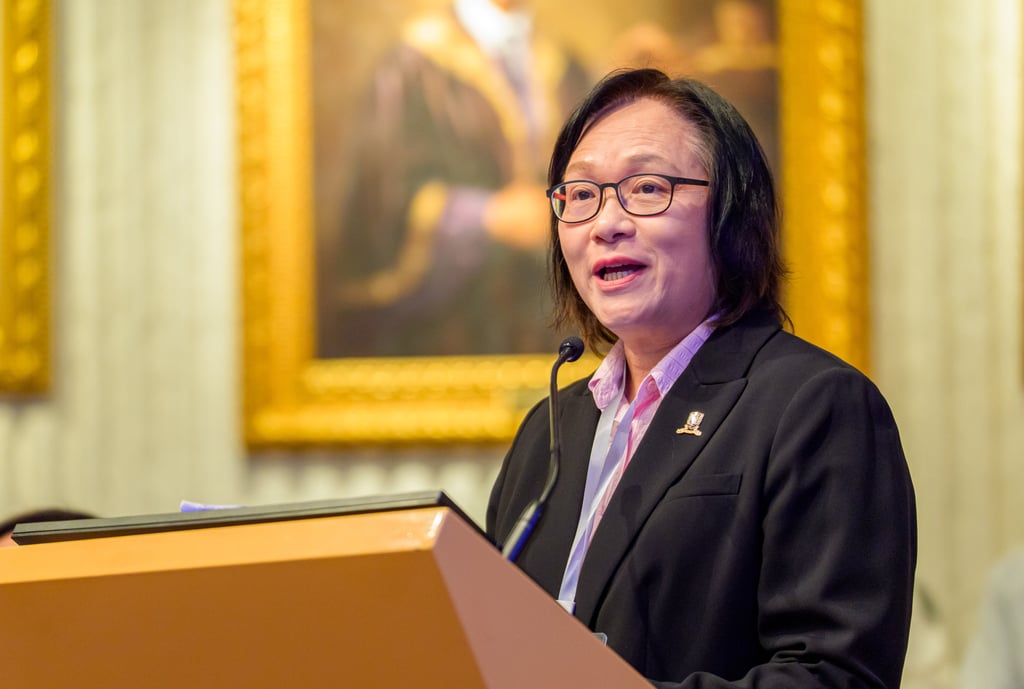
Many of the mathematicians who spoke at the ceremony brought up the rapid changes the community was undergoing amid recent AI-driven advances, noting that this development offered both opportunities and challenges.
Yau said the tide was starting to turn regarding AI, offering more possibilities to catch up to the US – which had a head start in traditional mathematics. However, he said it was difficult for any one country to compete with America’s rapid development of AI unless resources were pooled.
Vassily Gorbounov, the deputy dean of mathematics at HSE University in Russia, said this was a challenging time in which political divisions placed restrictions on mathematics – an issue he said was “foreign” to the community.
“It all causes unpleasant effects on the young generation, our future,” Gorbounov said. “They do lose faith and belief in their scientific future [which] we should not let happen.”
In addition to the involvement of major Asian countries, Yau said the union had support from the US, Europe and Latin America.
Jan Philip Solovej, president of the European Mathematical Society, said in a video address that he believed the new union would be an important partner.
And in a written statement, president of the American Mathematical Society Ravi Vakil said: “Asia already plays a central role on the world stage, and this will become even more true in the coming decades.”
KioskNews shows a cleaned-up reading view extracted from the publisher’s page — the original always lives on their site, not ours.