COP31 talks face early friction over future of fossil fuels
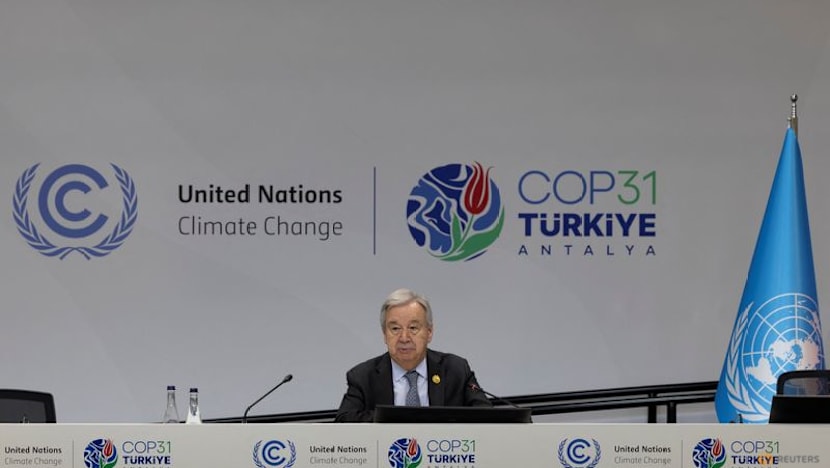
ANTALYA: Big fossil fuel producers and consumers at the COP31 climate talks are resisting any deal that would specify firm new targets or a shift away from oil, gas and coal, observers said on Friday (Nov 13) as the first week of talks drew to a close.
That poses a challenge for summit host Türkiye and lead negotiator Australia, which has another week to land the kind of ambitious agreement climate advocates say is needed to address the worsening impacts of global warming.
"Positions are still quite entrenched in terms of where they are, but that's pretty normal at this stage," said Cosima Cassel, an observer to the talks from environmental group E3G.
Major oil producers such as Saudi Arabia and Russia have traditionally resisted language constraining fossil fuels, while large developing economies such as India have opposed measures they say could limit their development and energy choices, a dynamic that has compromised the outcomes of past deals.
The world’s biggest oil consumer, the United States, meanwhile, has skipped the talks for the second year in a row under US President Donald Trump, who has called global warming a hoax and promoted continued use of fossil fuels.
The stance is at odds with the increasing severity of global warming, scientists and campaigners say.
A UN report last month found the world is on course to exceed the 1.5 degrees Celsius (2.7 degrees Fahrenheit) warming limit that countries had agreed to pursue under the 2015 Paris Agreement to prevent the worst effects of climate change.
As temperatures have risen, this year has been marked by extreme heatwaves across Western Europe and a glacier collapse in Nepal that triggered a flood that killed more than 1,450 people. Thousands more are still missing.
ELECTRIFICATION AND NO FIRM TARGETS
COP31 host Turkey is striving to place a proposal to expand global electrification at the centre of an eventual deal, saying the plan will lead to emissions cuts by speeding the shift away from fossil fuel-powered cars, boilers and other equipment.
The proposal does not require the increased electricity use come from renewable sources, although some countries, including last year’s COP host Brazil, are advocating for progress on a plan to require countries to more clearly map out their transition away from fossil fuels.
Katrine Petersen, another E3G observer, said whether those measures survive the talks depends on conversations in the days to come.
"We've also heard quite clearly from countries like India, the G77, that they don't want any firm targets. They don't want any kind of technology or fuel-specific language," she said. "(These are) the kind of consistent and ongoing divides that we've seen from those different parties before."
Representatives from India, Saudi Arabia and Russia did not immediately comment.
Diana Acconcia, head of the EU delegation, said Europe backed the electrification goal.
"Electrification is, in a way, an inclusive agenda because it is non-prescriptive in a way on how the electrification is achieved," she said. "Of course, for the European Union electrification is to be achieved by clean sources of energy."
The Australian team, which is leading negotiations under a split presidency arrangement, spent the first few days of the summit gathering views on what should be included in a political text agreed by consensus that will be followed by all the negotiated technical points.
Australia is taking further submissions from countries until Saturday night, with a view to formulating a draft text early next week.
KioskNews shows a cleaned-up reading view extracted from the publisher’s page — the original always lives on their site, not ours.