6 Best Sci-Fi Books About First Contact

Ambrose Tardive is an editor on ScreenRant's Comics team. Over the past two years, he has developed into the internet's foremost authority on The Far Side. Outside of his work for ScreenRant, Ambrose works as an Adjunct English Instructor.
First contact with extraterrestrial life. It is one of the most potent ideas in sci-fi literature, because it is the thing stargazers are always waiting for. The existence-changing event that humanity has been on the precipice of since the Space Age began, but which hasn't happened. Yet, anyway.
Andy Weir's novel Project Hail Mary solidified itself as an instant first contact classic when it came out in 2021, and this year's blockbuster film adaptation has brought a bunch of new science fiction fans into the fold. If you're among them, and Project Hail Mary left you looking for more first contact books, in particular, the novels below are the ones you should set your sights on next.
This curated list takes readers through selections going back over 50 years, from some of the genre's biggest names. Along the way, we'll consider how the first contact subgenre of sci-fi has developed during that time. We'll look at its recurring themes, its varying approaches, and make the case for why these novels are worth reading in sequence. Starting with the formative texts on the topic and working down the lineage of first contact fiction.
(As one final note, Project Hail Mary isn't on this list itself, nor are other honorable mentions like Carl Sagan's Contact, H.G. Wells' War of the Worlds, and Stanislaw Lem's Solaris. Think of these as rounding out the top ten, while we focus on the top of the top of the list.)
Rendezvous With Rama
Written By Arthur C. Clarke; Published In 1973

A classic trope in science fiction is the idea of some ancient, primordial alien civilization seeding the galaxy with life. Authors like Isaac Asimov and Arthur C. Clarke are like that but for the genre itself. They were at the crest of the first wave of 20th-century sci-fi writers to tackle big questions like "What if humanity isn't alone in the cosmos?" and "What would our first encounter with aliens look like?"
Rendezvous With Rama engages with this second question, making it a foundational text of first contact" fiction. In Clarke's novel, Rama is the name given to an extraterrestrial object, possibly a ship, that passes through the Solar System. An expedition is sent to explore Rama, where they encounter "biots," biological robots, that show clear evidence of having been designed by a higher intelligence.
Who those designers might be is left a mystery in Rendezvous With Rama, and subsequent generations of sci-fi writers took that as their cue to tackle similar cosmic uncertainties. As we progress through this list, we'll find traces of Rama's DNA manifesting in many of the other entries below.
The Mote In God's Eye
Written By Larry Niven & Jerry Pournelle; Published In 1974

Co-authors Larry Niven and Jerry Pournelle's "CoDominium Universe" is a long-running military science fiction series. Its fictional timeline spans over a millennia of human space exploration, into the 31st century and beyond. Which sets up an exciting subtype first contact story. In The Mote in God's Eye, humanity is already an established, expansionist interstellar civilization when they first meet an alien civilization.
That is, the "Moties," a species that prove to have a complex society with a history as long as humankind's, the details of which The Mote in God's Eye relishes in revealing to readers bit-by-bit. Niven and Pournelle's novel is considered another gold-standard of the genre for its handling of the procedural steps and ethical questions of first contact.
From the perspective of their CoDominium version of future humanity. Which is inclined to see the Moties as a threat, especially when their true martial capabilities become clear. Future Motie novels in the CoDominium saga explore the fallout of first contact, but The Mote in God's Eye is a world-class look at the immediate event.
The Forge Of God
Written By Greg Bear; Published In 1987

The Forge of God is a very different kind of first contact story. In fact, it is a unique kind of sci-fi novel altogether. In Greg Bear's masterpiece, aliens appear on Earth and make first contact with humanity. Who these aliens really are, and what they really want, are the driving mysteries of the book.
The answers, and how Bear delivers them, are too good to spoil in detail here. Let's just say that there might be more than one faction of aliens, with different plans for humanity. At the same time, how different Earthlings, with varying degrees of power, handle the arrival of extraterrestrials is one of the core elements of The Forge of God.
Bear's prose is dreamy, but his novel's plot proceeds like a thriller, and the science in The Forge of God is firmly in hard sci-fi territory. Forge and its sequel Anvil of Stars are must-read sci-fi for anyone interested in the genre, but especially for readers looking for first-rate first contact content.
A Deepness In The Sky
Written By Vernor Vinge; Published In 1999

In Rendezvous with Rama and The Forge of God (and Blindsight, next on our list), extraterrestrials come to Earth. That is obviously the most common type of first contact story in sci-fi. A Deepness in the Sky is like The Mote in God's Eye, where future humans first encounter other life while exploring deep space.
In Vernor Vinge's novel, expeditions from two competing strains of humanity arrive, at the same time, in orbit above a planet with the first technologically-advanced non-human species they have ever found. What follows is a decades-long struggle for supremacy while observing the aliens and waiting to make contact.
Meaning, Deepness totally flips the traditional first contact narrative, making humanity the aliens in the equation. It is one of many tricks up Vinge's sleeve, along with his technical scientific expertise, which made A Deepness in the Sky one of the greatest sci-fi novels of all time.
Blindsight
Written By Peter Watts; Published In 2006

Blindsight is spiritual successor to Rendezvous with Rama, with the flavor of The Forge of God. Peter Watts' novel is a real sci-fi stew. There's a lot going on in the book, as the authors examines his central theme, the nature of humanity, the human mind, and human existence, from a host of angles. That includes AI, vampires, and of course, aliens.
Like Rama, a spaceship is sent from Earth to confront evidence of extraterrestrial life in Blindsight. Like in Rama, what they find utterly challenges humanity's idea of what life should look like. Unlike in Arthur C. Clarke's novel, though, hostility quickly erupts between the two different classes of lifeforms in Blindsight.
That is, of course, a common theme in first contact literature. But even those books can be subdivided by the ones where aliens are the aggressors and those where it is humanity that shoots first.
The Three-Body Problem
Written By Liu Cixin; Published In 2008 (2014 English Translation)
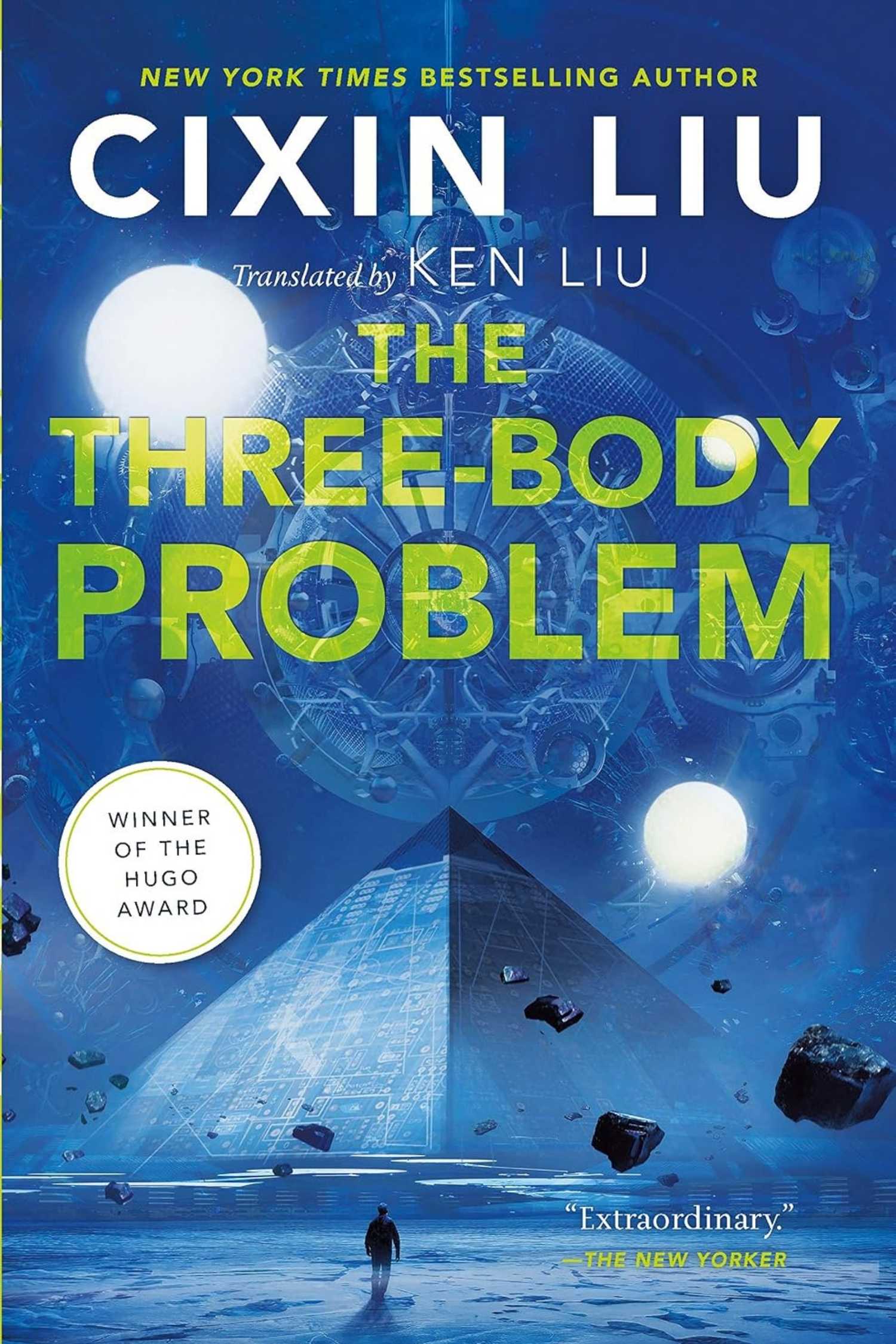
The Three-Body Problem is an unavoidable title when talking about modern science fiction. It is one of the best-selling sci-fi novels of all time. It is the first book in a lauded trilogy. It is a 10/10 audiobook listen. And the entire message of the book is that first contact would, most likely, be an existential catastrophe for human civilization.
In that sense, it is firmly in the camp of The Forge of God. What author Liu Cixin adds to the mix is a masterful ticking clock. The antagonistic Trisolarans in the book have advanced AI agents and human collaborators working for them on Earth, but because they lack lightspeed travel, their impending arrival at Earth takes hundreds of years. Giving humanity time to prepare, but also freak out.
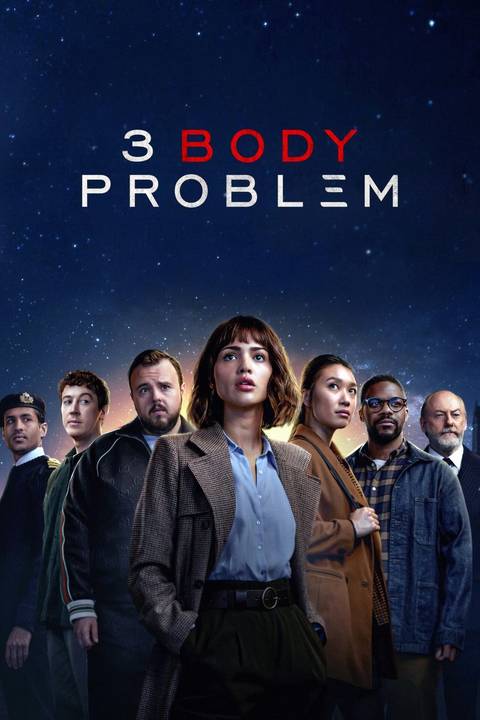
The long-term implications are explored in Three-Body's sequels. The centerpiece of the first novel, though, is the moment of first contact itself. The Netflix adaptation of the book didn't do it justice, but in the novel, it is a jawdropping moment of nihilistic anger on the part of one character, where she willfully dooms humanity by reaching out to the stars.
- Release Date
- March 21, 2024
- Network
- Netflix
- Directors
- Minkie Spiro, Jeremy Podeswa, Derek Tsang Kwok-Cheung, Andrew Stanton
- Writers
- David Benioff, D.B. Weiss, Alexander Woo, Madhuri Shekar, Rose Cartwright
KioskNews shows a cleaned-up reading view extracted from the publisher’s page — the original always lives on their site, not ours.