GROUNDUP: SAFM apologises for Jacinta Ngobese-Zuma interview
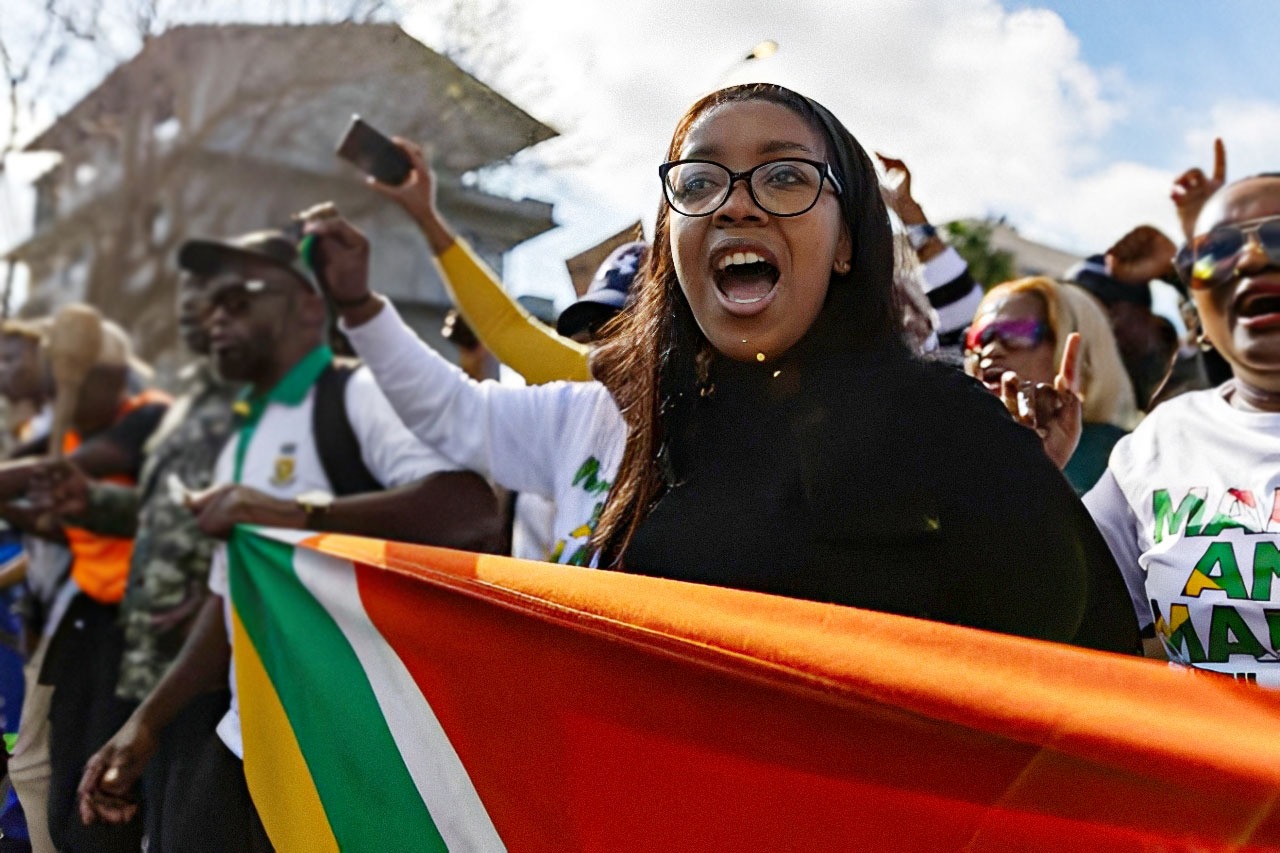
The SABC has been ordered to publicly apologise for broadcasting an interview with March and March leader Jacinta Ngobese-Zuma during which she made “factual” claims that were not backed up by any evidence the programme put to listeners.
The Broadcasting Complaints Commission has upheld a complaint over a June interview with March and March leader Jacinta Ngobese-Zuma, who made unsubstantiated claims about immigrants.
The commissioner ruled that the SABC failed to flag her statements as opinion or challenge them, even though a prior segment with GroundUp’s deputy editor had disputed the same claims.
The SABC publicly apologised for broadcasting an interview with leader Jacinta Ngobese-Zuma during which she made “factual” claims that were not clearly presented as opinions.
The broadcast aired on The National Pulse on SAFM on 3 June.
SAFM ‘contravened’ clause
This comes after Advocate Ben Winks, commissioner for the Broadcasting Complaints Commission, upheld a complaint by social justice activist Christopher Rutledge, who said SAFM had contravened a clause of the Free-to-Air Code which require an opinion to be “clearly presented as such”.
Presenter Ashraf Garda had interviewed Ngobese-Zuma as a right to reply to a preceding interview with Daniel Steyn, deputy editor of GroundUp, who had disputed certain claims made by March and March about immigrants in South Africa (SA).
In his complaint, Rutledge said, “The issue is whether SAFM complied with its obligations under the code when it broadcast a series of serious and highly inflammatory factual allegations concerning migrants, crime, civil society organisations, corruption and national security without requiring evidence, without verification and without clearly informing listeners that the allegations were disputed and unverified.”
Ngobese-Zuma had made several “factual assertions” without any evidence.
Ngobese-Zuma said 60% of serious crimes in Gauteng were committed by foreign nationals; that foreign-funded organisations in SA were using their money to buy arms; that bombs and explosives were entering the country; that foreign military bases were operating in SA; and that foreign nationals escaped prosecution because they were paying the police.
Rutledge said these were not expressions of political opinion but factual allegations concerning statistics, corruption, national security, organised criminal activity and civil society organisations.
Listeners not informed
The broadcaster had not asked her to provide any evidence and listeners were not informed that the allegations had not been independently verified.
“The code requires that where information is based upon opinion, supposition, rumour or allegations, it must be presented in a manner that clearly indicates that is the case. This did not occur.”
Rutledge said this was not a situation in which the broadcaster had no reason to question the accuracy of the claims, because it had devoted a substantial segment to examining and disputing those very claims.
The SABC said the statements were Ngobese-Zuma’s personal views and the previous interview with Steyn “ensured listeners were presented with alternative and contradictory perspectives” prior to hearing her views. It said that, taken as a whole, the programme was balanced.
Rutledge, however, said the response did not engage with the complaint that it did not comply with sections of the Free-to-Air Code, which required that comment must be “truly stated” or “fairly indicated”.
The statements made by Ngobese-Zuma were “factual propositions”, capable of verification or refutation.
The interview with Steyn, he said, demonstrated that the broadcaster knew that several “facts” underpinning her political argument were disputed.
Rutledge said he did not challenge the broadcaster’s right to interview controversial public figures or to engage in robust debate.
Read the ruling here
In his ruling, Winks said the issue was whether each statement by Ngobese-Zuma was an honest expression of opinion, clearly presented as such, and based on facts truly stated or fairly indicated and referred to.
Broadcaster breached the code
He dealt with each of the statements individually and ruled that in each case, the broadcaster had breached the code.
The parties were then asked to make submissions on appropriate sanctions.
The SABC said it was committed to using the findings as a learning opportunity to enhance guidance for presenters and producers, and to strengthen editorial safeguards for high-risk current affairs discussions.
Rutledge said the significance of the commissioner’s findings extended beyond this interview. It established a principle that a broadcaster does not necessarily discharge its obligations under the code by attributing serious factual allegations to a guest or describing them as that person’s views.
Rather, the interviewer should scrutinise the statements, ask for the source or evidentiary basis for them and inform listeners where an assertion is disputed or has not been established.
“The broadcaster was not required to silence the guest. It was required to interrogate the factual foundation of what was being presented to its audience,” Rutledge said.
Winks said a significant aggravating factor was that Ngobese-Zuma’s five statements, which were presented as facts, were extremely serious and could expose immigrants in SA to contempt, discrimination and even displacement.
“The whole world is facing a pandemic of disinformation. In the face of this challenge the broadcast media need to be particularly alert to the dangers of disinformation and misinformation, most of all when the country is approaching elections.”
He directed the SABC to broadcast a summary of his findings on the same programme and apologise for breaching the code.
The broadcaster accepted full responsibility for its contraventions of the code. DM
KioskNews shows a cleaned-up reading view extracted from the publisher’s page — the original always lives on their site, not ours.