Why is Russia seizing private businesses to bankroll its war in Ukraine? What is behind Putin’s nationalisation drive?
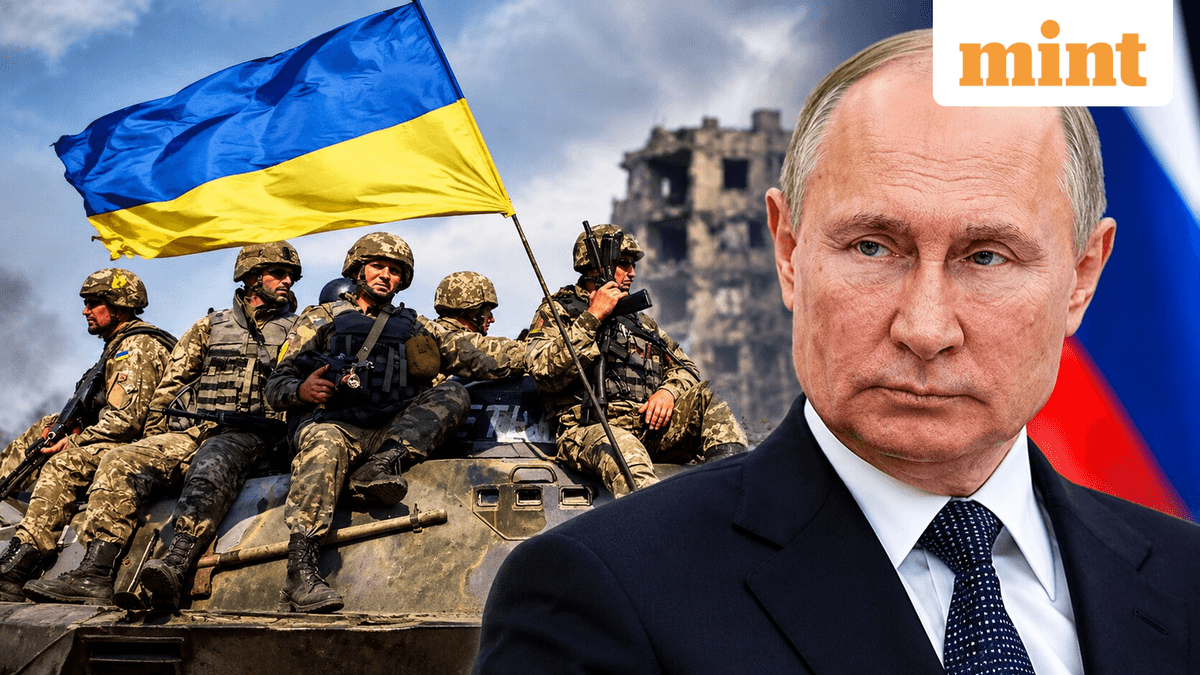
Russia is stepping up its takeover of privately owned businesses and valuable assets as the economic costs of its war in Ukraine mount, putting even wealthy entrepreneurs with close ties to President Vladimir Putin at risk of losing their fortunes.
The Kremlin's expanding nationalisation drive has targeted businessmen, former lawmakers, industrial groups and foreign companies, with assets increasingly moving into state ownership or the hands of individuals linked to the ruling establishment. The trend is raising concerns among Russian business owners about the security of private property, as political loyalty appears to offer little protection against government takeovers.
According to a Wall Street Journal report, citing economic agency AK&M, assets seized by the Russian state accounted for around 40% of the total value of mergers and acquisitions in Russia this year. The proportion was above 20% in 2025, compared with just 7% in 2024.
Why is Putin's government seizing private businesses?
Russia's war in Ukraine has increased pressure on government finances, businesses and the country's wider economy. With military expenditure rising and economic pressures mounting, the Kremlin is increasingly asserting control over valuable private assets.
The campaign has also created uncertainty among business owners, including those who previously enjoyed political protection.
"The pie is shrinking, and so the groups closest to the Kremlin are trying to devour the rest," Russian economist Andrei Yakovlev told the WSJ, describing the growing competition among powerful interests for control of the country's remaining private wealth.
Even Putin loyalists are losing their businesses
One of the most prominent examples is Vadim Moshkovich, founder of Rusagro, one of Russia's largest agricultural holdings.
A former senator and billionaire, Moshkovich had maintained close ties with the Kremlin and met Putin on the day Russia launched its full-scale invasion of Ukraine in February 2022. However, his political connections did not prevent authorities from taking control of his business interests.
His assets, estimated at around $7 billion, were seized following allegations of fraud and bribery. Moshkovich has denied the charges. The nationalisation of Rusagro, which has extensive agricultural operations, became one of the most significant cases in Russia's latest wave of asset seizures.
Another example is Konstantin Strukov, a billionaire and former regional lawmaker from Putin's United Russia party. Despite receiving a state honour for his contributions to the gold-mining industry, authorities seized his assets, including his controlling stake in gold producer Yuzhuralzoloto. Prosecutors alleged that he had illegally obtained control of the company, claims Strukov disputed.
The cases suggest that even businessmen with established connections to the ruling establishment are increasingly vulnerable to state intervention.
Who benefits from Russia's nationalisation drive?
A major concern surrounding the seizures is the eventual ownership of the businesses after they are taken over.
Although the assets are theoretically meant to be sold through open auctions, more than 90% reportedly end up with state corporations or individuals who have longstanding connections with Putin, according to Arnold Khachaturov, head of the Center for Data and Research on Russia, cited by the WSJ.
The process has also extended to foreign businesses. Russian authorities have taken control of local assets belonging to companies including Nestlé, Auchan, Japan Tobacco, Metro and Aptar.
Could Putin expand the nationalisation drive further?
The scope of state intervention could widen following a decree signed by Putin in August. It allows the government to temporarily take control of critical infrastructure if private owners fail to protect facilities against Ukrainian drone attacks.
The measure covers strategic sectors such as energy, communications, industrial facilities, transportation and logistics.
The move comes as Ukrainian drone strikes have increasingly targeted Russian industrial and energy infrastructure, adding to the economic pressures created by the war.
The nationalisation campaign is reportedly weakening confidence in private property rights and creating uncertainty over the future of business ownership in Russia.
Even businessmen who have supported the Kremlin or maintained close political relationships are increasingly concerned that their assets could become targets. The uncertainty could discourage domestic investment and make foreign companies more reluctant to commit capital to the Russian market.
Analysts cited by the WSJ suggest that some takeovers could reflect competition among powerful business groups and officials, rather than direct presidential intervention in every instance.
KioskNews shows a cleaned-up reading view extracted from the publisher’s page — the original always lives on their site, not ours.