What is ‘Mera Ghar Mere Naam' scheme? Punjab Minister reveals property cards made for 5.15 lakh people and given to them
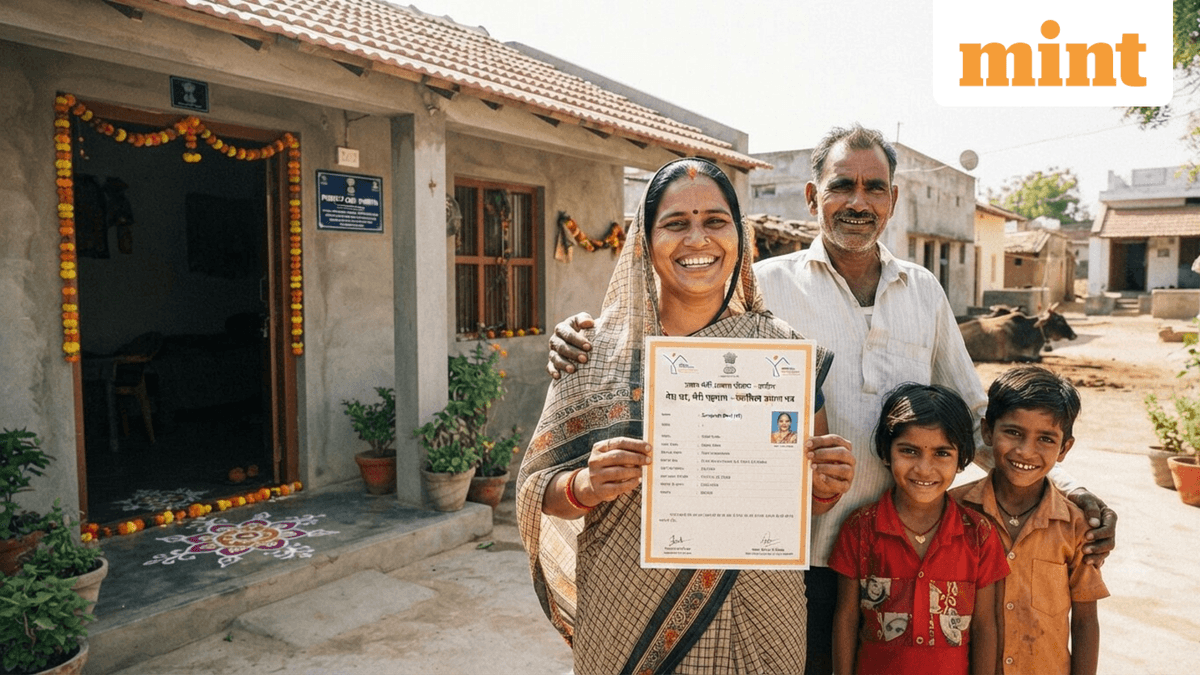
The Punjab government has distributed more than 5.15 lakh property ownership certificates in just 50 days under its flagship ‘Mera Ghar Mere Naam’ scheme, Revenue Minister Hardeep Singh Mundian said on Sunday.
Launched by Chief Minister Bhagwant Mann last month, the initiative aims to provide legally recognised ownership rights to families living in the state’s ‘Lal Lakir’ areas, where homes have historically remained outside formal property records.
More than 10,000 families are receiving ownership documents every day under the initiative, which covers 2,576 villages across all 23 districts of Punjab, according to an official release. The scheme seeks to address long-standing gaps in property documentation through drone-based surveys and the preparation of an authentic Record of Rights.
Mundian described the initiative as a "revolution of dignity", saying it was not merely an administrative exercise but a historic reform that would give legal recognition to homes occupied by families for generations.
"For generations, our brothers and sisters in villages have lived in homes built with their blood, sweat and toil, but not recognised by law. For 30 to 40 years, they had no government record of ownership.
"They could not take a bank loan against their own house, nor could they settle a dispute based on any record. 'Mera Ghar Mere Naam' ends this era of uncertainty. It creates a permanent, legally backed record for every house, ensuring the right owner gets the right title without any bribe and any hassle," he said, according to PTI.
What is ‘Mera Ghar Mere Naam’ scheme?
‘Mera Ghar Mere Naam’ is a Punjab government initiative to establish legally recognised ownership records for residential properties in ‘Lal Lakir’ or ‘Abadi Deh’ areas. These are the inhabited parts of villages, traditionally demarcated by a red line on revenue maps, where houses and settlements have often remained outside formal land ownership records.
As a result, many residents have lived in their homes for decades without official documents establishing ownership. This has reportedly created difficulties in accessing bank loans against their properties and resolving ownership disputes through recognised records.
The scheme seeks to address this problem by conducting drone-based surveys, verifying property details on the ground and preparing an official Record of Rights. Once the details are verified, eligible residents receive property ownership certificates.
The scheme has an earlier history. An initiative with the same name was launched on October 17, 2021, by then Chief Minister Charanjit Singh Channi to grant proprietary rights to residents living in houses within the Lal Lakir. The latest rollout was launched by Mann on October 7.
Four-phase implementation across 10,734 villages
The minister said the scheme covers the ‘Lal Lakir’ areas of all 10,734 villages in Punjab and is being implemented in four phases.
Under the first phase, which covers 2,284 villages, the Record of Rights is ready in 96% of villages, while 84% of ownership cards have already been distributed.
The second phase, covering 1,680 villages, is targeted for completion by the end of November 2026. The third phase, involving 1,152 villages, is expected to be completed by mid-December 2026. The remaining 5,579 villages under the fourth phase are targeted for completion by January 2027.
How does the property card process work?
Explaining the mechanism, Mundian said the process is managed through the Punjab Abadi Deh portal, developed by the National Informatics Centre (NIC). The digital system is intended to maintain a complete digital trail, reduce human interference and curb corruption.
"The process begins with a drone survey conducted by the Survey of India to map the abadi area of each village, followed by ground verification. Draft maps and ownership details are subsequently uploaded on the portal and displayed in the village. Every property owner receives SMS notifications at each stage of the process," he added.
The process allows residents to check the draft maps and ownership details displayed in their villages before the records are finalised. The government aims to provide a documented ownership trail for eligible households across the state through the phased rollout.
KioskNews shows a cleaned-up reading view extracted from the publisher’s page — the original always lives on their site, not ours.