Marcos gov’t on track to miss growth target for fourth straight year
Already have Rappler+?
to listen to groundbreaking journalism.
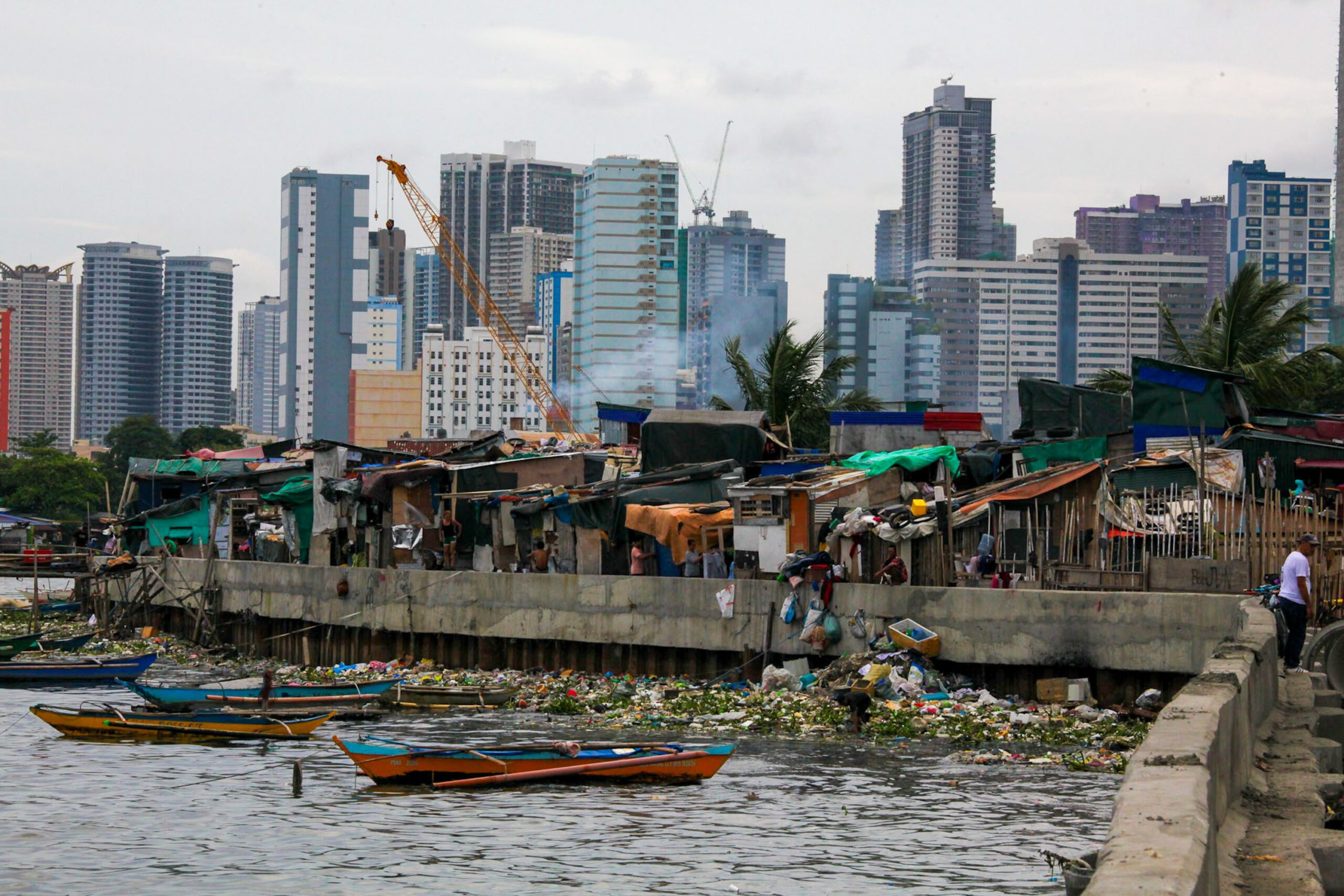
TWO WORLDS. Informal settlements stand in contrast to Manila's modern high-rise buildings on July 9, 2026.
Rappler
Even achieving 3% growth in 2026 would be a 'remarkable accomplishment,' says economic planning chief Arsenio Balisacan
AT A GLANCE
- The Philippine economy is experiencing its weakest growth since 2009, with GDP growing only 2.1% in Q3 2026, falling short of expectations and lagging behind regional neighbors.
- The government has revised its full-year growth target down to 3.5% to 4.5%, but achieving even this lower target seems unlikely without a significant fourth-quarter rebound.
- Despite challenges, there are signs of cautious optimism with exports growing by 8.6%, and the government plans to reassess growth forecasts in December.
This is AI-generated. Read the article for full context. Report any errors.
MANILA, Philippines – President Ferdinand Marcos Jr.’s administration is staring at yet another year of missed economic growth targets, with the Philippine economy slowing for a fifth consecutive quarter and sinking to its weakest pace since 2009, outside the pandemic.
The latest gross domestic product (GDP) figures showed the economy growing by just 2.1% in Q3 2026 from 2.4% in the previous quarter and 4% a year earlier, a surprisingly weak performance when most economists had expected a modest rebound.
The Philippines has also once again lagged well behind its Southeast Asian neighbors. Vietnam’s economy surged by 9.95% in the third quarter, while Indonesia grew by 5.47%. Even the more mature economies of Singapore and Malaysia expanded by 5.4% and 5.3%, respectively, according to their governments’ preliminary estimates. Elsewhere, Taiwan raced ahead, growing 14.36% due to booming demand for artificial intelligence and semiconductors.
Closer to home, it’s been a rough year for the local economy. After a disappointing first half, Marcos’ economic managers had already slashed their full-year growth target from 5% to 6% to just 3.5% to 4.5%. Now, even that lower target is looking out of reach.
With GDP growing by just 2.5% throughout 2026 so far, the economy would need to post a monumentally strong fourth-quarter growth of about 6.3% to reach even the lower end of its already reduced annual target of 3.5% to 4.5%.
Department of Economy, Planning, and Development Secretary Arsenio Balisacan was hardly optimistic.
“It’s very, very challenging at this point given the current environment,” Balisacan told reporters.
He said even achieving full-year growth of 3% would already be a “remarkable achievement,” requiring the economy to grow by around 4% to 4.5% in the fourth quarter.
But even such an outcome would extend the Marcos administration’s record of missing its annual economic growth targets.
In 2023, GDP grew by only 5.5%, below the government’s 6% to 7% target. Growth reached 5.7% in 2024, again missing the revised 6% to 6.5% target, before slowing to 4.4% in 2025, missing the target of 5.5% to 6.5%.
Ironically enough, lackluster government spending has itself become part of the problem. Public construction investment contracted by another 15.1% in Q3 2026. Balisacan agreed that the flood control corruption scandal had made government agencies “a bit cautious” about continuing with infrastructure projects, particularly those already underway.
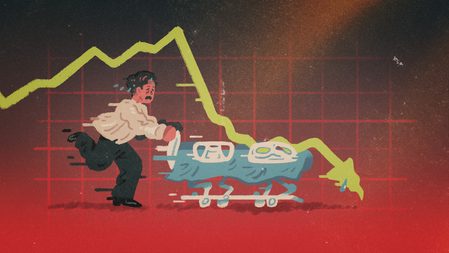
There are, however, some reasons for cautious optimism. Exports grew by 8.6%, supported by stronger demand for electronics and AI-related products. Overall investments also contracted less at 0.2%.
The country’s chief economist was also more upbeat about recovery next year, saying that attaining 5% to 6% growth “remains possible, but requires stronger investment, easing price pressure, and renewed confidence.”
The government’s economic managers are set to meet in early December to revisit their growth forecasts and targets, including the projected 5% to 6% expansion in 2027. – Rappler.com
KioskNews shows a cleaned-up reading view extracted from the publisher’s page — the original always lives on their site, not ours.