Chinese AI chips to capture 88% of home market by 2028, UBS says, as Nvidia woes mount
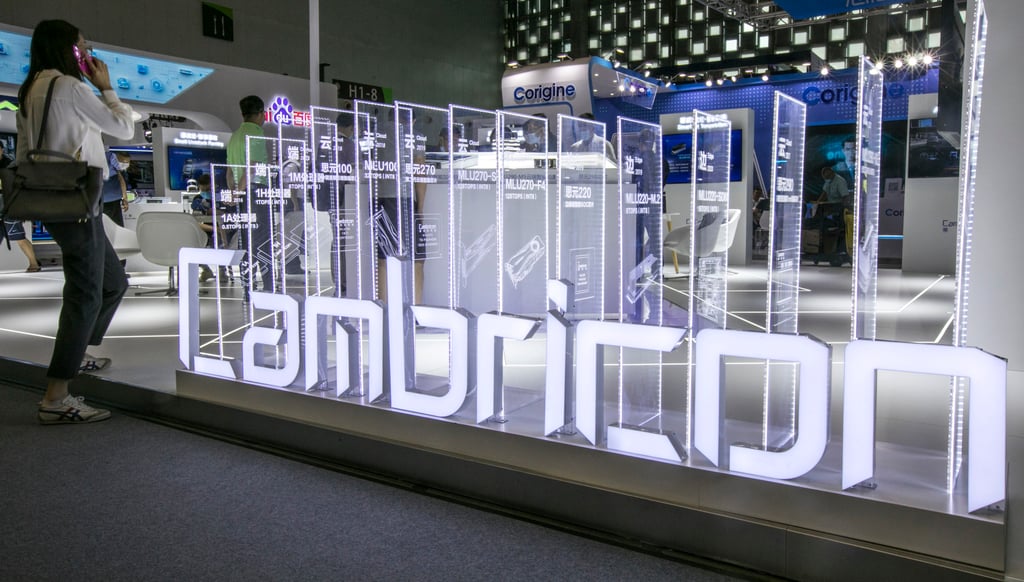
China’s annual domestic artificial intelligence accelerator shipments are set to jump nearly sixfold between 2025 and 2030 to more than 10 million units, with Cambricon Technologies and Biren Technology emerging as front runners, according to UBS.
This comes as Beijing doubles down on technological self-reliance amid heightened scrutiny over US chip exports following the recent Nvidia saga.
Shipments of locally made AI processors – rising from 1.7 million units in 2025 – would propel Chinese suppliers’ share of their home market to 83 per cent in 2027 and 88 per cent in 2028, Jimmy Yu, head of China technology at UBS Securities, said in a research note published on Tuesday.
That would represent a gain of more than 40 percentage points from 2025 levels, at the expense of overseas incumbents.
“Demand for China’s graphics processing units [GPUs] and AI accelerators is surging, driven by rising domestic AI infrastructure buildout and capital expenditure, the pursuit of self-reliance and booming demand for agentic and other AI applications,” Yu wrote.
AI accelerators, which include GPUs, are used for training and running AI models. UBS noted that growth was also being underpinned by an improving local supply chain and rising demand for inference – the process of running trained models to generate outputs.
However, a shortage in high-bandwidth memory (HBM) – a component that enables AI processors to access large volumes of data quickly – alongside limited advanced chipmaking capacity – was expected to constrain shipments this year and next.
“While investors tend to focus on demand, we believe supply-chain constraints will be equally, if not more, important,” the report said.
Factoring in hurdles, UBS projected domestic GPU shipments would reach about 3.7 million units in 2027 and 5.5 million in 2028, falling 20 to 30 per cent short of projected demand. It expected growth to accelerate from 2028 as domestic supply expanded.
Over the next one to two years, a chipmaker’s ability to secure manufacturing capacity and key components would be its primary competitive edge, followed by partnerships with major cloud service providers (CSPs) and AI model developers, the report said.
“Based on our scoring framework, we believe Cambricon is better positioned than other listed names, given its scale, superior accelerator performance and close relationship with the largest CSP customer in China,” Yu wrote.
“We also see Biren [Technology]’s supply-chain relationship as a key differentiating factor relative to smaller domestic peers,” he added.
The domestic buildout unfolds amid tightening US export controls and recent leadership turmoil at Nvidia. On November 16, Washington unveiled new rules restricting Chinese access to advanced American chips via overseas data centres.
Days earlier, co-founder Jensen Huang had stepped down as CEO of the world’s most valuable AI chipmaker following reports of an alleged extramarital affair with a Chinese businesswoman formerly employed at Megaspeed, which was under US investigation for potential export control breaches.
Huang was reinstated as CEO on Monday.
The new US regulations require licences for certain exports, re-exports and transfers of advanced chips and servers to data centres providing substantial computing power to companies headquartered in China or other restricted destinations, or those whose ultimate parent companies are based there.
US President Donald Trump said on Friday that he wanted only older chips sold to China, adding that his administration was discussing an agreement with Beijing, without providing further details.
“A competitive domestic GPU ecosystem could reduce China’s dependence on foreign compute infrastructure while enabling faster and broader AI adoption across Chinese enterprises,” UBS said.
KioskNews shows a cleaned-up reading view extracted from the publisher’s page — the original always lives on their site, not ours.