Why is Chinese state media telling people to stop using English AI terms?
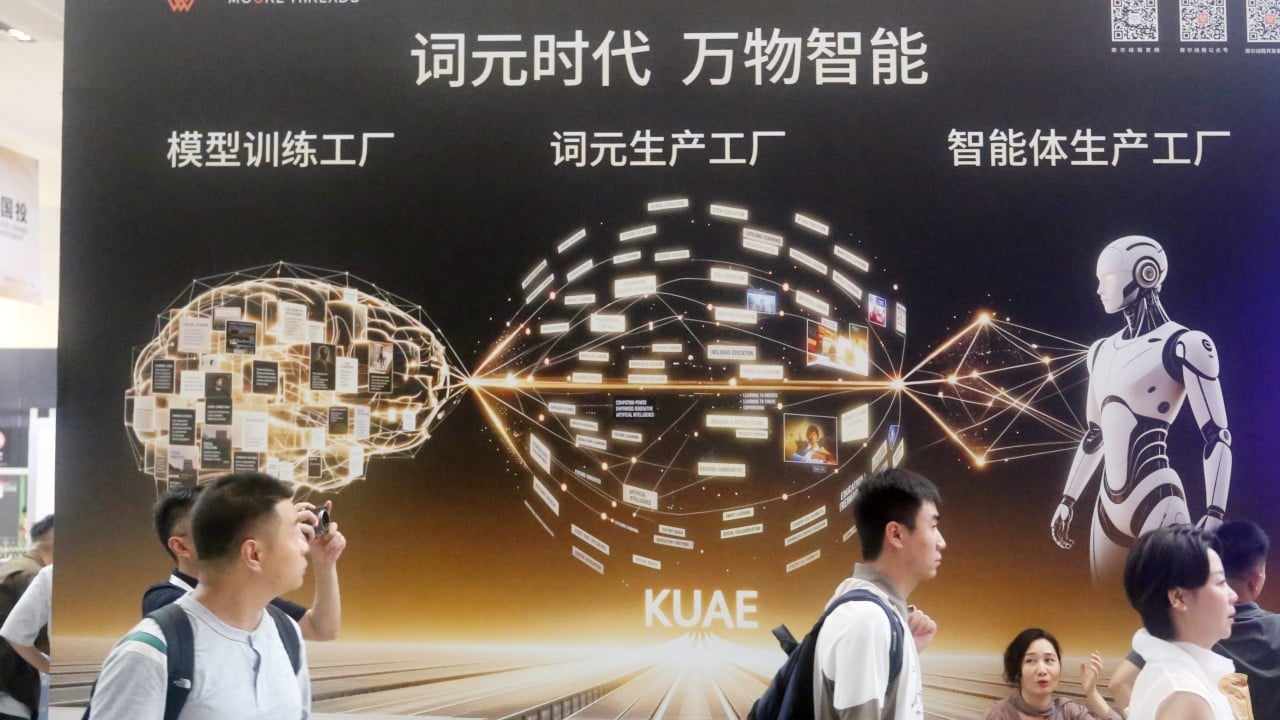
China’s state media has called for English-language terms related to artificial intelligence (AI) to be dropped in favour of standardised Chinese equivalents in a push to boost the country’s “discourse power”.
As AI technologies have rapidly spread in China, English terms have entered common speech in the country, such as “agent” and “LLM” for large language model, a commentary published by the Communist Party mouthpiece People’s Daily noted earlier this month.
The article argued that reliance on foreign terminology would lead to “cognitive dependency” and ultimately undermine the country’s voice in global technology governance.
This latest call to action follows China’s official designation of ciyuan as the standard translation for “token” in March at the China Development Forum 2026. Ci means “word”, while yuan is often associated with fundamental elements or currency. Specifically, the yuan is the base monetary unit of China’s official currency, the renminbi.
The commentary said that reliance on foreign jargon could deprive China of the authority to define key concepts, stunt the growth of original domestic theories and hinder the development of a Chinese framework for talking about technology.
English AI terms were rarely self-explanatory to ordinary Chinese people, the commentary argued, contrasting them with earlier examples of technologies whose names were localised, such as dian nao – electric brain – for computer.
KioskNews shows a cleaned-up reading view extracted from the publisher’s page — the original always lives on their site, not ours.