‘Bizarre’ for world to incur more debt to deal with high debt: NK Singh
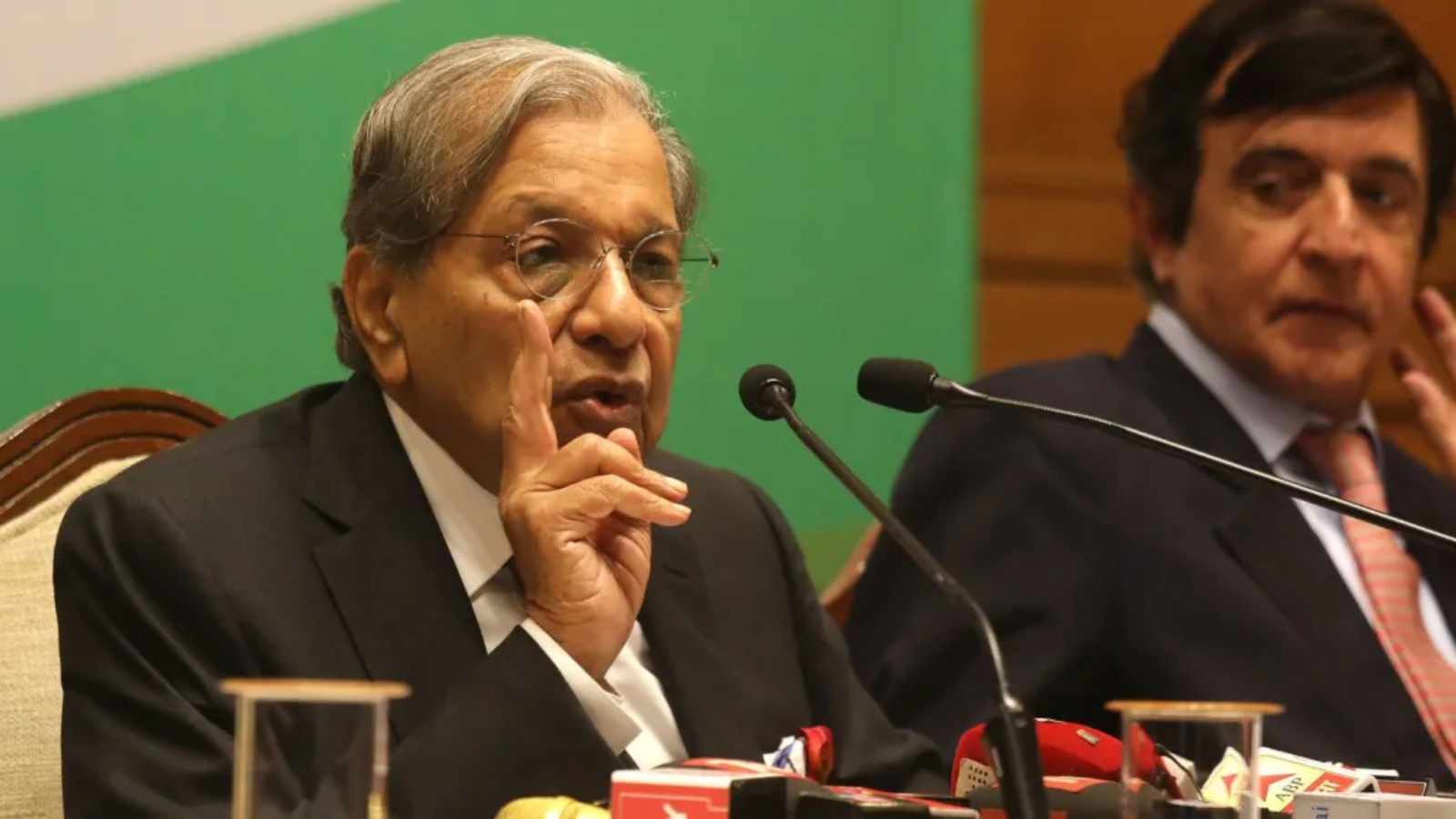
N K Singh was speaking at the launch of his new book, Endeavours: An Ensemble of My Life, which goes beyond economics and policy and into his passions: from classical music and homeopathy to his travels and time spent in Japan. (Express Archive)
Noting that the world is passing through “a severe crisis of multiple kinds”, NK Singh, Chairman of the 15th Finance Commission, said on Wednesday that the “prescription” that to “deal with more debt is to incur more debt” looks “bizarre”.
Singh was speaking at the launch of his new book, Endeavours: An Ensemble of My Life, which goes beyond economics and policy and into his passions: from classical music and homeopathy to his travels and time spent in Japan.
Answering Singh’s question on global debt, economist Minouche Shafik — most recently the President of Columbia University, but before that a Deputy Governor of the Bank of England — said advanced economies, who seem to be able to get away with ever more higher levels of debt, seem “politically incapable of getting to grips with their fiscal situation”.
On the other hand, the markets are tougher on emerging and developing countries.
“Japan is the prototype for how high can your debt go? How long can you defy gravity? Once you reach 200% of GDP, does anything happen? You look at France today, the numbers are very, very scary; the politics are very scary. And I worry that given the politics, I think in many countries the vested interests resisting change — particularly in the advanced economies — are so entrenched that only a crisis will force political change,” Shafik said.
Asked by Singh to juxtapose the fractured world of today with the Non-Aligned Movement and Group of 77 described in a chapter of the book, External Affairs Minister S Jaishankar said that was the political company which was the “natural accompaniment” to that economic model.
“Once the course correction started in 1991-92 and the economic model changed, I think the political company also underwent a certain change,” Jaishankar, also part of the panel discussion with Shafik and others, said.
Story continues below this ad
“It’s an interesting era because there is a lot of posturing there; on many big issues we actually get left out. The world moves on, which is why we also had to make course corrections in foreign policy in the 1990s along with the economic reforms. But I also won’t really throw the baby out with the bath water; I think, today, many parts of it have been reinvented, have been recharged, have been rethought — and that is why today you have the concept of the Global South,” he said.
KioskNews shows a cleaned-up reading view extracted from the publisher’s page — the original always lives on their site, not ours.