Our Friends in the North: The Thatcher Years review – old pals back on the toon as TV series gets squished

The four thwarted, postwar north-eastern dreamers created by dramatist Peter Flannery have now played more than a whole day of drama across different formats. The 1982 RSC world premiere of Our Friends in the North featured almost four hours in the lives of lawyer-councillor Mary, drifting philanderer Tosker, photo-journalist Nicky and petty criminal Geordie. The award-winning 1996 BBC Two version ran 10 hours, as did the 2022 Radio 4 adaptation. Now Flannery brings the quartet home to the stage and to Newcastle (where the first version toured) in another play.
Starting in 1964, with Labour PM Harold Wilson promising a new Britain, the first stage version ended in 1979, as Margaret Thatcher’s victory heralded a rightwing transformation. Exploiting the way that saga dramas test characters against landmark events, the TV version took them to 1995 (brink of Blair) and the radio one to 2020 (Boris Johnson and Covid). It would be intriguing to know if the idealism of these now triple-locked pensioner characters burns again under Burnham, but Flannery has tracked back to 1979-85, adapting the sixth (Thatcher in) and seventh (miners out) TV episodes.
A piece begun when he was an RSC writer in residence always had Shakespearean ambitions and these continue with the tremendous Trevor Fox, like the Chorus in Henry V, galvanising our imaginations and dropping historical footnotes. Fox, who starred in the TV and radio series, doubles as Nicky’s dementia-affected dad, Felix, a subplot especially poignant in what will be a memory play for much of the audience.
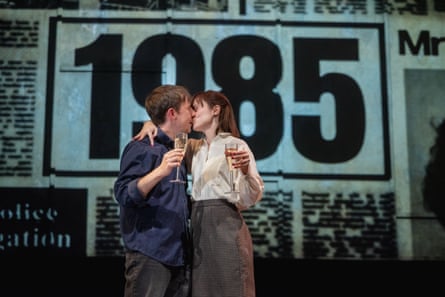
All forms of the story have used soap opera domestic tension to offset socialist history and here the epic courtship of Sam Neale’s Mary and Ryan Nolan’s Nicky affectingly shows campaigners for social change yearning for romantic conformity. The largely wasted lives – the piece’s bleak sub-theme – of Tosker and Geordie are caught by Jack Robertson, pointlessly optimistic, and Scott Turnbull, accepting defeat. Jude Nelson makes a small part large as a Tory MP who achieves a prophetic early breach in Labour’s “red wall”. The politics are Kinnockian, accusing Labour’s Militant tendency and miners’ union leader Arthur Scargill of swelling a rightwing electorate that led to 18 years of Tory rule.
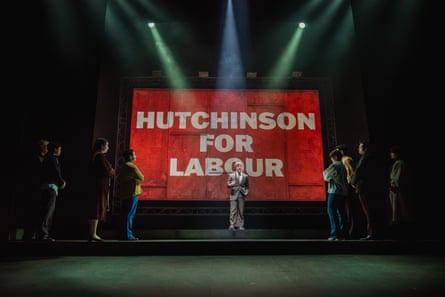
The different Our Friends in the North directors have tended to panic at its politically expository dialogue and in this case it sometimes feels as if director Jack McNamara is searching for action such as slow-motion strobing for clashes between colliery pickets and riot squads.
For completists, this is a must-see but, paradoxically, it feels incomplete. In all media, the story has had length and breadth and, though these two episodes were a logical choice, Flannery perhaps acknowledges losses from selection and compression when Fox’s Chorus laments: “There’s always so much more to say.” The events depicted partly explain why a regional theatre would struggle to put on an all-day epic, but this dramatically immortal foursome needs it.
KioskNews shows a cleaned-up reading view extracted from the publisher’s page — the original always lives on their site, not ours.