Cross-industry association in Hong Kong releases guide on responsible AI use

A Hong Kong group comprising leaders from different industries has launched a guide to promote responsible use of artificial intelligence, calling for organisations to designate clear owners for their AI initiatives to strengthen accountability.
Releasing the 209-page Guidelines on Responsible Corporate and Institutional Adoption of Artificial Intelligence on Thursday, the Artificial Intelligence Association of Hong Kong said that with the rise of autonomous AI agents, organisations needed to implement rules governing their use.
The guidelines called for the designation of a senior executive in organisations to be accountable for its AI initiatives, and the appointment of named owners of use cases.
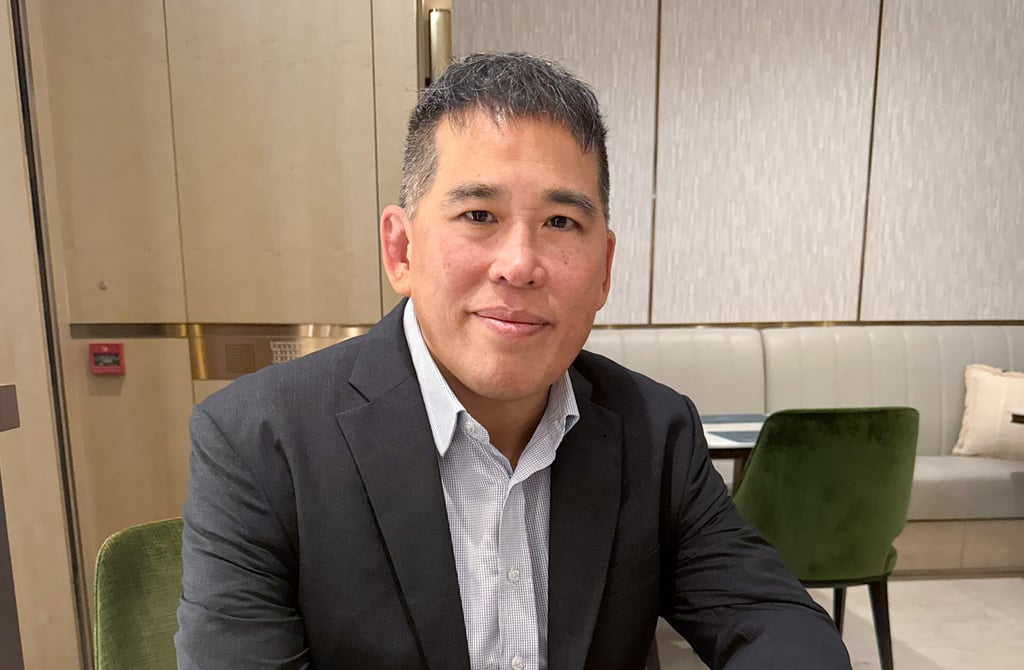
“AI is moving from generating content to actually taking action,” said Neil Tan, the group’s founder and chairman, noting that agents can now access corporate emails, cloud drives and even financial accounts.
“You will be surprised that inside different organisations, [including] large corporates and institutions, they do not have named owners.”
Such a lack of human accountability could lead to disputes over unauthorised actions by AI models and agents, he said.
Tan explained that any given corporate action, such as recruitment, involved different functions, causing ownership to fall in between the cracks of different roles.
Established in 2024, the association brings together members across different industries, including finance, legal, public utilities and academia, to devise solutions for responsible AI use. Its different boards and committees include top executives from utilities such as Hong Kong and China Gas Company (Towngas) and CLP Power, banks such as Standard Chartered and HSBC, and scholars from various local universities.
The group currently has 50 leadership team members, including 20 advisory board members and observers, as well as 30 committee co-chairs.
According to Tan, the association spent nearly a year formulating the guidelines, taking reference from AI regulatory frameworks in different jurisdictions.
The guidelines also introduced the concept of “know your agent” – referring to the requirements for companies to define an AI agent’s purpose, approved tools, data access limits, prohibited actions and contingency plans before deployment – and adapted the banking term, “know your client.”
“In the age of AI, this is probably going to be the number one thing that they will talk about for probably in the next three to five years because there are so many agents that are going to be deployed,” Tan said.
Other suggestions in the guidelines also include ranking the risks of different use scenarios according to tiers and applying corresponding scrutiny, and setting a centralised register of different AI use cases across an organisation.
Tan said the guidelines could be adopted not only by large corporations but also small- and medium-sized enterprises, non-government organisations, professional bodies and educational institutions. These organisations would have to assign an appropriate level of oversight over their AI use.
But Tan said the guidelines did not specify the levels of scrutiny based on an organisation’s size or capacity, so as to allow flexibility in their implementation.
He hoped the document could serve as a flexible “bridge” for corporate AI governance before more formal “guardrails” from legislation become available in Hong Kong.
Currently, Hong Kong does not have dedicated legislation on AI.
In his latest Policy Address released in September, Hong Kong Chief Executive John Lee Ka-chiu said the government would review whether existing laws were adequate in addressing liability issues arising from accidents or damage caused by AI use.
Other regulatory bodies, including the Hong Kong Monetary Authority, Insurance Authority and Securities and Futures Commission, are also formulating regulatory frameworks and action plans to ensure responsible AI use within their respective industries.
KioskNews shows a cleaned-up reading view extracted from the publisher’s page — the original always lives on their site, not ours.