Ben-Gurion wished Gaza would ‘sink into the sea,’ newly revealed documents from 1956 show
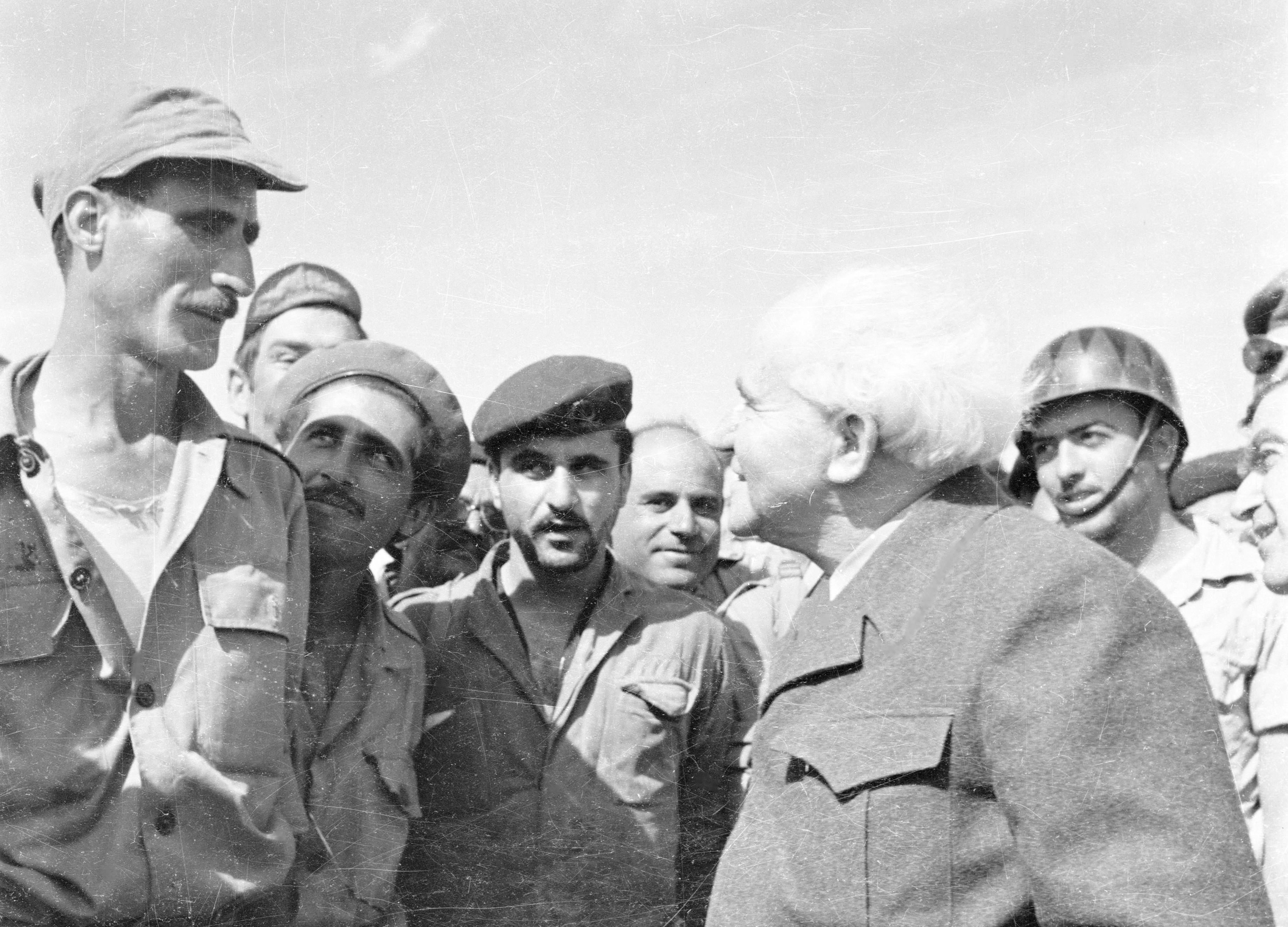
Former prime minister and defense minister David Ben-Gurion wished the Gaza Strip would "sink into the sea" and warned that future wars would bring devastating civilian casualties, according to documents released by the IDF and the Defense Establishment Archive to mark the 70th anniversary of the 1956 Sinai Campaign, known as "Operation Kadesh" or the Suez Crisis.
The documents also reveal Ben-Gurion's warning about the next war, primarily his fears that "Tel Aviv will be bombed, Haifa will be bombed, and people will be killed. Not combatants, women, children."
Ben-Gurion made his remarks about Gaza during a cabinet meeting on October 28, 1956, on the eve of Operation Kadesh. Months later, on April 4, 1957, he repeated them at a conference of senior officers following the IDF's withdrawal from the Gaza Strip and the Sinai Peninsula.
"The Gaza Strip is an 'embarrassing' objective [...] We have to take it. It stands in our way. If I believed in miracles, I would wish it would sink into the sea," he said.
'Tel Aviv will be bombed, Haifa will be bombed': Warning about the next war
In another newly released document, Ben-Gurion warned IDF commanders against relying on the success of Operation Kadesh as an indication of what to expect in a future war. He said that although the IDF had managed to limit casualties during the Sinai Campaign, there was no reason to assume the same would be true in the future.
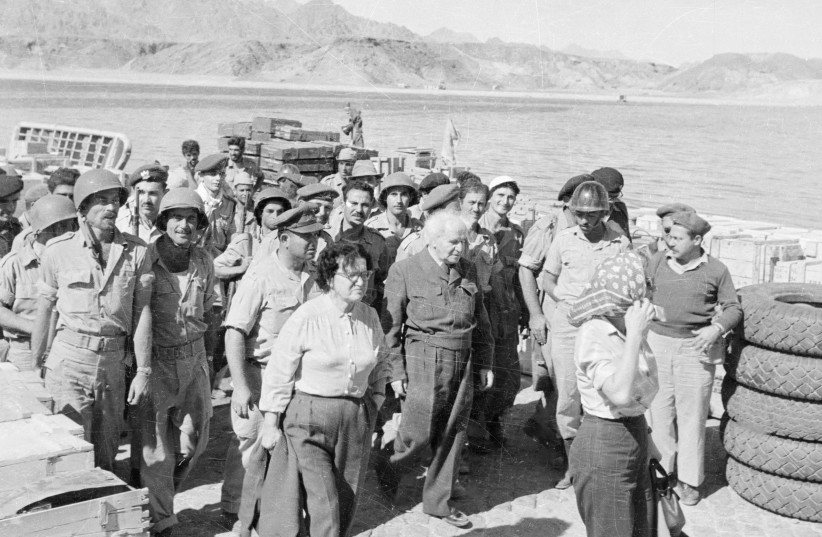
Ben-Gurion stressed that another war could inflict severe damage on the civilian home front and urged commanders: "And do not draw an analogy [...] from the Sinai Campaign to the next war."
'This terror would have destroyed us': Opposition to controlling Gaza
In his remarks about the Gaza Strip, Ben-Gurion addressed the difficulties involved in maintaining Israeli control over the territory.
"We know that the Gaza Strip is a problem under any administration, whatever that administration may be, whether it is an Israeli administration, or an Israeli administration plus the UN, or a UN administration without Israel," he said.
According to Ben-Gurion, the worst possible outcome would have been Egyptian rule over the Strip, but continued Israeli control could also have come at a heavy cost.
"But it was clear that our remaining in Gaza, after the world had ostracized us, and there would be terror there that we would have to suppress, was beyond Israel's capabilities and vital needs. This terror would have destroyed us."
Ben-Gurion also addressed the Palestinian population in the Gaza Strip and the moral cost of continuing to control the territory.
"And therefore, from the very beginning, I strongly opposed those who demanded the annexation of Gaza. What Israel lacks is not another 300,000 Arabs, Arab citizens, and ones like these," he said.
He went on to warn that prolonged control over the Strip could harm Israel in ways that extended beyond the military sphere.
"And perhaps this would have destroyed us, not militarily, but morally [...] If, in the eyes of the people and in the eyes of the world, we lose our moral right to exist, Israel cannot exist."
Shimon Peres: 'Our victory in battle does not necessarily mean the last battle'
Among the newly released documents is a handwritten account by Shimon Peres, who was serving as director-general of the Defense Ministry at the time.
Peres described Ben-Gurion as having made two seemingly contradictory decisions: first to go to war and then to withdraw.
"He also explained to us that wars would not solve the problem of Arab-Israeli relations, since our victory in battle does not necessarily mean the last battle, but an Arab victory could be the final victory," Peres wrote.
Rescue of Jews from Egypt and thousands of rare photographs
The materials also include documents concerning Operation Honio, during which an Israeli team rescued 65 Jews from Port Said, Egypt, in November 1956.
In a report submitted to the head of Military Intelligence, Lt.-Col. Aryeh Eliav wrote: "My role within the team was to rescue Jews and bring them to Israel."
Additional documents detail the activities of the Israel Air Force during the war, including a plan to attack Egyptian airfields that was never carried out, accounts of an accidental attack on IDF troops, and records of the attack on the Egyptian destroyer Ibrahim el-Awal.
The IDF and the Defense Establishment Archive at the Defense Ministry are publishing the documents on a dedicated website to mark the 70th anniversary of Operation Kadesh.
The website brings together more than 4,500 photographs, documents, and maps, many of which have never previously been made available to the public.
It also includes information on 149 commanders who began their military careers during Israel's War of Independence and later became part of the IDF's founding command leadership.
KioskNews shows a cleaned-up reading view extracted from the publisher’s page — the original always lives on their site, not ours.