Sacred 15,000-ft Uttarakhand Gurudwara needs 19-km Himalayan trek
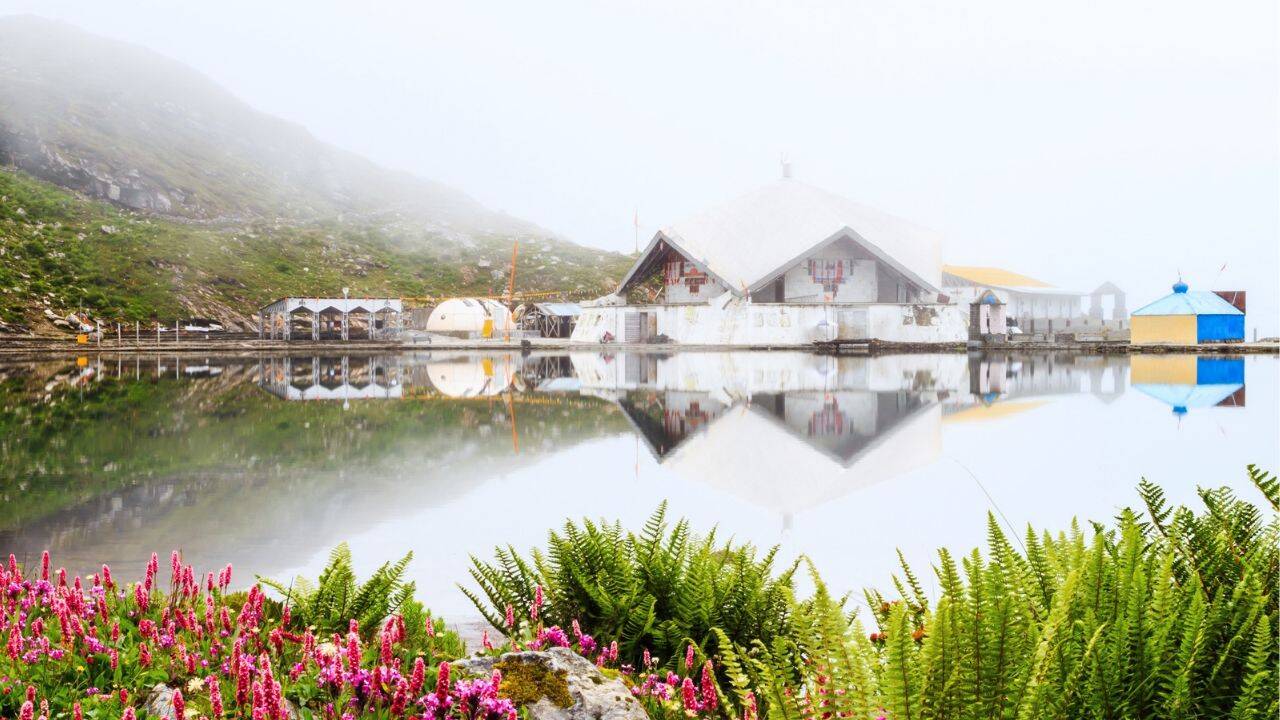
Hemkund Sahib (Image Credit: Canva)
Spiritual awakening and meditation require peaceful surroundings, and India’s landscapes have been adorned with a rich history of spiritual leaders attaining enlightenment.
From Gautam Buddha to Jain Tirthankaras, India has had the privilege of serving as the land of spiritual traditions. One such wonder located in the remote Himalayas is Gurudwara Hemkund Sahib. The gurudwara is one of the most revered sites for Sikhism followers, and the pilgrimage to the site is considered deeply significant.Amid Uttarakhand’s Garhwal Himalayas, the gurudwara is located at an altitude of 4,632 metres and is surrounded by seven Himalayan peaks.
The beauty of the site is enhanced by a glacial lake in the middle of the peaks. Currently, the journey to the site is strenuous, as pilgrims must undertake a steep trek of almost 19 kilometres. However, the ropeway project is underway, which will make the holy site more accessible to everyone, especially the elderly.
The Spiritual Legacy of Guru Gobind Singh
The significance of the gurudwara is rooted in its association with the tenth Sikh Guru, Guru Gobind Singh.
The site is mentioned as being “adorned with seven snow peaks” in Guru Gobind Singh’s Bachitra Natak and is believed to be the place where he meditated in a previous life. However, even before it became a Sikh pilgrimage site, local villagers revered the lake as Lokpal, the “sustainer of life”.

(Image Credit: Canva)
While Bachitra Natak contains a poetic reference to this frozen lake site, Kavi Santokh Singh’s Suraj Prakash gave a detailed description of the “Dusht Daman” legend. It also mentioned the Guru’s meditation at the site. Further, Pandit Tara Singh Narotam identified the location using clues from the Mahabharata. Finally, Sri Kalgidhar Chamatkar by Bhai Vir Singh documented the search for the sacred site and its historical significance.The site was rediscovered in 1934 when retired army granthi Sant Sohan Singh trekked to it after being inspired by Bhai Vir Singh’s writings. He went there to confirm the historical descriptions of the site. By 1935, he, along with Survey Department Havaldar Modan Singh and contractor Ganga Singh Bhandari, had completed the 10 × 10 ft shrine that stood there. They also installed a handwritten copy of the Guru Granth Sahib to consecrate the holy tapasthan.
How to visit
The difficult 19-kilometre trek starts from Govindghat, which is approximately 280 kilometres from Rishikesh by road. From Govindghat, the 13-kilometre trek route is relatively well maintained and passes through the village of Ghangaria. After that, a further 6-kilometre stone path leads to Hemkund Sahib. There are no accommodation facilities at the site, so pilgrims must plan their return journey carefully and follow the local authorities’ recommended trekking timings.
Hemkund Lake (Image Credit: Canva)
Due to heavy snowfall around the gurudwara, it remains inaccessible for most of the year. The best months to visit Hemkund Sahib are generally between May and October, when the pilgrimage season is open. This is also when Uttarakhand’s Char Dham Yatra takes place. Check the official website for the annual opening dates before visiting.By AirJolly Grant Airport in Dehradun is the nearest airport for travellers heading towards Hemkund Sahib.
From Dehradun Airport, taxi and bus services are available to reach Govindghat, from where pilgrims must continue on foot towards Ghangaria and Hemkund Sahib.By TrainUttarakhand’s pilgrimage network is accessible through railway stations such as Rishikesh, Haridwar and Dehradun. Rishikesh is a convenient railway station for travellers heading towards Hemkund Sahib. From there, bus and taxi services are available for onward travel to Govindghat.By RoadGovindghat is approximately 280 kilometres from Rishikesh by road. It can be reached by bus or car via the Rishikesh–Badrinath National Highway.
Preserving a Sacred Himalayan Treasure
Gurudwara Hemkund Sahib is more than a pilgrimage destination; it is a place where faith, nature and history come together. Surrounded by snow-covered peaks and a pristine glacial lake, it offers pilgrims a quiet place for meditation even today. Even though the site has become increasingly popular and the number of pilgrims has increased over the years, it is necessary to protect its fragile Himalayan environment so that its spiritual significance and natural beauty endure for generations.
KioskNews shows a cleaned-up reading view extracted from the publisher’s page — the original always lives on their site, not ours.