The tree Quezon planted, and Bacolod nearly forgot
Already have Rappler+?
to listen to groundbreaking journalism.
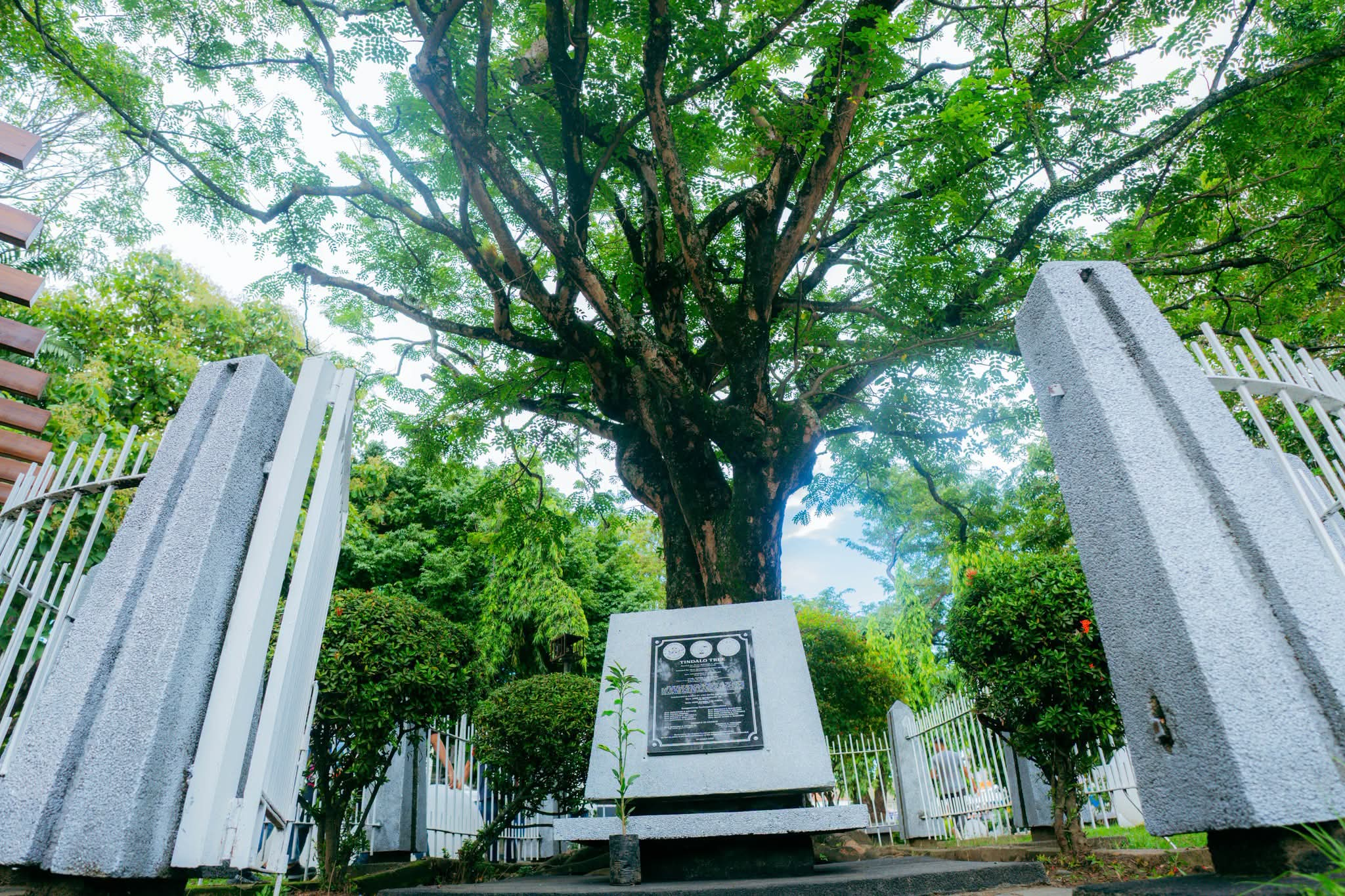
QUEZON'S TREE. Bacolod's only surviving tindalo tree, planted by the late president Manuel L. Quezon at the city plaza 88 years ago, is still standing tall and healthy.
Bacolod PIO
The endangered tree was planted by the late president Manuel L. Quezon on October 19, 1938, to mark Bacolod's proclamation as a chartered city
AT A GLANCE
- The tindalo tree, planted by former Philippine President Manuel L. Quezon in 1938 to commemorate Bacolod's charter city status, has become a symbol of fading historical memory due to neglect and a stolen marker.
- A controversial redevelopment project for the public plaza, which included tree cutting, has raised concerns about heritage preservation and public safety, leading to disputes over construction quality.
- On the 88th anniversary of Bacolod's charter city proclamation, a new black granite marker was installed to commemorate the tree's historical significance, with local officials emphasizing the importance of preserving this living link to the city's past.
This is AI-generated. Read the article for full context. Report any errors.
NEGROS OCCIDENTAL, Philippines – It had survived World War II, the city’s worst fire in the 1950s and generations of powerful typhoons. Yet for decades, a tree planted by one of the key figures in Philippine history stood in the heart of Bacolod, its history fading from public memory.
The endangered tindalo (Afzelia rhomboidea) was planted by the late president Manuel L. Quezon on October 19, 1938, to mark Bacolod’s proclamation as a chartered city. Quezon, the country’s first president of the Commonwealth, was a central figure in the campaign for Philippine independence from the United States and in the creation of institutions that would shape the country before independence.
The tree was a living link to that chapter of Philippine history. But its story had become almost as obscure as its species.
Enclosed by a rustic steel gate in the city’s now-controversial public plaza, the tree had lost much of its public identity. Its brass marker, once meant to preserve the story of its planting, had long since become illegible. During the plaza’s controversial redevelopment which started in January of last year, the marker was reportedly stolen, further severing the connection between the tree and the event it was planted to commemorate.
Planted 88 years ago by a president who helped steer the Philippines toward self-government, the tindalo had nearly become a stranger in its own home, a silent witness to Bacolod’s history, standing in a 99-year-old plaza while the story of its own place in that history slipped from view.
Then came the controversy over the P80-million redevelopment of the plaza by the Tourism Infrastructure and Enterprise Zone Authority (TIEZA), a project that included the cutting of trees. Officials of the Negros Occidental Historical Council (NOHC) were alarmed when they learned that the brass marker identifying the historic tree had been stolen.
The redevelopment was part of a P300-million tourism project intended to improve public spaces in the city. Instead, the project became a source of frustration, with work unfinished and questions mounting over construction quality, public safety and the treatment of a historic landmark.
City hall said it would not sign the project’s acceptance documents, citing defects and safety hazards that it asserted had to be addressed before the local government could accept the work.
But the dispute was about more than unfinished construction given that the public plaza is a designated national historical landmark, putting the redevelopment under scrutiny over whether it complied with heritage-preservation laws and followed the original project proposals.

“We felt very sad knowing the reports of a stolen marker, and so we checked and we found it was for the historic tindalo tree planted by ex-president Quezon,” NOHC president Solomon Locsin told Rappler on Tuesday, October 20.
The council decided to replace the marker with black granite engraved with historical details to prevent it from being stolen again.
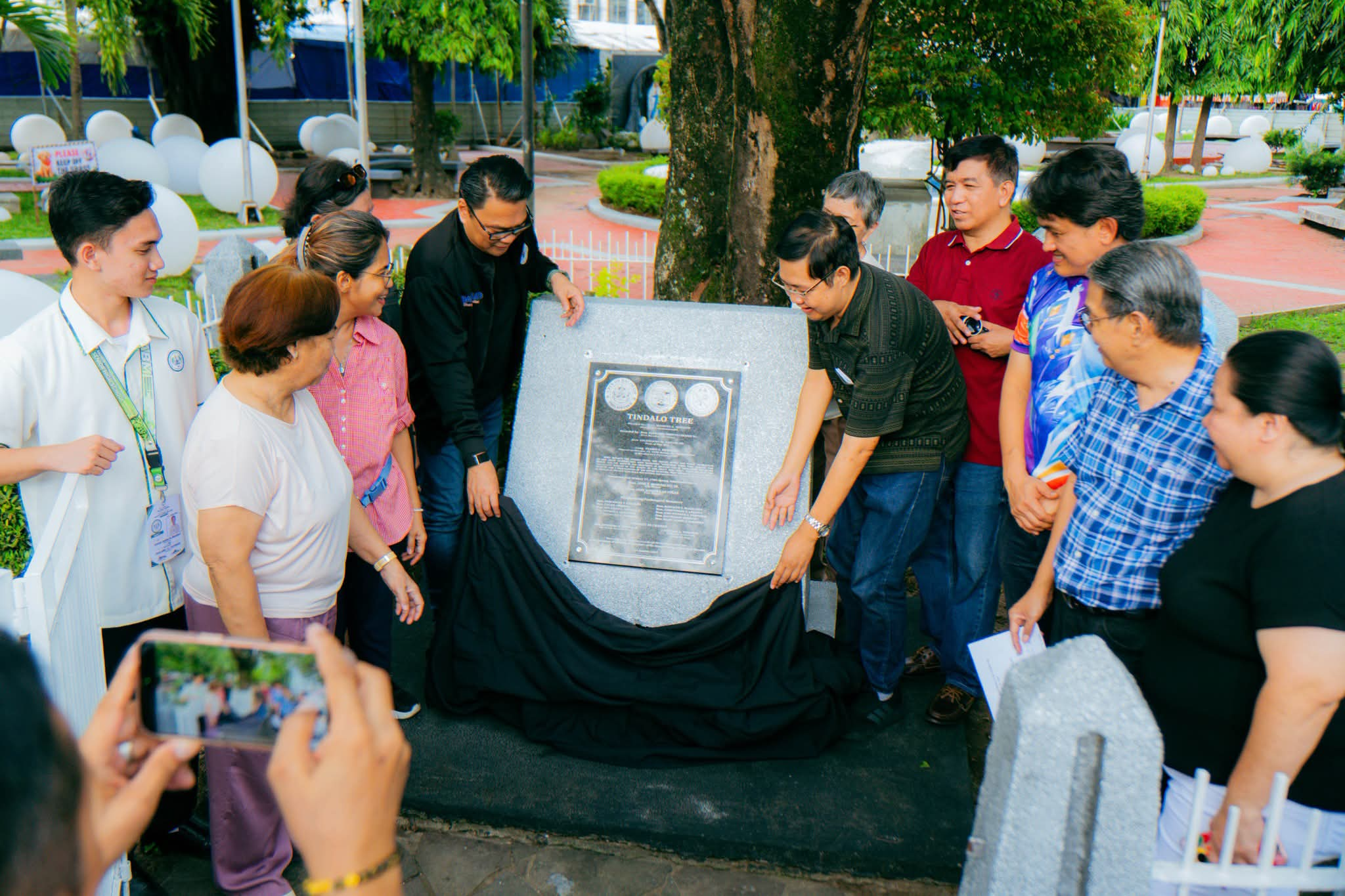
On Monday, October 19, the 88th anniversary of the proclamation of Bacolod as a chartered city, the marker was reinstalled in a simple ceremony commemorating Quezon’s planting of the tree and its place in the city’s history.
The ceremony did not have much fanfare although it featured a reenactment of Quezon planting the tree and brief messages from Locsin, Bacolod Mayor Greg Gasataya and Councilor Wilson “Jun” Gamboa Jr., chairman of the City Council’s committee on history.
Locsin said Bacolod was fortunate to have a historic tree planted by a former Philippine president.
Under Department of Environment and Natural Resources Administrative Order No. 2017-11, tindalo is classified as an endangered species in the Philippines.
Called balayong in Bacolod and Negros Occidental, only a few trees of the species can be found in the Campuestohan area of Talisay City, part of the protected Northern Negros Natural Park, according to Randy James Rojo, founder of the nonprofit Group of Environmental Socialists (GOES).
Gamboa said he was glad that the NOHC provided a new marker for what he described as Bacolod’s only known surviving tindalo tree, saying it would help younger generations recognize its historical and environmental significance.
Gasataya, meanwhile, said city hall will protect the tree, including its new marker.
“I hope that [the] collective memory of the community will be recast for the younger generations to appreciate the history of Bacolod plaza, which is celebrating its centennial next year,” Locsin said. – Rappler.com
KioskNews shows a cleaned-up reading view extracted from the publisher’s page — the original always lives on their site, not ours.