Adam Zivo: RCMP was worried about safer supply, while downplaying harms in public
British Columbia’s new conservative government has vowed to overhaul the province’s drug policies, but perhaps that should include an investigation into whether local RCMP leaders downplayed the dangers of “safer supply.”
Sign In or Create an Account
An obscure document produced by the B.C. RCMP, which originates from late 2025 and was provided to National Post last week by a concerned community member, raises questions about whether the mounties have been fully honest with the public about the failures of “harm reduction.”
The 59-page slide deck delves into the myriad failures of the province’s harm-reduction policies. The presenter named on the cover page, Sgt. Arvind Dongriah, is the B.C. RCMP’s drug decriminalization co-ordinator and a member of its Investigative Services and Organized Crime division.

Columnist Jesse Kline keeps you up to date with what’s happening in Israel and the effects of antisemitism on life here in Canada. Friday mornings.
By signing up you consent to receive the above newsletter from Postmedia Network Inc.
A welcome email is on its way. If you don't see it, please check your junk folder.
The next issue of Channel Israel will soon be in your inbox.
We encountered an issue signing you up. Please try again
Dongriah did not present original investigative findings, and instead relied on publicly available materials and media reports that he — and presumably his colleagues — evidently found credible. His sources included the National Post, CBC and several academic papers and government resources (my own reporting was cited five times).
From the content of the sergeant’s presentation, it is clear that the B.C. RCMP believed in 2025 that safer supply drugs were being diverted to the black market; that organized gangs were redistributing these drugs across Canada; and that decriminalization and the availability of safer supply may have worsened the opioid crisis.
Dongriah also questioned whether safer supply is supported by reputable research and acknowledged that there was a “failure to address diversion risks and associated harms” because, not only had reports of diversion been “initially dismissed,” there had been “no evaluation” of its existence or effects.
The sergeant recommended that safer supply drugs be consumed under medical supervision — a reform that British Columbia had already implemented by then, and which will soon be coming to Ontario — and that there be a public awareness campaign to educate Canadians about “the risks of increased hydromorphone availability.”
The person who provided me the slide deck, Victoria-based entrepreneur Jason Heit, framed it as an internal RCMP document. His interpretation was supported by the cover page, which warns that it is “property of the RCMP” and that it is not to be “reclassified, copied, reproduced, used in whole or part or further disseminated” without the mounties’ consent.
When I emailed the B.C. RCMP’s communications team, they contested that the document was private. They wrote that the slide deck had been presented at the National Association of Drug Diversion Investigators (NADDI) conference in October 2025, and that it was “readily available” through NADDI’s online learning centre.
However, this American online learning centre is an incredibly obscure (and sparse) resource that only NADDI’s membership can access. Individuals can only become NADDI members if they professionally work in drug control (the organization reviews and approves all applications), and Googling Dongriah’s presentation yielded no relevant search results for me.
It is far-fetched to imagine that Canadians could find and review Dongriah’s presentation unless they had prior knowledge of its existence and were making a concerted effort to retrieve it. The slide deck is thus functionally buried away from the eyes of the Canadian public, regardless of whether it’s technically accessible.
Why does this matter, though, if Dongriah had no novel investigative findings? Answering that requires some political context.
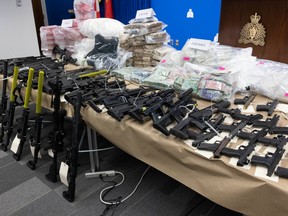
In early 2024, amid a heated national debate around harm reduction, the B.C. RCMP made several high-profile safer supply related drug busts. The organization’s leadership subsequently released a statement claiming that there was no evidence of widespread safer supply diversion.
This had a tremendous impact on public discourse, with harm-reduction activists widely using the B.C. RCMP’s words to gaslight and discredit critics of safer supply.
The day after the statement was released, though, the B.C. RCMP’s headquarters sent a memo to all 150 of the province’s detachments, informing them that, in order to respect the sensitivities of the upcoming provincial election, they could not directly address “hot button issues,” such as drug seizures and decriminalization, and that all media inquiries must be routed through central HQ.
News of this memo broke a month later, when a copy was obtained by long-form media outlet Northern Beat. The story caused a ruckus: some commentators saw it as an attempt to gag local mounties who might contradict the “safer supply is fine” narrative being pushed by the B.C. RCMP’s top brass. They smelled a political cover-up.
The B.C. RCMP went quiet on safer supply afterwards, even as the diversion crisis became indisputable. That’s why Dongriah’s presentation matters: because it shows the chasm between the B.C. RCMP’s internal beliefs and its public silence.
The organization quietly acknowledged that safer supply diversion was a significant problem, yet did nothing to warn Canadians, suggesting either incompetence or, worse, an ongoing political aversion to criticizing harm-reduction shibboleths.
The B.C. RCMP’s communications team stonewalled my emailed questions on this matter. They did not explain how and when the organization’s beliefs on safer supply diversion had evolved, nor why its concerns were withheld from the public.
Instead, they referred me to the provincial ministry of health, which they claimed was the most appropriate respondent. If this were true, though, then why was it appropriate for the B.C. RCMP to publicly comment on safer supply in 2024? You cannot defend a controversial program and then offload accountability when it blows up in your face.
If the organization refuses to be transparent here, perhaps the B.C. Conservatives should step in and impose accountability.
National Post
Join the Conversation
This website uses cookies to personalize your content (including ads), and allows us to analyze our traffic. Read more about cookies here. By continuing to use our site, you agree to our Terms of Use and Privacy Policy.
KioskNews shows a cleaned-up reading view extracted from the publisher’s page — the original always lives on their site, not ours.