ASI begins fresh probe at Kashipur — a site believed to have Mahabharata link
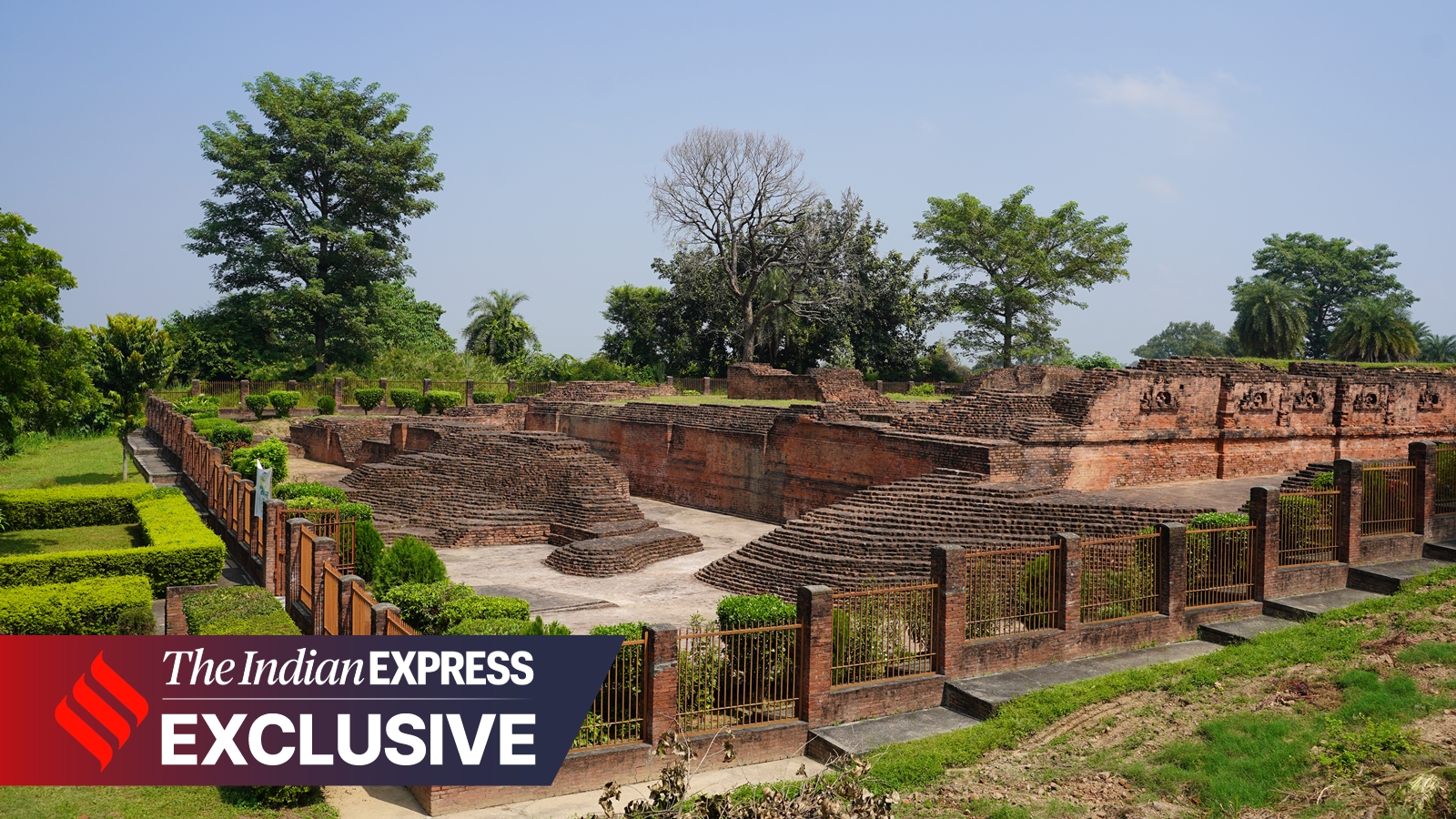
A 90-acre mound near Uttarakhand’s Rudrapur is the Archaeological Survey of India’s latest subject of probe owing to its connection with the Mahabharata as well as Chinese scholar Xuanzang. The excavation in Kashipur started this week and is expected to go on until March, ASI officials said.
According to mythology and local legend, this site was the training ground and residence of sage Dronacharya from the Mahabharata, and the Pandavas are said to have built the Drona Sagar Lake as ‘guru dakshina’ (an offering) to him, for imparting battle skills to them.
Excavations at Kashipur – also identified as Govisana by Xuanzang who had visited the place in the 6th century – have been conducted by ASI across multiple phases since 1939, uncovering Gupta-to-early-medieval temple complexes, the 90-acre mound near Drona Sagar and rich multi-period artifacts.
“While excavations have been conducted here in the preceding decades also, the idea this time is to find scientific evidence of objects retrieved here earlier, and also dig deeper to uncover proper cultural sequencing,” Mohan Joshi, Superintending Archaeologist of ASI’s Dehradun circle, tells The Indian Express.
As per ASI, Kashipur is identified by Alexander Cunningham with Kiu-pi-shwang-na (or Govisana) of Xuanzang. Cunningham, a British Army engineer who founded and served as the first Director-General of the Archaeological Survey of India (ASI), traced the remains of a large structure at Bhim-Gaja, the highest place at the site. The ASI conducted excavations here in the years 1939-40, 1965-66 and 1970-71 in order to reveal the details of the structure traced by Cunningham.
Excavations revealed a substantial part of the plan of the temple built in three different phases. Initially, the temple appears to have started as a soil-brick-built high platform surmounted possibly by a sanctum during the Gupta period, but later, two encircling walls probably in the 6th-7th century AD, were laid around it.
Since the excavation was aimed at obtaining the detailed plan of the temple, no attempt was made to reveal the complete cultural sequence of the site. However, as per ASI records, pottery collected from the site revealed that it remained under occupation from the Painted Grey Ware period to the early medieval period.
Story continues below this ad
This Painted Grey Ware culture is associated with early advanced civilisations of northern India, especially the Mahabharata era. In the 1950s, noted archaeologist and ASI chief B B Lal excavated Hastinapur (near Meerut), where he famously discovered Painted Grey Ware, and associated this with the sites and chronology of the Mahabharata.
Furthermore, pottery dating back to the Kushan, Gupta, and Medieval periods has also been recovered at this site, implying that the region remained continuously inhabited for thousands of years, with human activity persisting without interruption.
However, the recent excavations by ASI’s Dehradun Circle have unearthed brick structures and a circular formation, generating renewed interest in the region’s archaeological narrative, officials say.
Joshi adds, “Once the excavations for this season are complete, we will assess the need to extend it further.” In later stages, the site can be developed for both tourism and research purposes.
KioskNews shows a cleaned-up reading view extracted from the publisher’s page — the original always lives on their site, not ours.