Stacey Dooley: Down the K Hole review – the weird tale of how you can order ketamine quicker than pizza

Stacey Dooley’s latest documentary, Down the K Hole, lands as part of a new batch of three from the presenter. One explores the death in barracks of 19-year-old Jaysley Beck and asks how well the army protects its female soldiers from sexual assault and harassment; another investigates the phenomenon of women who are killed by falling and how often domestic abuse may have been involved.
Down the K Hole follows the stories of a handful of ketamine addicts in recovery, representatives of what we are told is a 20% increase in UK admissions involving use of the drug since 2023. Dooley spends four months embedded in Acorn Recovery Projects, a rehab centre in Stockport. It is not really made clear what “embedded” means. She appears to turn up in the mornings, rather than live there full-time. And there isn’t a great sense in the interviews with addicts and their families that she is any closer to them than she would be under normal circumstances. Nor, during her reflections after every interaction – usually leaning against a wall in the nearest corridor and sighing – does she come up with any greater insights than she usually does. Dooley’s speciality is empathy and, afterwards, either repackaging what she has just been told, or giving voice to the feelings – sadness, frustration, resignation – she can count on the audience sharing. Which is fine, as far as it goes. But as the programme – indeed, as her career as a documentary maker – continues, you do start to wish she could parlay her established bona fides into something just a bit more rigorous and move us all on from our shared understandings.
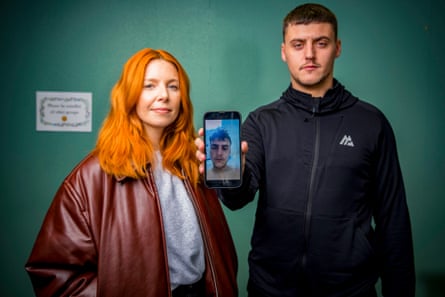
“From horse tranquilliser to festival favourite,” ketamine is the current recreational drug of choice among under-24s. Presumably the 25-pluses are screaming at them: “Don’t do it! The clue is in the horse tranquiliser origin story. It will destroy you, organ by organ, and quickly too. Put it DOWN.” Because, of course, that’s what it does. The staff at Acorn recount their standard experiences of clients beginning treatment because they have “ket bladder” – which means they are in agonising pain, feel the need to wee all the time, and when they do so they pee blood and bits of said organ, which is breaking down inside them. “It looks like phlegm,” says admissions manager Mel. She shows Stacey a picture. It does. Says Mel: “Buying sanitary briefs for 19-year-old lads – like, how did we get here?”
There appears, according to Dooley’s film at least, to be no other answer than ketamine’s cheapness and accessibility – and the fact that it doesn’t leave you with a hangover or huge comedown. “You can order pizza and ket, and the ket’ll come first,” says Acorn resident Jensen, who has been using the drug almost every day for eight years and is now six weeks clean. “£40-50 will get you 7g.” It’s a lot of bang for your buck, especially for Jensen, who even enjoyed the k-holes (an intense dissociative state, “like greening out on weed”). Dooley is horrified at the prospect of being so out of control. “It sounds so bleak,” she says afterwards. But the point is surely that being elsewhere, or at least blunting the edges of here, is the point. And so – why?
Most users have something that could at least partly explain their dependence on the drug. Jensen’s mother died in 2019. Lauren has always struggled with depression and is now back in rehab for a second attempt at sobriety; she relapsed after a miscarriage. Like Jensen, Liam’s mother died and, already addicted, he upped his usage. The men especially talk about it enabling them to avoid feelings. But Dooley never drills down into why some people use but most others don’t. And there isn’t much consideration given to the problem that most of them are seeking help only because of the physical damage caused. “If I wasn’t facing consequences,” says Liam, who is in constant pain, “I would definitely still be doing it.” This is after listening to his sisters’ and young nephew’s accounts of what it’s been like looking after him and fearing his death for years. Similarly, Josh lies in bed awaiting bladder reconstruction surgery wishing he could take some ket, while his dad looks on, an expression of quiet devastation on his face.
It’s an hour that will bring some attention to ket use as a gathering storm. But it doesn’t do much more than point at the sky and say: “Look at those clouds!” Dooley, these days, could do more.
KioskNews shows a cleaned-up reading view extracted from the publisher’s page — the original always lives on their site, not ours.