Big dreams, growing pains in Indonesia: Prabowo’s turbulent 2 years in power
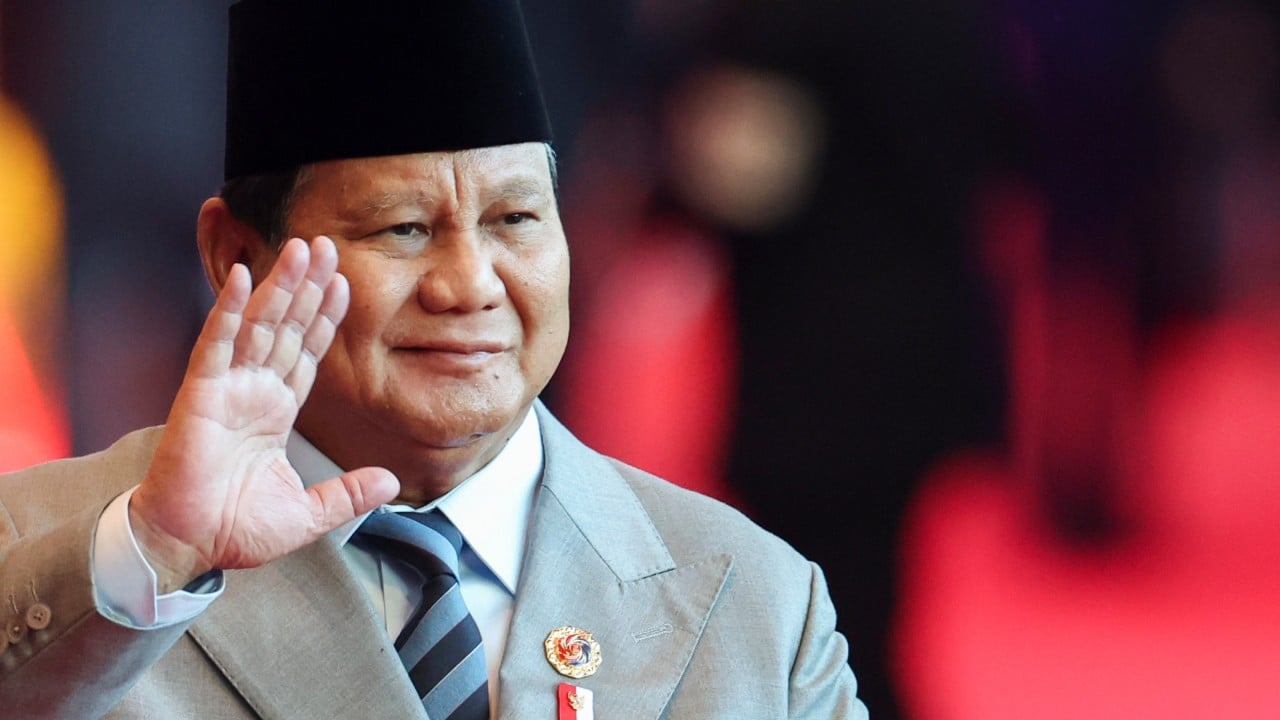
Her disillusionment reflects a broader loss of confidence in the 75-year-old former special forces commander – a sharp reversal from the position of strength he enjoyed after finally winning the presidency on his third attempt.
Taking office with virtually no parliamentary opposition after bringing former rival parties into a sprawling governing coalition, Prabowo rode a post-inauguration honeymoon that saw his public approval rating hit 79 per cent at the start of his term as he began implementing his blueprint to transform Southeast Asia’s largest economy and elevate its global standing.
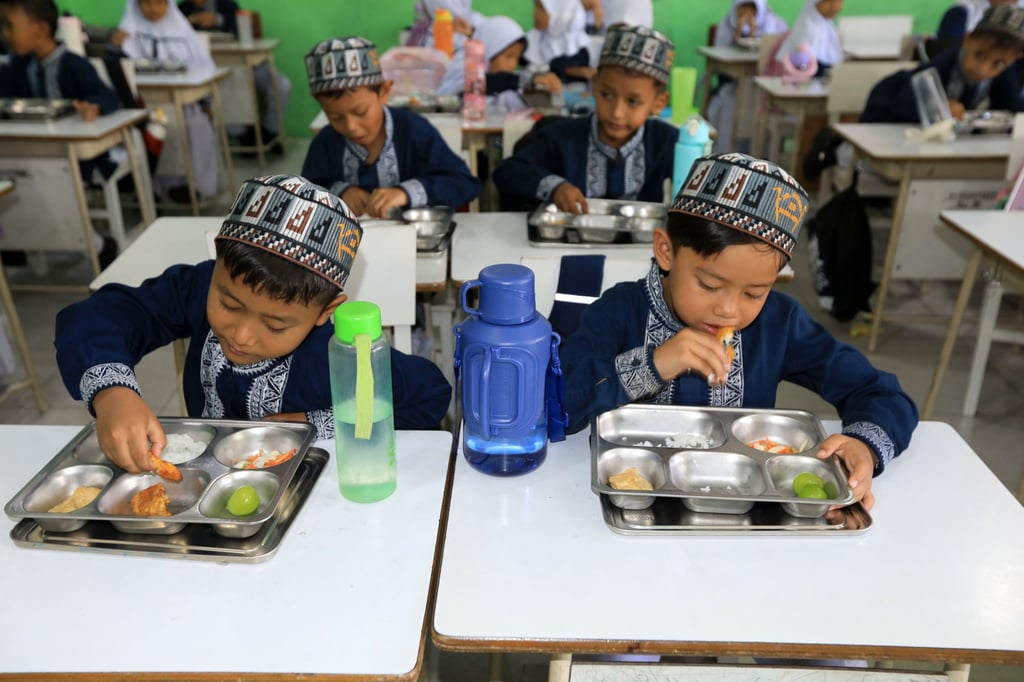
At home, he staked his legacy on eradicating child malnutrition through his universal free nutritious meals programme – initially projected to cost 450 trillion rupiah (US$25 billion) a year at full scale – and reviving rural economies through Red and White Village Cooperatives, a state-backed network of retail and logistics hubs.
For investors, his pitch was that these and other state-led initiatives would create millions of jobs and propel annual GDP growth to 8 per cent, with sovereign wealth fund Danantara central to his plan to put state assets to work in strategic industries and accelerate development.
Abroad, he championed Global South diplomacy in the Brics bloc alongside a pledge to remain a stabilising anchor in Southeast Asia.
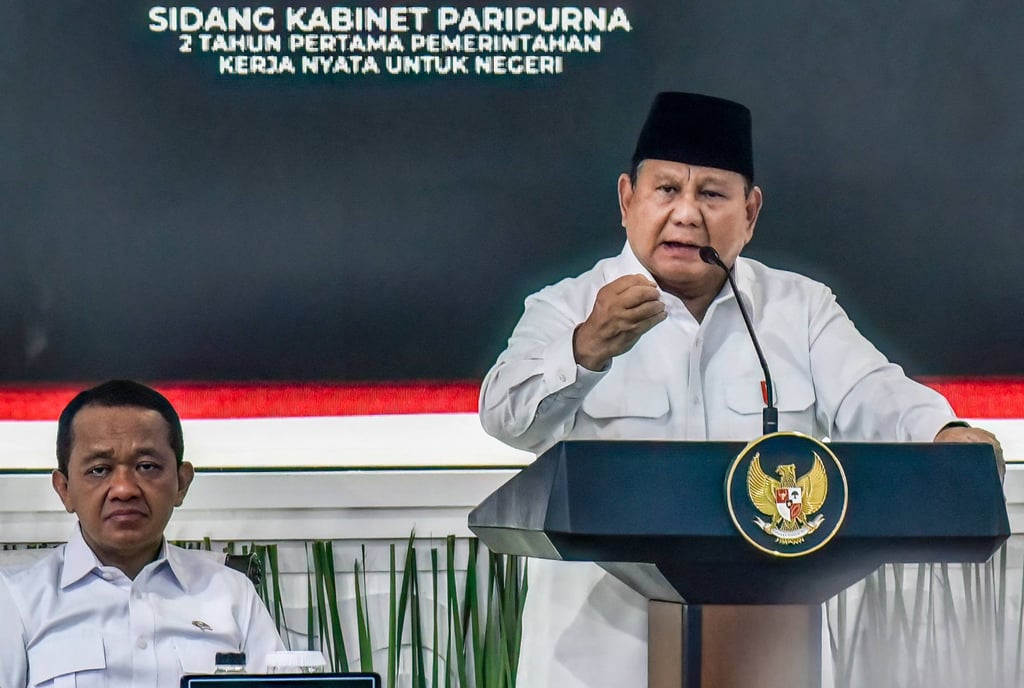
Yet as Prabowo marked his first 24 months in the top job on Tuesday, those lofty ambitions have collided with harsh realities on all three fronts.
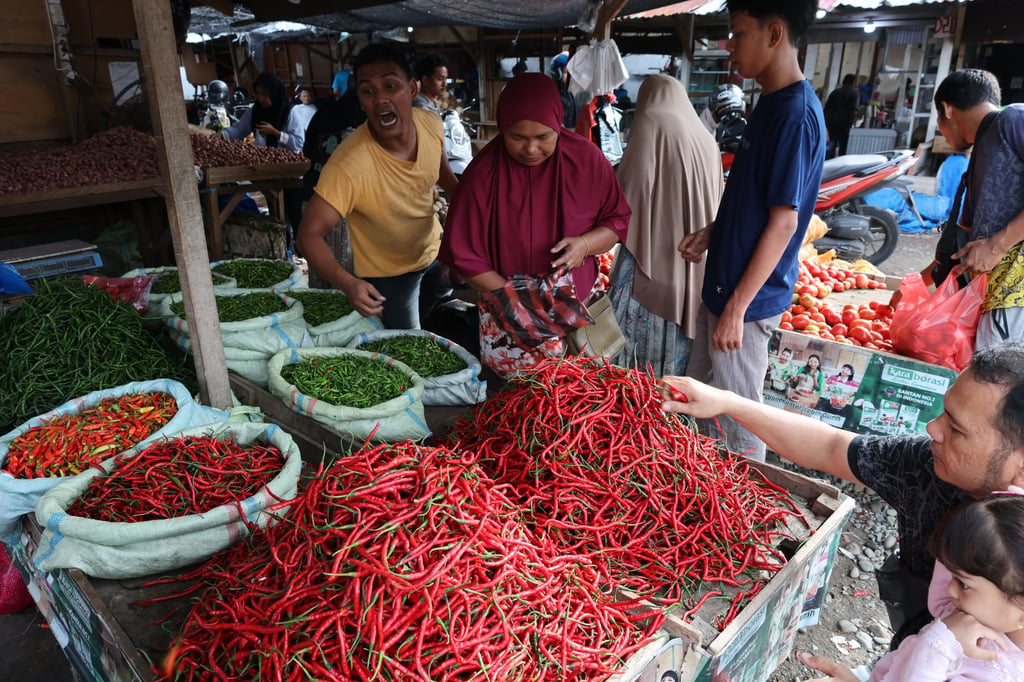
An October survey by Saiful Mujani Research and Consulting (SMRC) found that Prabowo’s approval rating had fallen to 44.5 per cent, below the 50 per cent mark for the first time. A separate survey by the Centre of Economic and Law Studies (Celios) found that 75 per cent of respondents felt stressed by government policies, with high prices for basic necessities and a lack of job opportunities among their chief concerns.
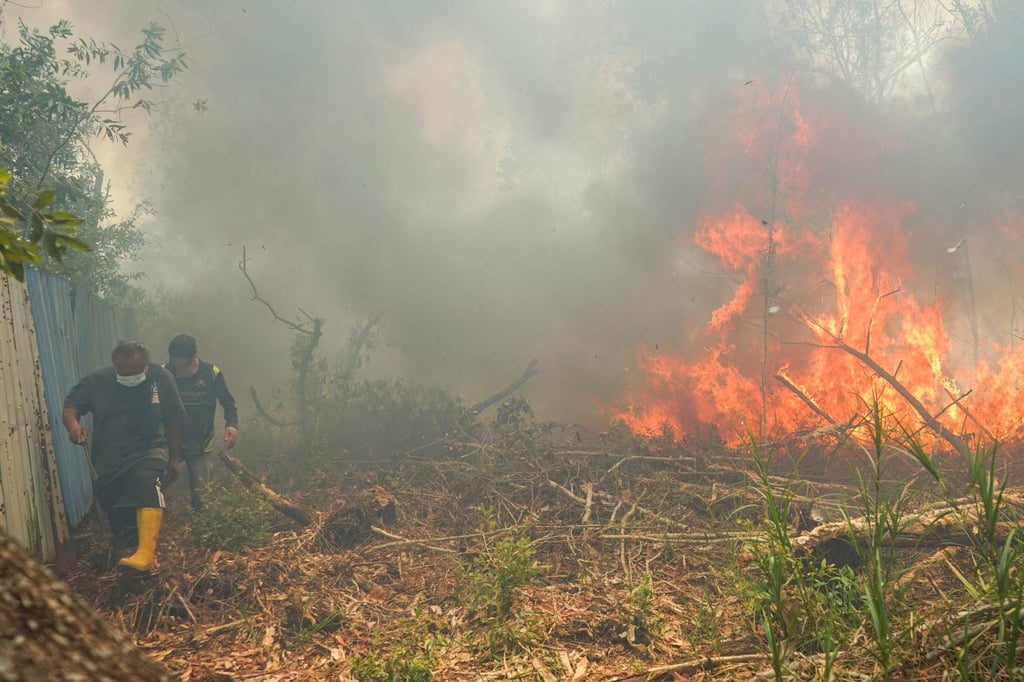
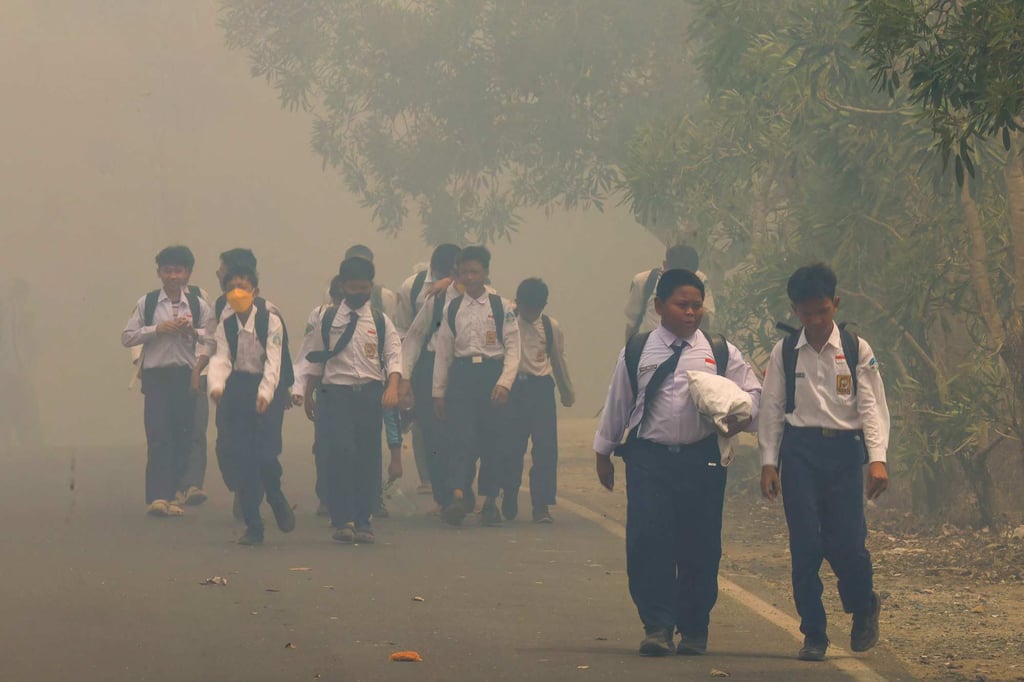
Simultaneously, a looming global index downgrade has triggered a bruising stock market rout, while raging forest fires have blanketed the region in toxic smog, choking neighbours Malaysia and Singapore.
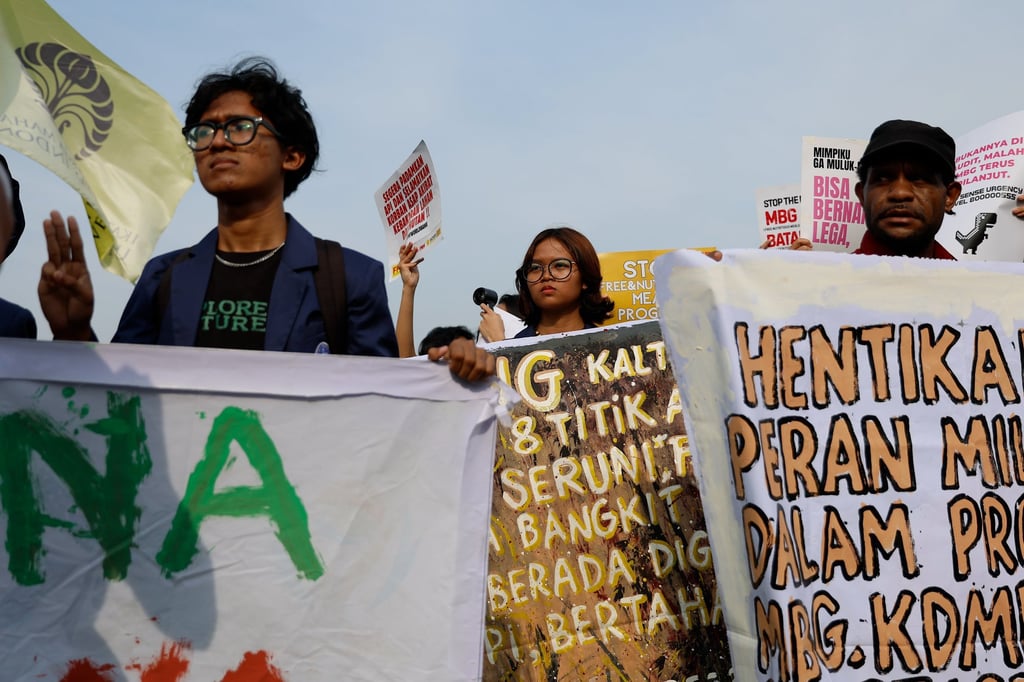
In the face of those challenges, analysts say Prabowo has oscillated between reactive damage control and stubborn resolve.
Rather than fundamentally rethink his agenda, he has made adjustments, such as slashing the budget for the free meals programme but refusing to abandon it, and repeatedly reshuffling his cabinet. His government has also sent confusing signals abroad, approving foreign firefighting help to battle the haze before subsequently putting the offers on hold.
While ruling party allies defend his adjustments as “dynamic moves” to protect fiscal stability, observers argue they merely paper over the deeper structural flaws of his administration.
The question now is whether Prabowo can genuinely change course or whether the setbacks of his second year will define the rest of his term.
Prabowo himself remains publicly defiant. Brushing off economic pessimism at a nickel-processing project launch on October 8, he pointed to robust state-backed investments as proof that his administration was succeeding.
“Every month, they predict that we will collapse. But today, I have come here and I see a bright future for Indonesia,” he declared.
Fraying mandate
At the heart of the public mood shift is the troubled roll-out of the signature welfare schemes that once anchored Prabowo’s popularity. The SMRC survey showed that 61 per cent of citizens familiar with the free meals initiative were unhappy with its execution, while 71 per cent doubted the village cooperatives plan would succeed.
Saidiman Ahmad, a researcher and programme manager at SMRC, said the poll exposed a broad defection of supporters across all demographic groups, pinpointing mismanagement of the president’s flagship initiatives as the main cause of public censure.
Both the free meals initiative and village cooperatives plan “were significant factors”, Saidiman said.
Those missteps are glaring to voters like Lugas Limojoyo, 31, a resident of Purwokerto in Central Java who backed Prabowo in 2024 among the three presidential tickets.
Lugas, a former hotel chef, described the free meals programme and the cooperatives as Prabowo’s “main red flags”.
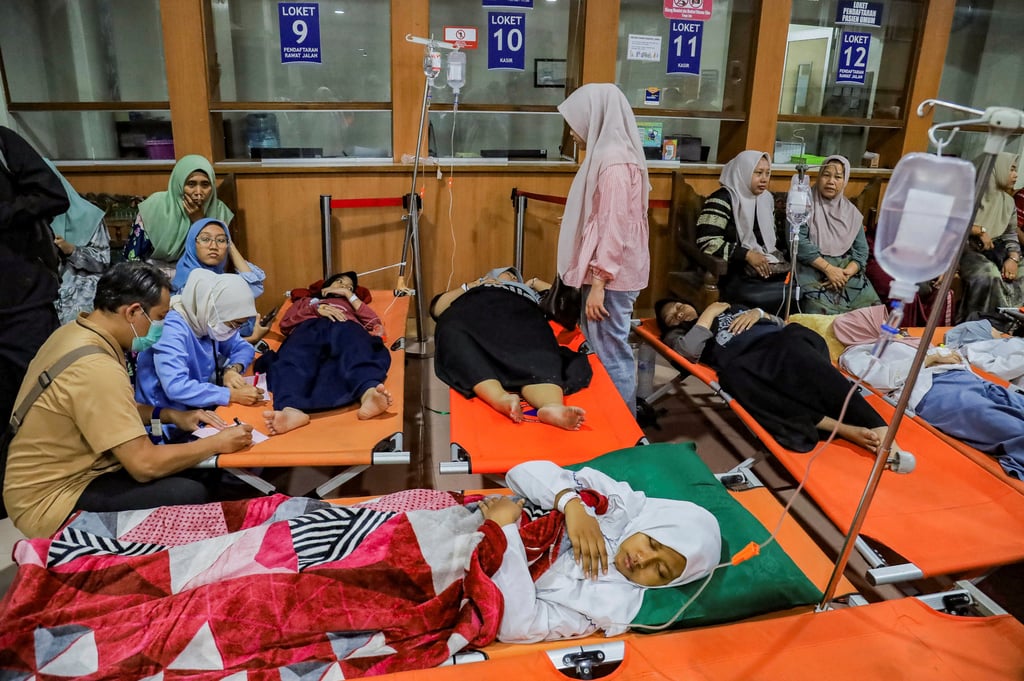
Pointing to recurring mass food-poisoning cases, he noted a lack of basic food safety protocols – an observation echoed by Indonesia’s food and drug agency, which has repeatedly cited poor sanitation and untrained staff as the primary causes behind thousands of students falling ill.
Lugas saw a similar lack of coordination in the village cooperatives initiative, noting that many state-funded warehouses “have already been built but aren’t operational, sitting there like empty husks”. Reuters has also reported concerns from analysts about the scheme’s top-down approach, the commercial viability of some locations and whether the cooperatives can respond to local needs.
Still, the programmes retain pockets of support. Anissa Fadhilah, a 29-year-old greengrocer in Surabaya, said she remained satisfied with Prabowo’s performance and would vote for him again in 2029 after her daughter received school meals and her business landed supply commissions from the scheme.
“I think [the free meals initiative] has the desired effect of lifting ordinary people economically, so I’m for it,” Anissa said.
Officials also defended the administration’s two-year track record.
Jasmine Herawan, a spokeswoman for Indonesia’s Government Communications Agency, said the administration had expanded the social safety net, with its free meals programme reaching 57 million recipients, while nearly 1.5 million people had been lifted out of extreme poverty within a year.
She also cited gains in food security, saying Indonesia produced 34.71 million tonnes of rice in 2025 without importing any that year.
On the extractive sector, Jasmine said: “We’ve also affirmed our mineral sovereignty by setting up a single-door export system for our key commodities.” The system is intended to give the government greater oversight of mineral exports and make it harder for companies to understate the value of what they sell overseas, potentially depriving the state of tax revenue.
00:47
Indonesian stocks see sharpest one-day drop since 1998 after proposed MSCI downgrade
Market reckoning
Costly spending commitments, however, have raised broader concerns about fiscal sustainability. Earlier this year, the government cut 67 trillion rupiah from the free meals programme before imposing further spending curbs across ministries in the final quarter to help keep the budget deficit within its legal ceiling of 3 per cent of GDP.
But fiscal tightening did little to reassure investors. On October 16, index provider MSCI warned that Indonesia could be downgraded from “emerging” to “stand-alone” market status over concerns about opaque corporate ownership and trading manipulation, triggering a bruising sell-off in Indonesian assets. The Jakarta Composite Index plunged 11.6 per cent and the rupiah fell to 18,050 per US dollar.
Despite emergency regulatory fines against market manipulators and bourse officials pledging swift governance reforms during a meeting with MSCI on Monday, the benchmark index hit a six-year low this week, as investors continued to digest the warning and the risk of billions of dollars in passive capital outflows.
Siwage Dharma Negara, co-coordinator of the Indonesia Studies programme at Singapore’s ISEAS – Yusof Ishak Institute, said regional investors continued to view Prabowo’s economic policy as unpredictable.
“He will not give up his populist programmes, like the free meals and rural cooperatives, but it is not clear what the economic benefit for the country will be,” Siwage said.
Siwage noted that the recent fiscal correction was too small to satisfy investors, many of whom viewed the free meals as a waste of state resources that should be redirected towards education, health or struggling regional governments.
“Prabowo fundamentally does not trust anyone else to advise him on economic direction,” Siwage said, warning that such moves were creating a poor investment climate. “If we want to restore market confidence, the most urgent fix is reducing this state intervention in the economy.”
Inside Prabowo’s ruling Gerindra party, lawmakers reject assertions that the administration’s economic agenda is faltering. Gerindra spokesman Sugiat Santoso dismissed Celios’ two-year study as “over the top” and “deliberately dramatised” to create mass panic.
Defending the village cooperatives as a path to financial independence for disadvantaged communities and the free meals as an ongoing investment in future generations, Sugiat added, “The president is definitely not here to please analysts, but to bring about real changes for the welfare of the people.”
Musical chairs
Unwilling to abandon his core populist pledges, Prabowo has instead turned to frequent personnel changes to tighten his grip on the bureaucracy – reshuffling his cabinet or installing new officials three times in the first two weeks of October alone, bringing his total number of cabinet shake-ups to eight in two years.
Arya Fernandes, head of politics and social change at the Centre for Strategic and International Studies Indonesia, said these shake-ups stemmed from the president’s underlying political vulnerability – specifically Gerindra’s lack of parliamentary dominance and the lingering influence of his predecessor, Joko Widodo.
This has forced Prabowo to consolidate power by accommodating a wide political spectrum, Arya noted. But the high cost of maintaining that stability – through an oversized cabinet and increased military budgets – has driven up fiscal pressure and forced the central government to slash local funding.
“In sum, Prabowo has secured elite support and lost mass support,” he said.
Yoes C. Kenawas, a researcher at Lembaga Survei Indonesia, said this dynamic reflected a leader whose authoritarian instincts make him insecure about elite loyalty.
“He remains deeply paranoid about elite betrayal and being backstabbed by coalition partners,” Yoes said. “Even with an 80 per cent parliamentary majority, he does not feel secure.”
Siwage said swapping out officials would not solve the administration’s deeper flaws: “We have seen many cabinet reshuffles so far, and he will likely continue shuffling officials, thinking a new person will fix the problem. But the real issue is that the entire system of governance is currently ineffective at implementing sound economic policy.”
Fanning flames
Nowhere has that administrative strain spilled beyond Indonesia’s borders more visibly than in the transboundary haze crisis.
Since August, severe forest and peatland fires across Sumatra and Kalimantan have sent thick smoke across the region, forcing school closures in Malaysia, prompting diplomatic protests and leading Singapore’s prime minister to warn of action against errant companies.
Siwage linked the resurgence of the fires directly to Prabowo’s domestic fiscal squeeze, which he said left local governments “without enough operational funds to fight the fires”.
For months, Jakarta resisted regional offers of firefighting help, while public remarks by officials only inflamed tensions – most notably when the newly appointed communications agency head suggested neighbours should remember Indonesia’s forests “send oxygen” when there is no haze.
Rifki Dermawan, an international relations lecturer at Universitas Andalas in West Sumatra, says the episode highlights a stark contrast: while Prabowo frequently travels globally, “Asean does not seem to be a priority”.
Pointing to the president’s failure to apologise or engage with regional counterparts over the pollution, Rifki said it suggested the bloc “might not be among Prabowo’s interests”. He attributed Jakarta’s reluctance to accept outside help to Prabowo’s suspicion of foreign involvement and repeated rhetoric blaming “foreign agents”.
A diplomatic thaw seemingly arrived on October 15 when Foreign Minister Arrmanatha Nasir announced Prabowo had approved regional firefighting help. But the administration later abruptly backtracked when security chief Dudung Abdurachman put the offers on hold, declaring Indonesia was “still capable” of managing the blazes.
Prabowo then railed against “countries that like to insult” his nation over the wildfires, amid growing public anger and calls for Indonesia to be treated as an “outcast” in the region.
“Indonesia is a polite and patient nation. Our country is often insulted, but believe me, our nation does not want to be insulted all the time,” Prabowo said on Wednesday.
Prabowo also told his cabinet on Wednesday that MSCI was trying to “scare us”, adding that Indonesia was “not afraid” and would not buckle, Reuters reported.
Despite plunging approval ratings, a market sell-off and diplomatic fires, Yoes warned Prabowo might not feel compelled to change course because the pain of his second-year slump had not hit his immediate political centre.
“The crisis is fragmented,” Yoes said. “The toxic haze chokes Sumatra and Kalimantan, but it does not blanket Jakarta or Java.”
Because the distress was clustered outside the capital, it looked manageable on paper, he added, “but underneath the surface, this is a crisis in the making”.
Defiance or adaptation
Analysts say moving beyond short-term diplomatic firefighting to rebuild his popular mandate and calm financial markets over the remaining three years of his term could depend on Prabowo’s willingness to look outside his inner circle.
So far, however, the president has framed mounting resistance not as a symptom of policy missteps but as a manufactured campaign by entrenched elites bankrolling paid protesters and online influencers – known locally as “buzzers”.
“We have no doubts. Even if they have hundreds of trillions of rupiah, they pay buzzers, they pay for algorithms, they attack us on social media, and they finance demonstrations, we are not afraid. We stand with the people, we are ready to die for the people,” Prabowo said during a fiery speech on October 6.
That defiant posture worries observers who believe Prabowo must adapt his approach to meet the challenges he is facing.
SMRC’s Saidiman argued that reversing the polling slide would require structural reform – starting with shrinking the cabinet, pulling back from the ongoing militarisation of the civilian sphere and conducting a “radical review of the administration’s costly yet ineffective populist programmes”.
“The president needs to step up and enact fundamental changes to how he governs the nation,” Saidiman said, adding Prabowo “should let opposition forces fulfil their function as a democracy should”.
Siwage warned that without an effective parliamentary opposition to check the president’s instincts, financial market tremors could eventually spiral into a wider political reckoning.
“Prabowo currently controls most of the government coalition and the parliament. With essentially no opposition, why would he change course when nobody dares to oppose his policies?” he said.
Outside Jakarta’s corridors of power, voters who helped put Prabowo in the presidential palace say he still has a window to turn things around – if he starts listening to ordinary Indonesians.
In Central Java, Lugas urged the president to break out of his palace echo chamber.
“My suggestion for Prabowo is to cross-check the reports he gets from those closest to him, because obviously he is only being fed information on the good things,” he said.
And in Bekasi, despite feeling let down by rising living costs, Ika said she was not ready to give up on Prabowo’s presidency just yet.
“Maybe these are growing pains for us,” she said. “I’m still optimistic about Prabowo’s leadership and I pray he won’t prove me wrong.”
KioskNews shows a cleaned-up reading view extracted from the publisher’s page — the original always lives on their site, not ours.