Argentina's inflation rate slowed to 14-month low in August
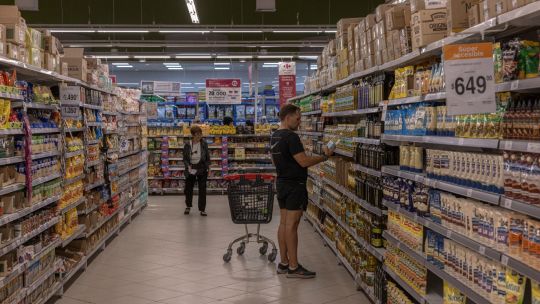
Argentina's inflation rate slowed to 1.7 percent in August, the INDEC national statistics bureau reported on Thursday.
The bureau’s Consumer Price Index (CPI) now shows that prices are up 33.5 percent over the past 12 months and by 21.3 percent so far in 2026.
As expected, the August figure was below the 2.1 percent recorded in July, returning inflation to the downward trajectory the government had hoped to see in the second half of the year.
Core inflation came in at 1.8 percent, with increases linked to housing, rents and other services, said INDEC.
Regulated prices rose 2.2 percent, driven primarily by increases in electricity, gas, public transport and private healthcare costs.
Seasonal prices, meanwhile, fell 0.9 percent, as lower prices for holiday packages and clothing offset increases in vegetables, tubers and pulses, as well as fruit.
Housing, water, electricity, gas and other fuels recorded the largest monthly increase, rising 2.8 percent, followed by education, which increased 2.5 percent.
Recreation and culture recorded no monthly variation, while clothing and footwear was the only category to register a decline, falling 0.6 percent.
Food and non-alcoholic beverages had the greatest impact on the monthly inflation figure across Argentina's regions, driven by increases in vegetables, tubers and pulses, fruit, and bread and cereals.
President Javier Milei will hope the news delivers a breath of fresh air to his popularity after a testing few weeks in the polls, following weeks of headlines over household indebtedness and industrial decline.
A positive sign had emerged Tuesday when the statistics institute of the Buenos Aires City government posted a monthly rate of 1.7 percent – a sharp slowdown from the 2.9 percent recorded in July and the same as the national rate.
Private consultancy firms and economists had generally forecast a rate for August of between 1.5 percent and 1.9 percent, with few predicting a rate of over two percent.
The Central Bank’s REM market expectations survey, in which nearly 40 analysts participate, produced an average read of 1.7 percent.
President Milei previously promised that Argentina’s monthly inflation rate would start with “a zero” by August 2026. Even the most optimistic projections suggest such levels will not be reached until well into 2027, though price hikes are now slowing at a consistent level, if not rapidly.
Since taking office in December 2023, Milei has implemented fierce austerity measures that have eliminated the country’s chronic fiscal deficit and succeeded in bringing triple-digit inflation down to around 30 percent annually within two years.
The government has significantly cut public spending, closed tens of state agencies, enforced tens of thousands of redundancies and overseen a sharp decline in the purchasing power of wages and pensions.
Industry plummets
Additional INDEC data this week highlighted the challenges facing Argentina’s industrial sector, underlining the uneven nature of the country’s economic recovery.
Manufacturing output fell 4.9 percent year-on-year in July and was down five percent compared with June, according to the statistics bureau. The monthly decline was the sharpest recorded so far this year.
Industrial production was down 2.6 percent overall in the first seven months of 2026, with only March and June registering year-on-year growth.
The downturn was widespread, with 12 of the 16 manufacturing divisions tracked by INDEC posting declines. The steepest falls were recorded in other equipment, apparatus and instruments, down 31.4 percent year-on-year; machinery and equipment, which fell 26.7 percent; and clothing, leather and footwear, down 15.9 percent.
KioskNews shows a cleaned-up reading view extracted from the publisher’s page — the original always lives on their site, not ours.