Welsh researchers solve 400-year-old combination lock recovered from Ann Francis’ shipwreck
The Ann Francis sunk in December 1583 after being blown off course while returning home to Norfolk from Spain. She wrecked on Margam Beach, near Port Talbot in South West Wales.
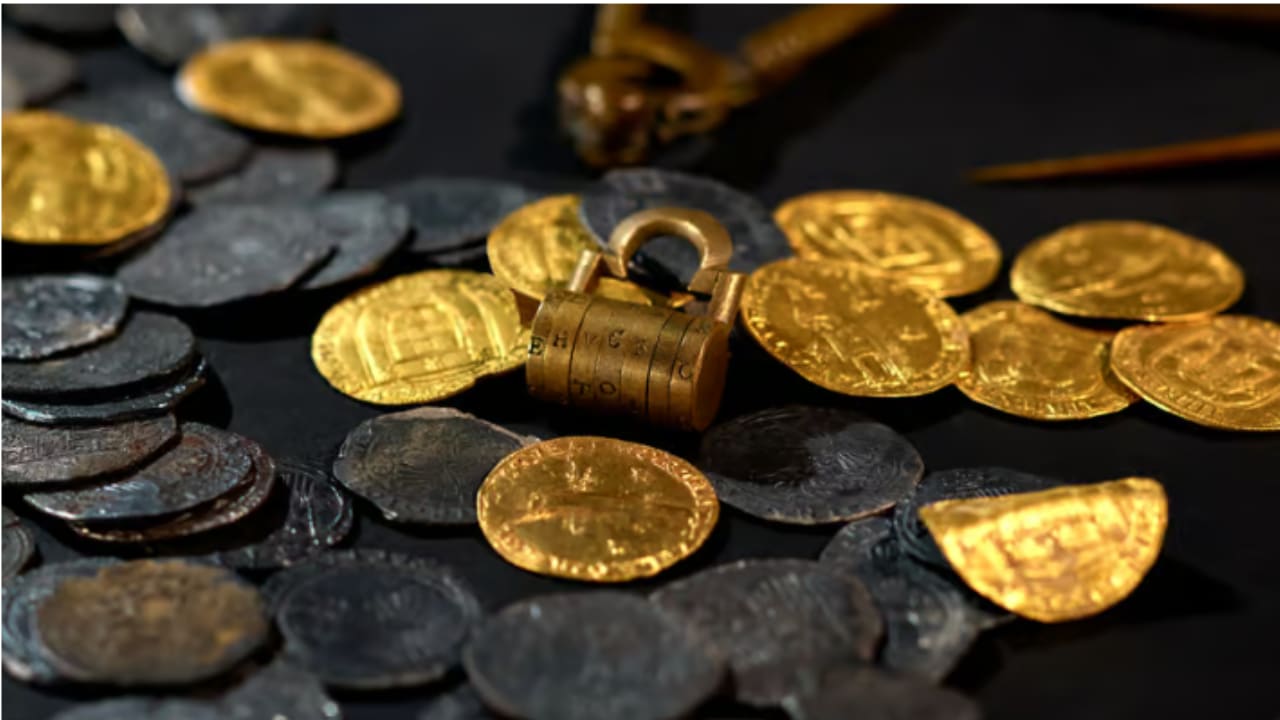
A 16th century combination lock recovered from the Ann Francis in Wales was unlocked using CT scanning technology by experts from Amgueddfa Cymru – Museum Wales and Cardiff University.
The university announced the development in a statement earlier this week.
The Ann Francis sunk in December 1583 after being blown off course while returning home to Norfolk from Spain. She wrecked on Margam Beach, near Port Talbot in South West Wales.
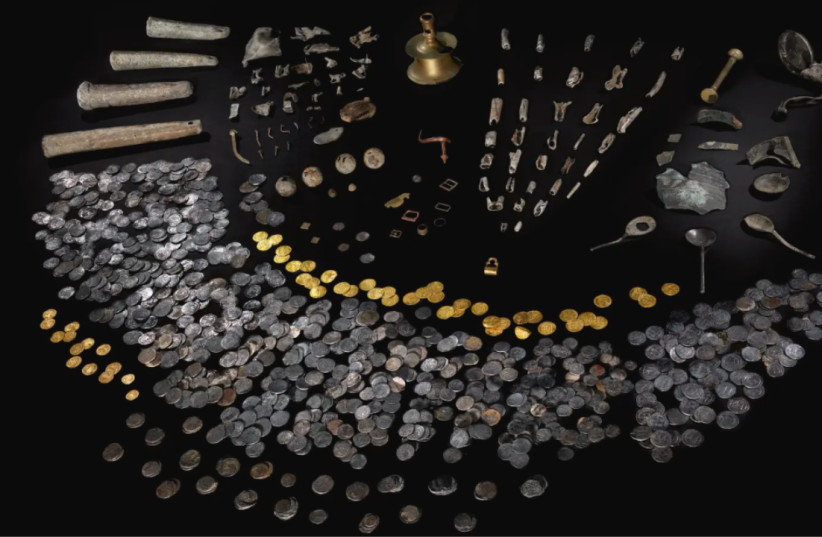
The majority of the ship's hoard, made up of some 870 gold and silver coins, as well as personal belongings, ship’s equipment, and cooking, eating and drinking utensils, was discovered by metal detectorist Peter Hughes over a period of 21 years between 1996 and 2017.
The hoard, all dating to the late-15th to 16th century, was later acquired by Amgueddfa Cymru, and has been on public display at the National Waterfront Museum in Swansea since July.
“When I found the lock I was immediately astonished by the incredible workmanship and its astonishing condition,” said Hughes. “When I moved the ring dials of the combination they turned with ease after over 400 years beneath the sands and I was left in disbelief. I also remember being left excited at the prospect of finding wonderful things from the treasure chest it once locked.”
Among the finds on display are several historical gold coins dating to the reign of Ferdinand and Isabella of Spain, the Ann Francis’s boatswain’s whistle, and the recently-cracked combination lock.
How to crack a 400-year-old lock?
Working alongside Cardiff University specialists, members of Amgueddfa Cymru’s team used CT technology to examine the lock’s internal mechanisms to correctly identify the letter combination needed - ANCE - and unlock the artifact.
“Micro-CT scanning allowed us to look inside the lock without damaging it,” explained Dr. David Williams, a research associate at Cardiff University’s School of Engineering’s Musculoskeletal Biomechanics Research Facility. “By creating a detailed 3D image of the internal mechanism, I could see how the notches lined up with the letters and identify the exact combination.”
“We normally use this technology to study bones and other biological structures, so investigating a 400-year-old padlock was certainly a first for us. I had to wait until later that evening for the museum team to test the combination, so getting the message that we'd cracked it was incredibly satisfying.”
“It's not every day you get to solve a 400-year-old mystery!” Williams added.
What did the lock seal?
The lock may have once secured a small chest that holding items of significant value, such as coins or documents that have not survived in the centuries since the wreck.
It was found near a collection of Spanish silver coins and coin weights, which researchers believe lends credence to the theory.
Though combination locks from the Elizabethan period are known in Britain, the one from Ann Francis is in “exceptionally good condition,” noted Alastair Willis, Amgueddfa Cymru’s senior curator for numismatics and the Welsh economy.
Its condition and association with the Ann Francis makes it a unique discovery “and the code a tantalising mystery to solve,” Willis said. “Of course, now we’ve solved it, we are left wondering if the code meant something to its owner.”
Tides of Treasure, the exhibit where the Ann Francis’s treasures are displayed, will be open to the public at the National Waterfront Museum, Swansea until September 2027.
KioskNews shows a cleaned-up reading view extracted from the publisher’s page — the original always lives on their site, not ours.