LOCAL ELECTIONS 2026: Malema blames GNU cooperation for EFF losing support to the DA
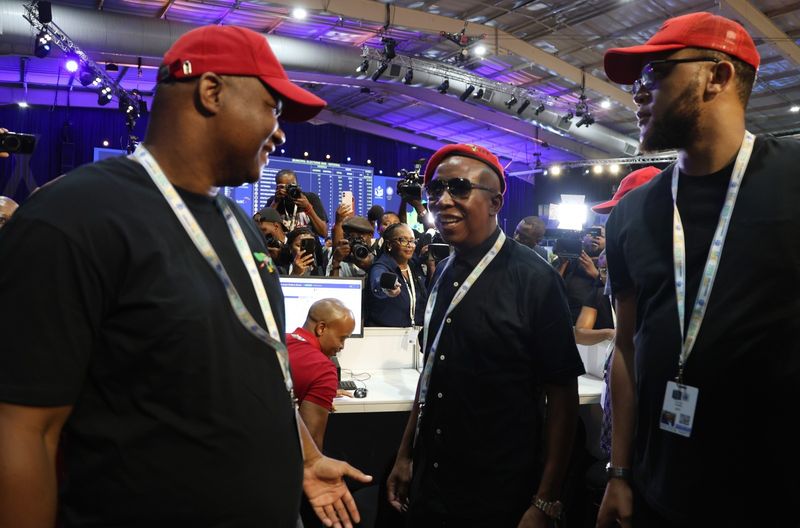
EFF leader Julius Malema has rejected suggestions that the Democratic Alliance (DA) took votes from his party, arguing that voters who shifted their support to the DA did so because of the ANC’s decision to work with its former political opponents in the national government.
“There is no DA that stole votes. Our people voted for DA. DA did not steal any votes from the EFF,” Malema said.
He argued that the ANC’s decision to enter into a government of national unity with the DA after the 2024 national and provincial elections had influenced how voters viewed the two parties.

“Our people decided to go in bed with the enemy because the ANC said to them in 2024, it is nice to sleep with the enemy,” he said.
Malema said voters had questioned why they should not support the DA at the ballot box when the ANC itself was willing to work with the party and give it positions in government.
He also criticised DA Joburg mayoral candidate Helen Zille, accusing her of becoming increasingly boastful and warning that the EFF would not be intimidated during coalition negotiations.
“If some will be arrogant, we’re going to fold our arms, and Helen will take it,” he said, suggesting the party was prepared to take a hard line in negotiations.
Malema also warned that communities in Soweto could face consequences under a DA-led administration, referring to concerns about municipal services and residents’ struggles with poverty.
Malema acknowledged the party’s decline in national support, saying it would not make excuses for its performance in the 2026 local government elections.
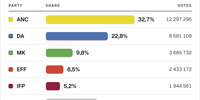
The party received 1.8 million votes, or 6.26% of the national vote, compared with 2.4 million votes, or 10.31%, in 2021. Malema said this represented a loss of 612,326 votes and saw the party move from third to fourth place nationally.
“That is the setback we must confront honestly,” he said.
However, Malema argued that the national picture did not tell the full story, pointing to the party’s performance in wards and municipalities.
He said the EFF had increased the number of wards it won from 19 in 2021 to 37 in the latest election, with 30 of those being new wards and seven retained from the previous election.
The party’s strongest ward-level growth was in North West, where it increased its tally from three to 10 wards. In Mpumalanga, where it had no ward victories in 2021, it secured seven wards.
In the Free State, Malema said the party increased its tally from two to four wards, while in the Eastern Cape it went from no ward victories to two. It also increased its representation in Gauteng and KwaZulu-Natal from one ward to two in each province.
Malema said the party had, for the first time, secured ward councillors in metropolitan municipalities, winning two wards in the City of Johannesburg and one each in Buffalo City and Mangaung.
He also highlighted the EFF’s performance in Polokwane, where it retained the four wards it had won in 2021 and added another.
The party’s support had also increased in 48 municipalities, which include the Northern Cape, Nelson Mandela Bay, Umsobomvu, Bela-Bela, Setsoto, Maquassi Hills and Thaba Chweu, compared with the previous local government elections, he said.
Malema added that the results showed the EFF remained capable of rebuilding its support despite the national decline.
“All of the above paints a picture of a national organisation capable of reorganising itself and recovering its votes,” he said. DM
KioskNews shows a cleaned-up reading view extracted from the publisher’s page — the original always lives on their site, not ours.