What do Sydneysiders in your area, and age group, earn?
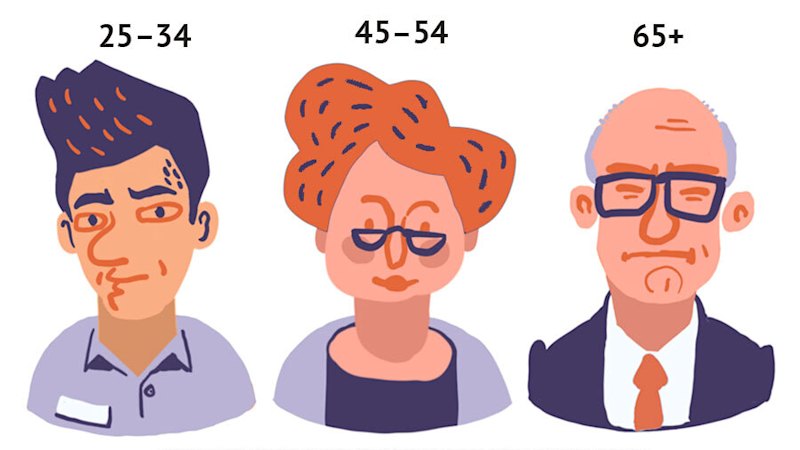
For workers in Sydney, it pays to be a bloke aged between 45 and 54.
Men in that age group have the city’s highest median income at $102,309 a year, a little more than males aged 35 to 44 at $99,906. The median is the middle value of all incomes so it includes full-time and part-time workers.
Womens’ income in Sydney also peaks between 45 and 54 years, at a median of $74,860 – about 27 per cent lower than for men in the same age group.
Analysis of official income data by this masthead reveals how earnings vary by age and sex across the city. You can search the median income for your age group and suburb here:
Across Greater Sydney, the median annual income was $62,180. For men, the median was $70,343 and for women it was $55,209.
Sydney’s highest annual median income was in the Leichhardt district, which includes Balmain, Rozelle and Annandale, at $88,888 per year. The North Sydney-Mosman area was next highest on $87,559.
The lowest median income was in the Fairfield district at $48,502 a year.
Men in Sydney had higher median incomes than women in every age cohort and every district.
The analysis shows male earnings rise sharply from the mid-30s, but for women, the increase at that stage of life is much more subdued. A key reason for this difference is a higher share of part-time work among women.
Rae Cooper, professor of gender, work and employment relations at the University of Sydney, said women shoulder much more unpaid domestic work during “the prime working years” in the 30s and 40s when family care is most intense.
“This can constrain their participation, working hours and career choices, contributing to a ‘motherhood penalty’ in pay,” she said.
“A gender income gap that persists and widens through working life leads to the gender wealth gap, affecting women’s economic security not only today but across their entire lifetime and into retirement.”
Women also tend to work in sectors with lower wages than industries favoured by men, which contributes to the gender income gap.
In the Leichhardt district, women aged 45 to 54 had a median income of $121,019, which was the highest for any female age bracket in any locality. The Marrickville-Sydenham-Petersham area had the smallest median income gap between all men and women at 7.6 per cent.
The highest median income for any age bracket and sex was males aged 45 to 54 in the Manly district, which includes Balgowlah and Seaforth, at $198,291 (that’s 34 per cent more than the median for women aged 45 to 54 in the area of $148,369).
Men aged 45 to 54 had the highest median incomes across most of Greater Sydney; in the Manly, Ku-ring-gai and North Sydney-Mosman districts, median earnings for males aged 45 to 54 were more than 20 per cent higher than for males in the 35 to 44 age bracket.
But that pattern switches in a band of suburbs across Sydney’s west and south-west, where men aged 35 to 44 had the highest median incomes.
KPMG urban economist Terry Rawnsley said these trends reflected the high share of trades workers who live in that region of Sydney.
“This is a tradie story,” he said.
“When you look at your builders, electricians, carpenters and plumbers, their income profile by age is a bit flatter than the average – they tend to get to a higher level of income in that 35 to 44 age range, then it trails off a bit for many after that age. Health is one reason because those trades’ jobs can be physically demanding.”
Demographer Matthew Deacon, of Demographic Solutions, said many people aged 35 to 44 who had moved into Sydney’s western suburbs had higher income levels and better job prospects than older, existing residents who were more likely to be working in declining industries such as manufacturing.
The local area income analysis also draws attention to broader inequalities across Greater Sydney: median incomes in the city’s best paid districts were about 80 per cent higher than in areas with the lowest median earnings.
Separate Australian Bureau of Statistics data shows Sydney is Australia’s most unequal capital city for income: the top 1 per cent of earners received 12.1 per cent of the city’s income in 2022-23.
Some Sydney districts adjacent to each other have stark income differences. The median income in Canada Bay ($71,098) was 44 per cent higher than the neighbouring Auburn region ($49,043), while in the Parramatta district, the median income was 30 per cent higher than nearby Merrylands-Guilford ($49,043).
The analysis draws on ABS personal income data for local area statistical districts (called Statistical Area Level 3); it does not include assets owned by individuals, such as housing and shares. Also, it doesn’t distinguish between part-time and full-time workers, which is one factor in the gap between men and women, since women are more likely to work part-time than men.
The data covers 2022-23, the most recent year for which it is available. It covers only individual pre-tax income.
Start the day with a summary of the day’s most important and interesting stories, analysis and insights. Sign up for our Morning Edition newsletter.


KioskNews shows a cleaned-up reading view extracted from the publisher’s page — the original always lives on their site, not ours.