Sara Duterte wealth case: The argument for examining Mans Carpio’s finances
Already have Rappler+?
to listen to groundbreaking journalism.
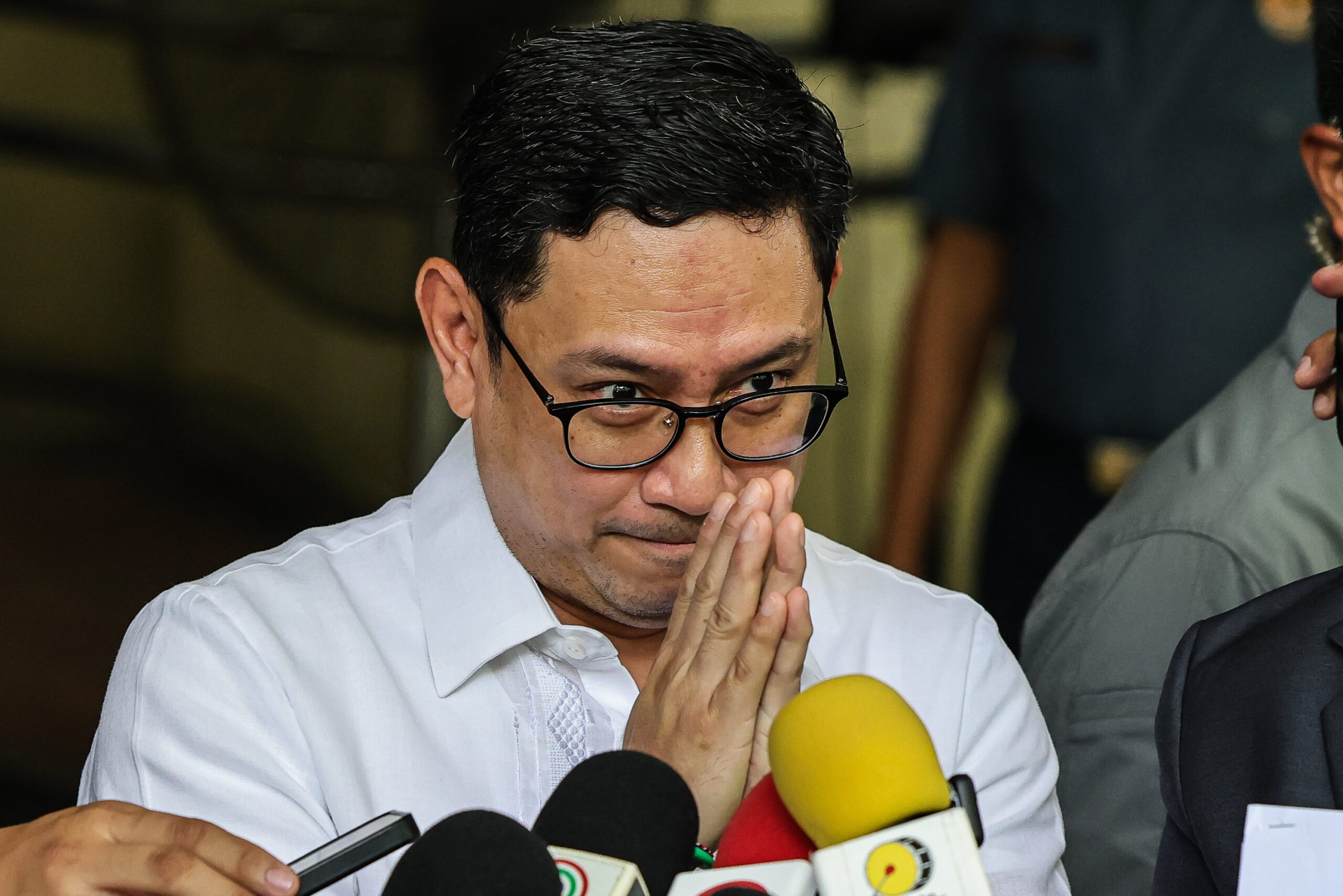
COMPLAINT. Atty. Manases Carpio, husband of Vice President Sara Duterte, arrives at the Quezon City Prosecutor’s Office along with his legal counsel, to file a criminal complaint against BSP Governor Eli Remolona Jr., AMLC Executive Director Ronel Buenaventura, and members of the House Committee on Justice over alleged violations of banking privacy and data protection laws, on April 27, 2026.
Jire Carreon/Rappler
The Anti-Graft and Corrupt Practices Act says properties in the name of the spouse of a public official may be considered when determining their unexplained wealth
AT A GLANCE
- Prosecutor Chel Diokno questioned the inclusion of properties owned by individuals related to government officials in investigations, referencing the Anti-Graft and Corrupt Practices Act.
- Former Sandiganbayan presiding justice Amparo Cabotaje-Tang explained that financial records of a public official's spouse can be scrutinized to prevent evasion from investigation into illegally acquired properties.
This is AI-generated. Read the article for full context. Report any errors.
It doesn’t take a genius to understand where prosecutor Chel Diokno was going when he asked former Sandiganbayan presiding justice Amparo Cabotaje-Tang what the law says about property owned by people other than the government official being investigated.
“Under Section 8 of RA 3019 (Anti-Graft and Corrupt Practices Act), the properties in the name of other persons, and even the spouse and the children, may be considered in determining whether the official has acquired properties,” Tang said during the 24th day of the trial of Vice President Sara Duterte on Monday, September 14.
Diokno was trying to establish the need to look into the financial records not only of the Vice President, but also those of her husband Mans Carpio.
It’s been a months-long effort by the House that already placed certain lawmakers in a legal battle outside the impeachment court, with Carpio suing House justice committee officials for disclosing his private financial records in April.
That is why the public knew that the Vice President, according to the Anti-Money Laundering Council (AMLC), had P6.7 billion in large and suspicious bank transaction records in the past two decades — because the number includes P2.9 billion in funds that flowed through Carpio’s own bank accounts.

Carpio’s legal counsel had cited various laws that were supposedly violated when the House hearing released the AMLC report, including the Anti-Money Laundering Act, the Bank Secrecy Law, and the Data Privacy Act.
Quezon City prosecutors recently junked Carpio’s complaint, but only for lack of jurisdiction.
Jurisprudence
Tang also cited Philippines v Rabusa, a 2022 Supreme Court case involving a forfeiture proceeding filed by the government to recover alleged ill-gotten wealth by a military officer and his family.
In that ruling, the Court asserted that the inquiry should understandably extend to the spouse and dependents of AFP officer Rabusa.
“Such pervasiveness of the inquiry is clearly warranted, if only to prevent persons in government who
illegally acquire property from evading investigation by simply placing property in the possession of or in the name of other persons,” the decision reads.
The same resolution cited the 1990 Supreme Court ruling, Mellon Bank, N.A. v. Magsino, which emphasized that looking into the whereabouts of illegally acquired funds requires examining bank records “in the name of persons other than the one responsible for the illegal acquisition.”
SALN disclosure
Diokno’s direct examination also prompted Tang to explain that public officials’ SALN should include assets and business interests of their spouses.
Tang provided one exception, supported by the the 2019 Supreme Court ruling, Abid-Babano v Executive Secretary.
“If the spouses had a complete separation of property before the marriage, then the property of the spouse need not to be included in the official’s SALN,” Tang said.
Diokno quipped that a prenuptial agreement or a judicial separation of properties during marriage could therefore allow public officials to exclude their spouse’s assets from their SALNs.
But who is liable if the spouse does not make the declaration in the public official’s SALN?
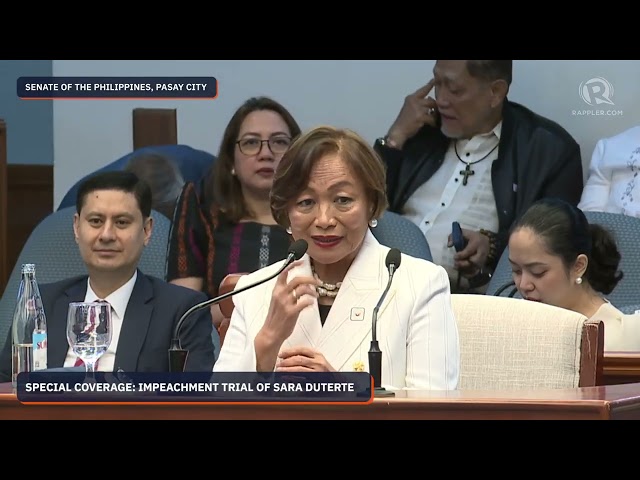
“Only the public official,” Tang said. “It’s only the government official who is required to file a SALN, and that public official is required to include the assets of her spouse.”
If a public official is proven to have acquired unexplained wealth during his or her term in office, he or she can be dismissed from office, based on RA 3019. – Rappler.com
KioskNews shows a cleaned-up reading view extracted from the publisher’s page — the original always lives on their site, not ours.