Navratri 2026: Start and End Date, Navratri Colours With Calendar, Significance and Importance
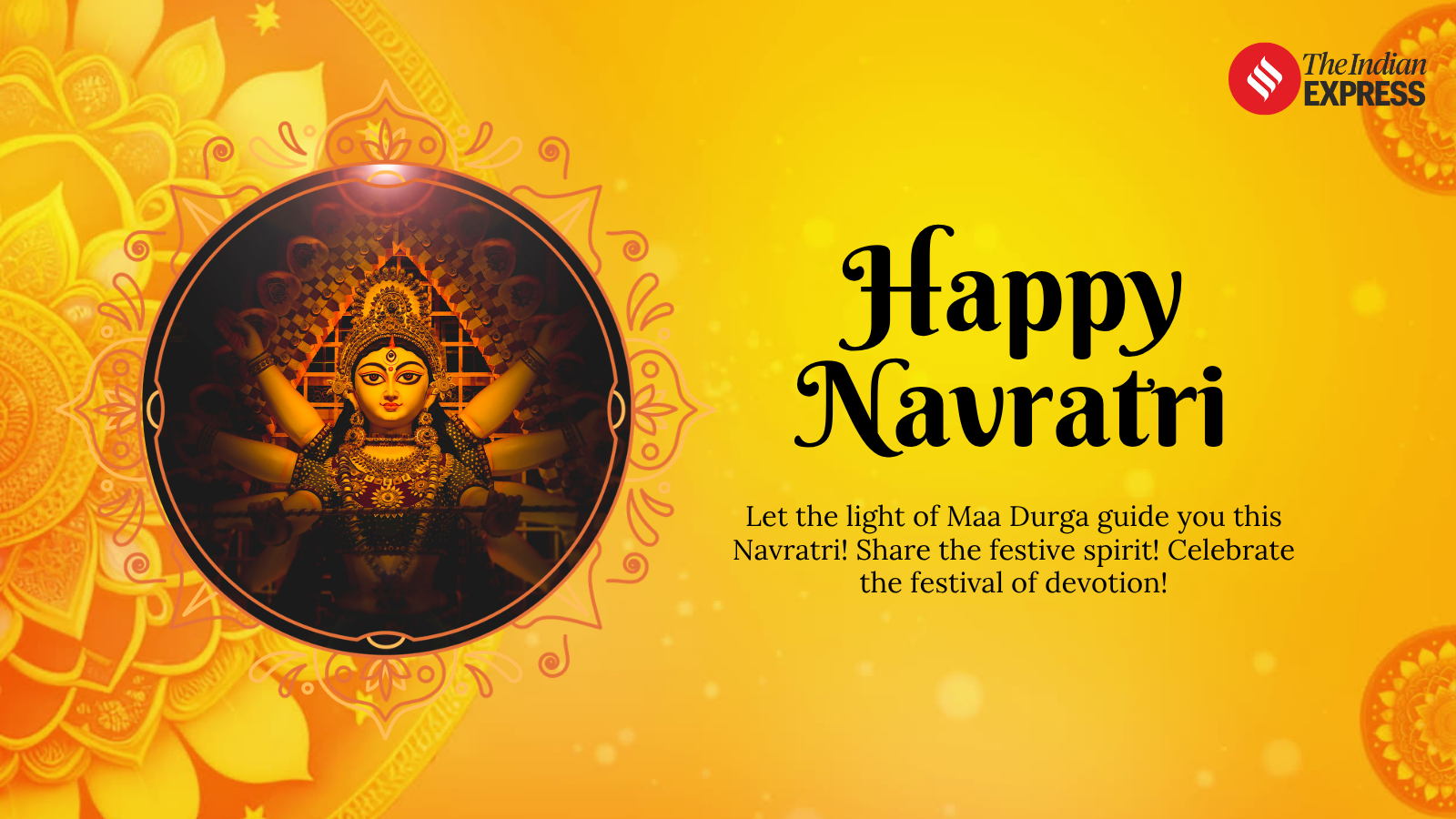
The festival of Navratri, which spreads over 9 nights and 10 days, is one of the most revered festivals in Hinduism and celebrated during the autumn season.
Sharad Navratri 2026: The term “Navratri” or “Navaratri” is a combination of two distinct words—”nava,” which stands for nine, and “ratri,” which signifies night. When brought together, the name literally translates to nine nights. Spanning nine consecutive nights and ten days, Navratri ranks among the most sacred and widely observed festivals in the Hindu tradition, typically taking place during the autumn months.
At its core, the celebration emphasizes devotion to Goddess Durga, also revered as Shakti, the embodiment of universal cosmic power honouring her through her nine distinct manifestations. While four different Navaratris are observed across India over the course of the year (specifically Chaitra Navratri, Paush Navratri, Magha Navratri, and Sharad Navratri), it is Maha Navratri, also known as Sharad Navratri, that is held as the most sacred and significant of them all.
According to the Hindu calendar, the festival is celebrated in the month of Ashvin, which typically falls in September and October as per the Gregorian calendar. This year, Navratri will be observed from October 11 to October 20, 2026, and the 10th and last day will be celebrated as Dussehra.
Importance and Significance of Navratri
Regarding the significance of Navratri, it shares the fundamental theme central to all major Indian festivals, the ultimate triumph of good over evil though the underlying legends and mythologies vary significantly. Across India’s diverse regions, the festival manifests in unique ways; eastern and northeastern states observe these dates as Durga Puja, whereas communities across the northern and western regions celebrate the nine-night festival to commemorate Lord Rama’s victory over the demon king Ravana.
According to tradition, Goddess Durga engaged in a fierce battle against the demon Mahishasura, ultimately emerging victorious over him. The festival is observed to honor and worship the Goddess in celebration of this triumph of divine light over darkness. The festivities officially commence on Mahalaya, the first day of the festival, which is dedicated to invoking and remembering Goddess Durga while signifying the conclusion of Pitru Paksha, the sacred fortnight of Shradhh honored by ancestors.
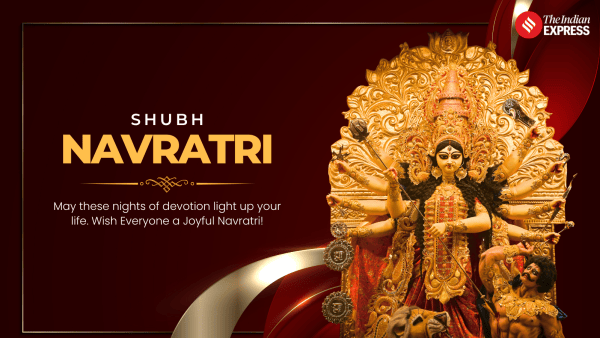 May the divine blessings of Maa Durga bring new hope, happiness and abundance into your life. Wishing you a very Happy Navratri.
On the sixth day of the festival, Goddess Durga is formally welcomed into family homes and elaborate public pandals. These festive observances stretch across the subsequent days until the tenth day, known as Vijayadashami, when the deity’s idol is immersed in a body of water. Throughout this period, communities gather to go pandal-hopping, partake in sanctified feast meals called bhog, and distribute food to those in need—an act that celebrates and honors the spirit of goodwill in everyone.
Across Northern India, the nine-day occasion centers on commemorating Lord Rama’s historic triumph over the demon king Ravana. Over the course of nine nights, theatrical stage plays known as Ramlila perform dramatic adaptations of the ancient Hindu epic Ramayana. On the tenth and concluding day, which depicts Lord Rama slaying Ravana with a bow and arrow, the celebrations culminate in the ceremonial burning of massive effigies representing Ravana alongside his brothers, Meghnad and Kumbhakaran. Observers throughout the region dress in traditional attire, keep ritual fasts, and gather for group prayers.
Story continues below this ad
Intricate stage decorations, storytelling recitals, dramatic reenactments of ancient legends, scripture chanting, devotional prayers, and vibrant folk dances like dandiya and garba are performed to embody the energetic spirit of the festivities. Friends and families unite to explore pandals and participate in local gatherings. On the ultimate day, the festivities conclude either with the immersion of the Goddess’s idol in water—as practiced during Durga Puja—or through the dramatic burning of effigies during Dussehra.
Navratri colours according to calendar
| Navratri Day | Date | Tithi | Goddess | Colour of the day |
| 1 | 11th October, 2026 | Pratipada | Shailputri | Orange |
| 2 | 12th October, 2026 | Dwitiya | Brahmacharini | White |
| 3 | 13th October, 2026 | Tritiya | Chandraghanta | Red |
| 4 | 14th October, 2026 | Chaturthi | Kushmanda | Royal Blue |
| 5 | 15th October, 2026 | Panchami | Skandamata | Yellow |
| 6 | 16th October, 2026 | Shashthi | Katyayani | Green |
| 7 | 17th October, 2026 | Saptami | Kalaratri | Grey |
| 8 | 18th October, 2026 | Ashtami | Mahagauri | Purple |
| 9 | 19th October, 2026 | Navmi | Siddhidatri | Peacock Green |
| 10 | 20th October, 2026 | Dsshmi | Vijayadashmi | – |
KioskNews shows a cleaned-up reading view extracted from the publisher’s page — the original always lives on their site, not ours.