ASX mixed in early trade as BHP, CSL rally, big four banks decline
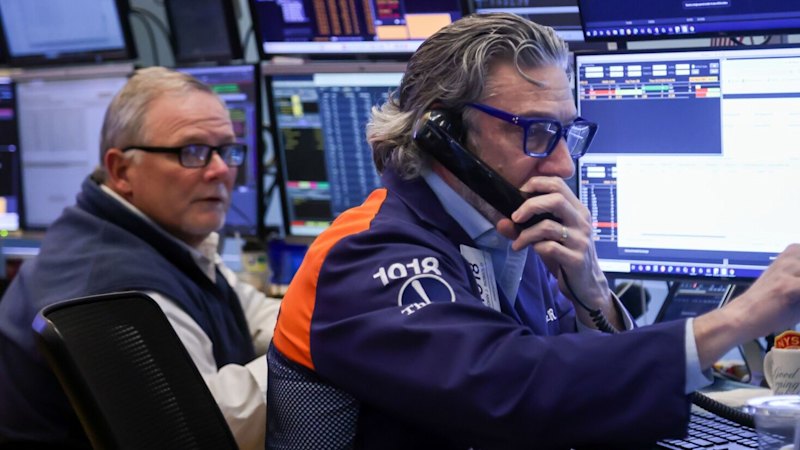
The Australian sharemarket is expected to fall at the open after US stocks edged further from their record heights overnight as elevated oil prices stoked inflation concerns and hopes faded for a deal to end the Iran war. Investor focus will be on market giants like BHP and CSL, which reported earnings this morning.
ASX futures pointed to a fall of 36 points, or 0.4 per cent, at the open. The ASX lost 0.5 per cent on Monday. The Australian dollar was stronger at US71.03¢.
On Wall Street overnight, the S&P 500 fell 0.5 per cent but remains near its all-time high set Thursday. The Dow Jones Industrial Average dropped 0.5 per cent, and the Nasdaq composite slipped 0.3 per cent. Wall Street’s losses solidified in the afternoon when oil prices accelerated upward. The price for a barrel of Brent crude, the international standard, rose 2.7 per cent to $US90.87.
It’s been careening back and forth because of uncertainty about what the war with Iran will do to the global flow of crude. Last month alone, Brent zigzagged between $US72 and US102 as hopes rose and fell that the United States and Iran could reach a deal that would allow oil tankers to freely exit the Persian Gulf again.
BHP, the world’s biggest mining company, said before the start of trading that a copper bonanza is fuelling a jump in revenue and profits as the red metal’s price hits record highs and shortages of concentrates and other feedstocks in China crimp output from its smelters.
The resources giant reported a 9 per cent lift in full-year profit to $US9.8 billion ($13.8 billion) as revenues jumped 15 per cent to $US58.8 billion.
Meanwhile, Australia’s biggest health-care company CSL posted a net loss of $US2.6 billion ($3.7 billion) due to restructuring costs and impairments. Revenue rose 1.5 per cent from a year earlier to $15.8 billion, beating the $15.4 billion analyst estimate. The blood giant forecast no revenue growth and underlying net profit growth of about 5 per cent at constant currency for fiscal 2027, signalling another subdued year as it pushes ahead with a sweeping restructuring.
The results were consistent with CSL’s May update and included $800 million of one-time pretax restructuring costs and $7.1 billion of pretax impairments, the company said.
Wall Street has run to records in large part because profits are booming for US companies. Those in the S&P 500 index are on track to deliver growth of roughly 50 per cent for earnings per share in the spring from a year earlier, according to FactSet. That’s much better than analysts expected and would be the best since five years ago, when the economy was erupting out of the chasm created by the COVID pandemic.
Nearly all the companies in the S&P 500 have turned in their profit reports for the spring. Still to come are big retailers, including reports this week from Home Depot, Target and Walmart.
They’re facing pressure. Their customers’ incomes may be turning iffier after US employers surprisingly cut more jobs last month than they added. At the same time, their customers are continuing to see bills rise quickly as inflation remains much higher than anyone would like.
A report last week said that shoppers surprisingly spent less at US retailers last month than in June, and CEOs for retailers could give colour this week on what they’re seeing.
In the meantime, the wait continues for what the war with Iran will do with oil prices. The price for a barrel of Brent crude rose 2.4 per cent to $US90.62 on Monday, and the losses for stocks solidified in the afternoon as the gains for oil prices accelerated.
Brent zigzagged between $US72 and $US102 last month as hopes rose and fell that the United States and Iran could reach a deal that would allow oil tankers to freely exit the Persian Gulf again.
In the bond market, Treasury yields ticked higher following their own big recent moves. The yield on the 10-year Treasury rose to 4.72 per cent from 4.68 per cent late on Friday following a report showing stronger-than-expected growth in manufacturing in New York state.
The 10-year yield has shot up from 3.97 per cent before the war with Iran, largely because higher oil prices raised the pressure on inflation and upped the probability that the Federal Reserve will have to hike interest rates.
Higher rates could keep a lid on inflation, but they do so by intentionally slowing the economy and making it more expensive for everyone to borrow money. The average long-term US mortgage rate has already jumped near its highest level in a year because of the rise in the 10-year Treasury yield.
Reports last week, though, showed that inflation last month was not as bad as earlier in the summer. That raised hopes that the Fed could wait until later in the year before having to decide whether to raise its main interest rate.
Usually around this time of year, anticipation is building on Wall Street to hear from the head of the Federal Reserve about where interest rates may be heading. But the Fed’s new chairman, Kevin Warsh, may give little insight at this year’s economic symposium in Jackson Hole, Wyoming, at the end of this month, according to Thierry Wizman, a strategist at Macquarie Group.
Warsh has been adamant about giving Wall Street less guidance about the Fed’s plans for interest rates.
On Wall Street, trading was relatively quiet.
L3Harris Technologies fell 4.6 per cent after the defence company said Christopher Kubasik stepped down as its CEO and chairman following “certain conduct by Kubasik that was not consistent with the values of the Company.” It gave few details but said the conduct was not related to its financial reporting, controls, customer relationships or operational performance.
Alphabet dipped 0.6 per cent even though Berkshire Hathaway said it increased its investment in Google’s parent company, along with several homebuilders. Berkshire built a reputation for buying stocks at affordable prices under its former CEO, famed investor Warren Buffett.
Constellation Brands fell 6.2 per cent after Berkshire said it sold all its holdings in the seller of Modelo beer and Robert Mondavi wine.
In other international markets, indexes dipped in Europe following a stronger finish in Asia.
Tokyo’s Nikkei 225 rose 0.7 per cent after a report said Japan’s economy grew at a slower pace in the April-June quarter than economists expected. Indexes jumped 1.3 per cent in Hong Kong and 1.4 per cent in Shanghai for some of the world’s biggest moves.
with AP and Bloomberg
The Market Recap newsletter is a wrap of the day’s trading. Get it each weekday afternoon.
KioskNews shows a cleaned-up reading view extracted from the publisher’s page — the original always lives on their site, not ours.