Unseen Harry Houdini writing published on 100th anniversary of his death
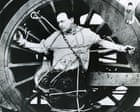
Unseen writing by Harry Houdini, the world’s most renowned escapologist and illusionist, is being published in the US on Saturday, the 100th anniversary of his death.
As well as being famous for his magic acts and quest to expose fake mediums and spiritualists before he died in 1926 at the age of 52, Houdini, whose real name was Eric Weisz, was a prolific author, with more than two dozen books, short stories and plays to his name.
One of them, an article titled An Interesting Scrapbook, was never published, and appears for the first time in print Saturday in Strand magazine, a literary publication that specializes in presenting lost or hidden works by prominent writers and historical figures.
It is a detailed look at some of the performers who shaped the early days of magic as a stage production, and inspired the path of Houdini, a Hungarian immigrant to the US as a child, into the best-known, and one of the most creative and popular entertainers of his day in Europe and America.
It features images of numerous theater bills from an era of growing public fascination with the supernatural blended with an increasing appetite for unusual or fanciful acts. Houdini explores advertised performances including “necromantic miracles”, “magical delusions”, and “the greatest living wizard”.
“What makes the article remarkable is it reveals a side of Houdini that has largely been overshadowed by his extraordinary fame as an escape artist,” said Andrew Gulli, Strand’s editor-in-chief.
“Here we have Houdini the historian, painstakingly documenting forgotten magicians, theatrical performers, old playbills, and the remarkable world of 19th-century entertainment.
“There’s something rather poignant about the world’s most famous magician devoting so much attention to entertainers whose names have largely disappeared from history.”
The article was preserved among many of the artist’s other papers in the Houdini Library at the Harry Ransom Center at the University of Texas at Austin, where a curated tour will mark the anniversary of his death on Saturday.
Houdini experts at the University of Michigan, and the online fan site Wild About Harry, told Gulli they believed it has never previously been in the public domain.
“[Finding] a published version of An Interesting Scrapbook turned out to be as elusive as the man himself, which raises an interesting mystery of why,” he said.
“Houdini was an accomplished author and an extraordinarily effective self-publicist. He was also fiercely competitive and protective of his professional knowledge. Could he have deliberately withheld this material because he feared rival magicians might benefit from his research? Or was it simply a project he never completed?
“We don’t know the answer, but the question itself adds another dimension to the discovery.”
Houdini was known to despise spiritualism being presented as anything other than entertainment, and dedicated increasing time in the years before his death from peritonitis debunking performers he called “charlatans” for claiming to be mind readers, or possess supernatural powers.
Several commemorations are planned globally on Saturday to mark the anniversary, including a gala and public events in Budapest, where he was born in 1874; and a séance at his former home in New York.
KioskNews shows a cleaned-up reading view extracted from the publisher’s page — the original always lives on their site, not ours.