IN CHARTS: Literacy of Filipino students in Grades 1 to 3
Already have Rappler+?
to listen to groundbreaking journalism.
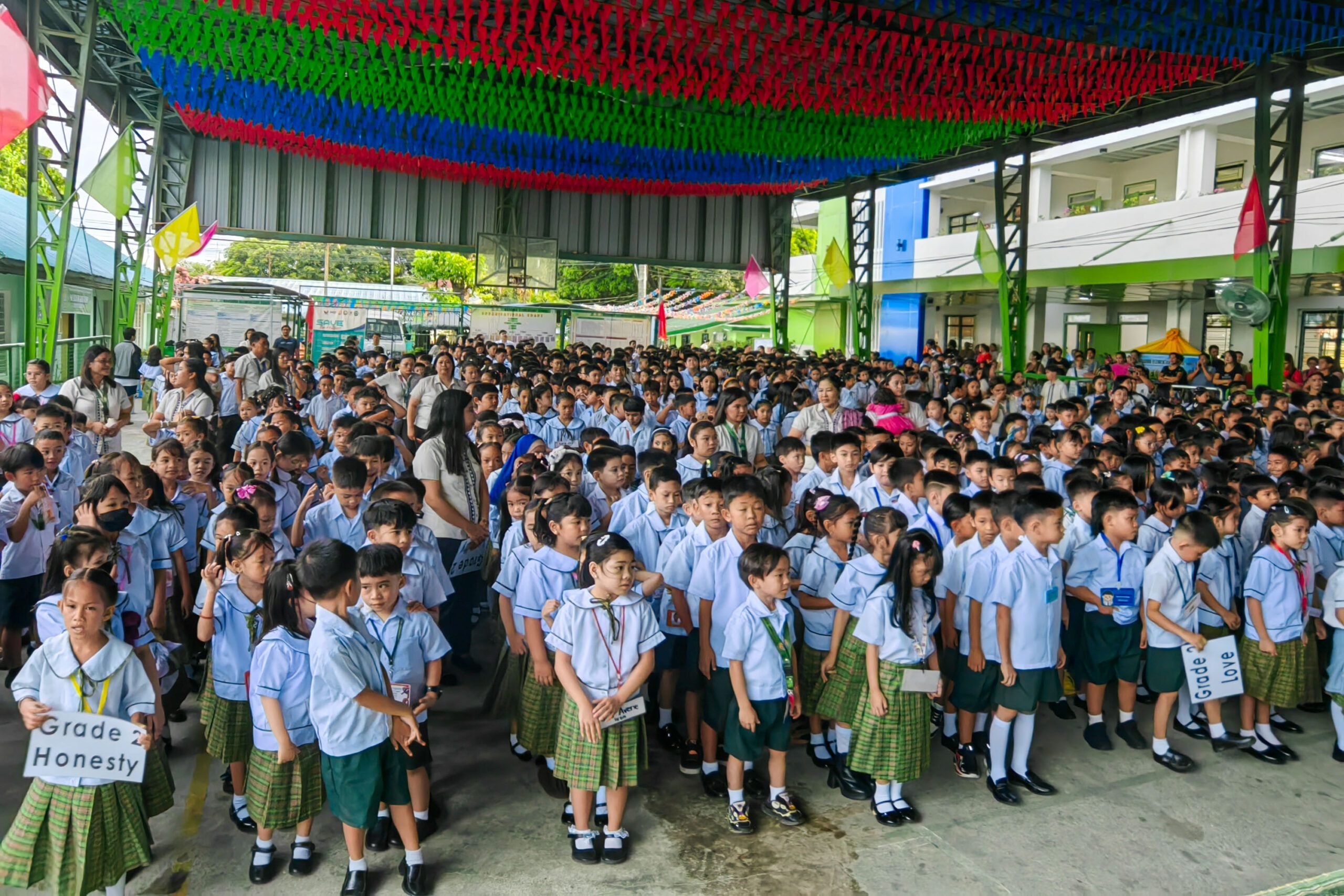
FIRST DAY. Students of Navarro Elementary School in General Trias City, Cavite, attend the first day of classes on June 8, 2026.
Dennis Abrina/Rappler
Around half of all students in Grades 1 to 3 still did not have proficient reading skills by the end of SY 2025-2026, the Department of Education's assessment shows
AT A GLANCE
- The Philippines is facing a significant learning crisis, particularly in literacy among children.
- The Bangsamoro Autonomous Region in Muslim Mindanao has the highest percentage of struggling readers.
This is AI-generated. Read the article for full context. Report any errors.
MANILA, Philippines – The Philippines faces a daunting challenge to fix the decades-long learning crisis in the country, starting with literacy in children’s early years of schooling.
Rappler checked the Comprehensive Rapid Literacy Assessment (CRLA) results from the Department of Education (DepEd) for school year (SY) 2025-2026 to better understand the reading profiles of Key Stage 1 learners, or students in Grades 1 to 3. The data sets were accessed in early June.
Reflected in the data were literacy rates for mother tongue in Grade 1, Filipino in Grade 2, and English in Grade 3. Under the enhanced K to 10 curriculum, the DepEd offers English and Filipino starting Grade 2.
The DepEd’s curriculum standards also suggest that by the end of Grade 3, students are “becoming literate and increasingly fluent” in the use of English, while using their mother tongue to understand and express “familiar and developmentally appropriate texts” or discuss content in various learning areas.
Here are some data visualizations of the literacy of Grades 1 to 3 pupils in the Philippines:
How many struggling readers are there?
Struggling readers are students assessed to be in low reading profiles. In terms of CRLA results, these are pupils in Grades 1 to 3 who were classified as emerging, broken down into lower or higher emergent.
By the end of SY 2025-2026, there were around 519,000 students from Grades 1 to 3 who struggled with reading. That’s 10% of all assessed students in Key Stage 1.
But the CRLA results also revealed that around half of all students in Grades 1 to 3 still cannot read “at grade level” or at the standard expected for their current grade.
By 2028, the Philippines is targeting 75% of Key Stage 1 learners to be reading at grade level, according to the National Education Plan 2026-2035, which was introduced by the Second Congressional Commission on Education (EDCOM 2) in January. (READ: [ANALYSIS] What does ‘at least nearly proficient’ mean in Philippine education?)
Where are the struggling readers?
Among the regions, the Bangsamoro Autonomous Region in Muslim Mindanao (BARMM) has the highest percentage of struggling readers.
Focusing at the end of Key Stage 1, over 22% of Grade 3 pupils in BARMM remain at low proficiency in literacy.
In its January report, EDCOM 2 stressed that children should be literate by the end of Grade 3 so they do not fall behind in later stages of schooling.
Senior technical officials of BARMM and various national government agencies are already preparing for the first meeting of the newly formed Bangsamoro Education Coordination Forum (BECF).
The BECF, a coordinating mechanism between the national and Bangsamoro governments, will attempt to address issues in early childhood care and development, curriculum and learning, learner support, governance and finance, teacher education, and higher and technical-vocational education in the autonomous region.

You can also check the percentage of struggling Grade 3 readers per schools division office in the table below.
Did Key Stage 1 learners show improvement in reading?
There are improvements seen in the reading profiles of Grades 1 to 3 pupils, as data showed decreases in the share of struggling readers by the end of SY 2025-2026.
Still, half of the students remain below the proficient level.
That trend is seen throughout the Philippine basic education system.
In its analysis, EDCOM 2 found that while the results show “consistent improvement” within SY 2025-2026, around 18% or 3 million out of 16.5 million students remain in non-proficient reading levels. (READ: Most Grade 11 students struggle with reading. What now?)
The assessment was done after the first full year of implementation of the DepEd’s Academic Recovery and Accessible Learning (ARAL) Program.
The DepEd was given P8.9 billion for the initiative in 2026. However, for next year, the Department of Budget and Management did not include an allocation for the ARAL Program in the proposed budget.
The ball is with Congress as Education Secretary Sonny Angara appealed for an additional budget to fund the ARAL Program, as well as beef up various aspects of the sector.
Funding for basic education reached P1 trillion in 2026. Will the government push to at least keep the education budget at this level to address the country’s learning crisis? – Rappler.com
KioskNews shows a cleaned-up reading view extracted from the publisher’s page — the original always lives on their site, not ours.