Geopolitical Uncertainty Is Everywhere. Are India's Stock Markets Suffering More?
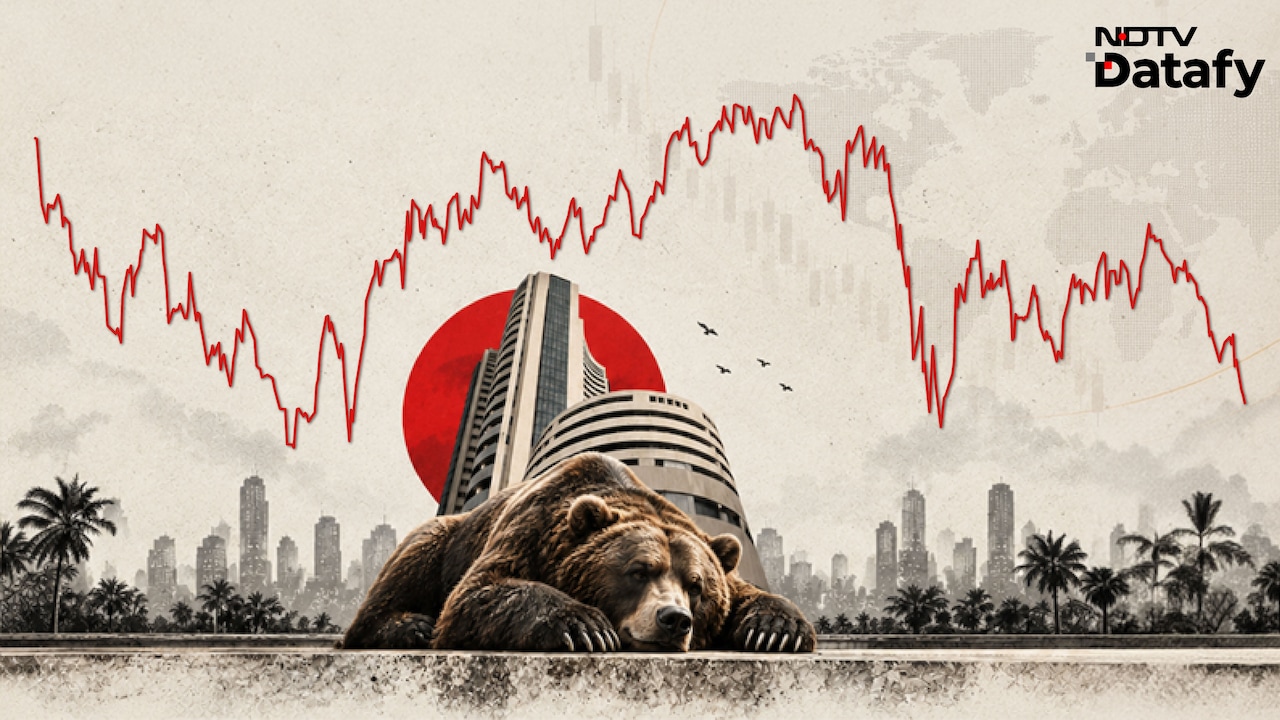
India's stock market is bleeding. Investor wealth has taken a hit, with the benchmark Nifty 50 down 8.7 per cent in only two months. While the triggers are largely geopolitical, a key question remains: why are Indian investors bearing a disproportionate share of the pain?
The Middle East conflict, fears of resurgent inflation, elevated global bond yields and sustained foreign portfolio investor (FPI) outflows have all weighed on equities. Yet, if the concerns are global, is India's underperformance also part of a broader global trend?
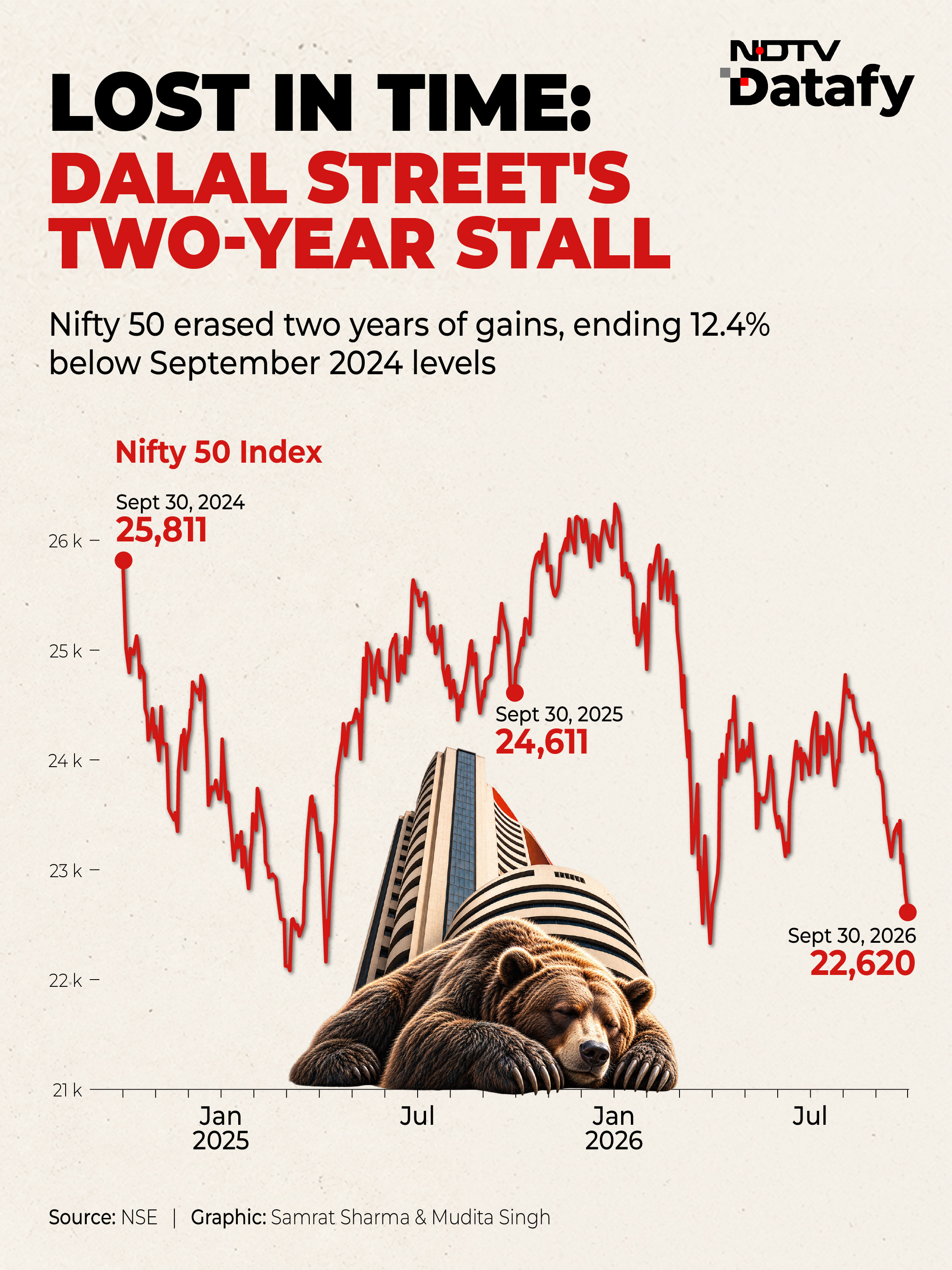
How much would an investment made in September 2024 be worth today?
Investors who put money into India's stock market in September 2024 would have seen their wealth shrink over the past two years.
The Nifty 50 stood at 25,810.9 on September 30, 2024. It slipped to 24,611.1 on September 30, 2025, and fell further to 22,620.5 on September 30, 2026.
In effect, an investment tracking the benchmark index two years ago would have lost 12.4 per cent of its value by now.
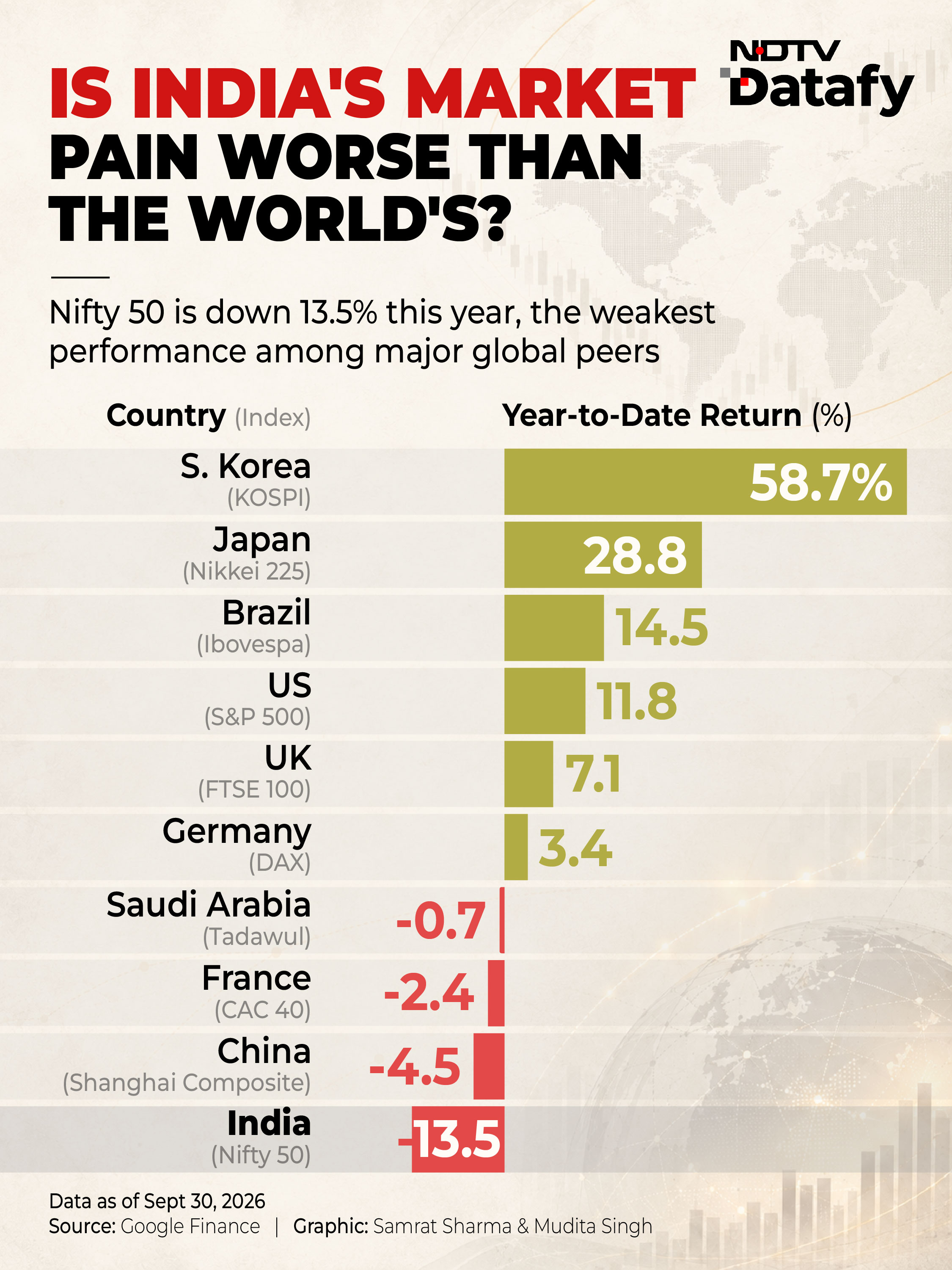
The concern is global, but the pain is local
The Middle East conflict has unsettled markets worldwide and kept uncertainty elevated. India's Nifty 50 has fallen 13.5 per cent since the start of 2026. However, several major markets have delivered positive returns over the same period. South Korea's KOSPI rose 58.7 per cent, Japan's Nikkei 225 climbed 28.8 per cent, Brazil's Ibovespa gained 14.5 per cent, and the US S&P 500 advanced 11.8 per cent. Among the major markets that have declined are Saudi Arabia, France and China, but their year-to-date losses were below 5 per cent.
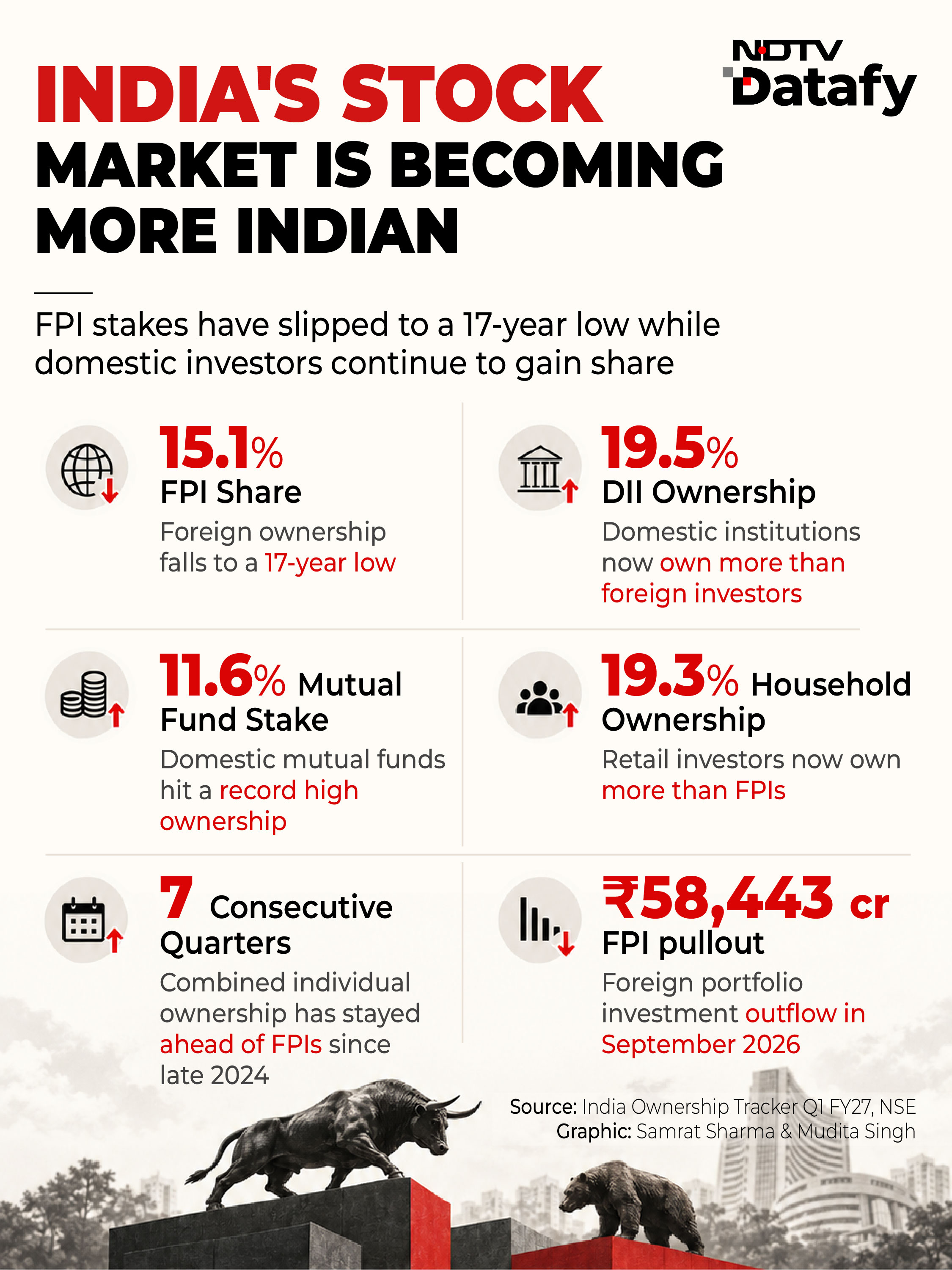
India's stock market is becoming more Indian as foreign ownership hits a 17-year low.
India's equity market is gradually becoming more domestically owned as the share of domestic institutional investors continues to rise while foreign ownership declines.
"Foreign portfolio investors' ownership compressed further amid record quarterly outflows of US$15.1 billion in Q1FY27 and rising domestic participation," according to the India Ownership Tracker FY27.
The report noted that FPI ownership in NSE-listed companies and the Nifty 500 fell to 17-year lows of 15.1 per cent and 16.2 per cent, respectively. In the Nifty 50, foreign ownership dropped to a 14.5-year low of 21.1 per cent.
While greater domestic participation makes the market less dependent on foreign capital, it also means that market downturns increasingly affect Indian households, mutual fund investors and retirement savers.
India's stock market is no longer as reliant on foreign investors as it once was, a structural shift that reflects the growing strength of domestic participation. But that changing ownership profile comes with a trade-off. As overseas investors step back and Indian investors take their place, a larger share of the gains stays at home during bull runs, but so does a larger share of the pain when markets stumble. The current correction is a reminder that even in a more 'Indian' market, global shocks can still hit close to home.
KioskNews shows a cleaned-up reading view extracted from the publisher’s page — the original always lives on their site, not ours.