At Climate Week, Elmo recalls a storm on Sesame Street: ‘Courage is when you still help others’
A generation of political leaders has failed to galvanize sufficient action on the climate crisis for so long now that it was perhaps little surprise that an audience in New York City turned to a three-and-a-half-year-old red furry monster for inspiration on Tuesday.
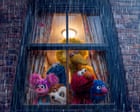
Elmo, the Sesame Street denizen, made a starry appearance at a Climate Week event that highlighted how the impacts of global heating affect children. The red creature, who frequently refers to himself in the third person, recounted to the audience his fear when a storm hit Sesame Street, an event depicted in a recent episode that featured the singer Post Malone.
“We all feel scared sometimes, but courage is when you feel scared but you still help others,” Elmo said at the event, which was named “Big Storms, Big Feelings”. “I tried to help others by giving lots of hugs and playing music on Elmo’s xylophone. When the storm passed Sesame Street didn’t look like Sesame Street, there was trash and branches all over the place.”
Elmo revealed that, much like a prepper, he had a “go bag” ready for the disaster and that the residents of Sesame Street banded together to help their neighborhood clean up after the storm. “Home is the people who make the place special,” he added. “So long as you’re with the people you love, you’ll be home. And that’s true in any weather.”
These sentiments were warmly received by the New York audience, who had clearly moved on from Elmo’s ambiguous support of the New York Knicks in last season’s NBA basketball playoff finals.
While media and political focus on the climate crisis has waned, despite a cavalcade of recent disasters, a Sesame Street executive at the event said the show is looking to find avenues for children to talk about the issue.
Kim Foulds, the vice-president of research and insight at Sesame Workshop, said a study was taken to “understand how children make sense of extreme weather and how their parents navigate those events across a global, diverse context”.
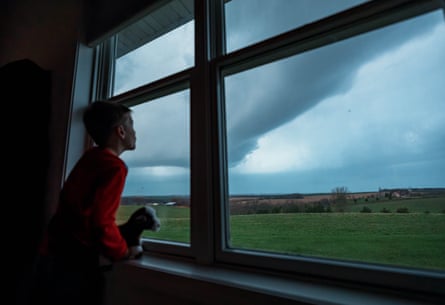
What the show heard back from parents was alarm over extreme weather events and accounts from children of severe heat, flooding and other disasters. This is affecting children around the world physically, she said, as well as upending their day-to-day lives.
“The biggest disruption that they’re causing to young children is how they disrupt their routines,” Foulds said. “So inability to go to school, lost time outside, and play with their friends, with their parents. And while there were some differences in the extreme weather events, we did hear across all geographies, they all experienced extreme heat in different ways.”
Experts at the event, including a climate scientist, a Unicef official and a young climate campaigner, all agreed that while parents often find it difficult to raise the climate crisis with their offspring, children are able to grasp the concept in surprising ways and can get involved in small-scale but direct actions such as planting trees.
“The most important thing to share, science actually shows, is that others care and there are solutions that work,” said Katharine Hayhoe, a climate scientist, on what to tell children.
“Those are the two most important things to share with anybody between the age of five and 95. Others care and there are solutions and kids get that faster than adults.”
KioskNews shows a cleaned-up reading view extracted from the publisher’s page — the original always lives on their site, not ours.