BULK SAVINGS: How one food stokvel helps 45 North West families fight hunger
/file/attachments/2996/1HungerSeriesLogo_334602.jpg)
Every month, Mapiti Seleka puts aside her R370 unemployment grant, knowing that when food prices rise again, she will not have to face this alone.
Along with 44 other households in Tsetse Village outside Mafikeng, she belongs to the Reabetswe Food Stokvel, a community savings group that helps families buy groceries in bulk, stretch limited incomes and put food on the table.
The 41-year-old mother of a six-year-old daughter is unemployed, but married, and says her family manages to buy just enough food and cover other essential expenses with her husband’s small income. She says the stokvel has changed more than how her family shops.
/file/attachments/orphans/61Stokvelgroup_107080.jpg "Stokvel group: Members of the Reabetswe Food Stokvel in Tsetse Village outside Mahikeng. (Photo: Supplied / Kedisaletse Molefe / Mapiti Seleka)")
“Now in December, we can also buy juice, biscuits and meat,” says Seleka.
“Before the stokvel, December was just pap and hope.”
Seleka says that in the past, she relied on her social grant and loans from mashonisas, or informal moneylenders, to help support her family. Three years ago, a conversation with her neighbours, Kedisaletse Molefe and Katlego Malgas, led to the creation of the stokvel.
“We were part of a food stokvel, and I wasn’t happy with the running of it. I felt robbed. Also, the food stokvel didn’t include toiletries and snacks,” says Seleka.
“Then, together with the two others, I started ours.”
What began in 2023 with three neighbours has grown into a structured stokvel with 45 members.
Members contribute R370 every month towards groceries, meat and snacks, allowing the group to buy food in bulk and stretch household budgets as food prices continue to rise.
Members say the food stokvel helps them feed their families special meals over the December holidays, keep leftover stock for January, when many cash-strapped South Africans struggle to afford food, and even stretch it for several months further.
Seleka says she is now also able to start each new year without the debt she previously incurred over the Christmas period to feed her family.
Stokvels’ part in SA’s informal economy
Stokvels, or rotating savings and credit schemes, are a major part of South Africa’s informal economy.
The National Stokvel Association of South Africa (Nasasa), estimates that there are more than 800,000 stokvel groups with about 11 million members in South Africa, moving more than R50-billion annually.
According to Nasasa, grocery and food-focused stokvel schemes are the most common, alongside burial societies.
The experience of the Reabetswe Food Stokvel members who spoke to Health-e News reflects findings from a recent University of Cape Town-led study of grocery stokvels in low-income communities in Cape Town.
Researchers found that pooling money allowed members to buy food in bulk at lower prices, stretch groceries over several months and ease financial pressure on households.
But researchers caution that cheaper food does not necessarily mean healthier food. In the 2026 study, most grocery stokvels prioritised affordability, quantity and shelf life over nutritional value.
Food stokvels allow for
bulk buys and discounts
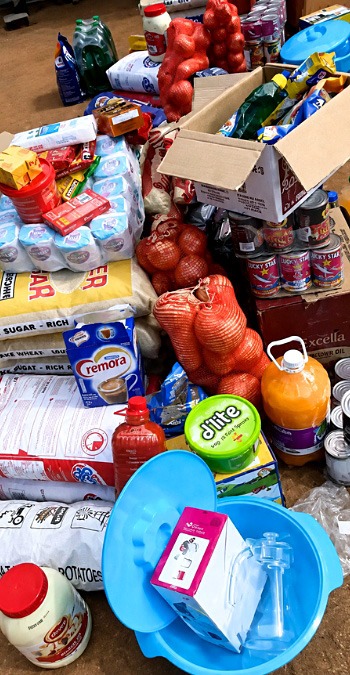
/file/attachments/orphans/62Stock1_185351.jpg "Members of the Reabetswe Food Stokvel buy bulk groceries from local supermarkets and wholesalers. (Photo: Supplied / Kedisaletse Molefe / Mapiti Seleka)")
Reabetswe Food Stokvel member Katlego Malgas says her membership has become about more than saving money.
“Every month we put in R370. R300 goes to groceries, R50 to toiletries and R20 for transport from the supermarket. Then in December, we share everything. No one has to borrow or panic.”
Pooling their money allows members to negotiate discounts with supermarkets and wholesalers.
“We source heavy essentials such as maize meal, meat produce, flour, cooking oil, rice, sugar and canned goods from Boxer Supermarket, TAG Cash & Carry, Shoprite and Checkout Supermarket,” says Malgas.
“We buy things you would never afford all at once if you were buying alone.”
/file/attachments/orphans/63Founders_624149.jpg "Reabetswe Food Stokvel co-founders, Mapiti Seleka (left) and Kediemetse Molefe. (Photo: Supplied / Kedisaletse Molefe / Mapiti Seleka)")
Co-founder Kedisaletse Molefe says buying together makes a significant difference.
“When we buy 10 bags of maize meal or five boxes of chicken together, the supermarket gives us a discount. Individually, you pay full price.”
She estimates members save between 15% and 20% compared with buying groceries individually.
For member Kegomoditswe Segwe, the stokvel helps families cope with rising food costs.
“If I save myself R370 each month, the total amount of food won’t even last for two months,” Segwe says.
“Prices go up every month. Chicken is expensive, oil is expensive. And then you still need to pay R50 for taxi plus delivery to town and back.”
Helping others in need
/file/attachments/orphans/64Meal_115144.jpg "A typical December meal enjoyed by Seleka and her family includes a variety of vegetables, fish with cheese sauce, couscous and salad. (Photo: Supplied / Kedisaletse Molefe / Mapiti Seleka)")
Seleka says the benefits extend beyond her own household and what they get to eat.
She also shares groceries with her older sister, Kedibone Ditibane, who cares for four children. Two of the children are unemployed, while the younger two receive child support grants.
“This initiative means a lot not only to me, but my immediate family as well,” says Seleka.
“I am able to help share food groceries with my sister and her four children.”
Members say the stokvel has also created a support network where neighbours encourage one another to keep saving and share ideas.
For Seleka, the biggest change is knowing her family can face rising food costs without falling into debt at the start of each year.
“It has changed our December. We are not just surviving the holidays. We are celebrating them. And we are not starting the New Year in debt.” DM
Read Part 1, Part 2, Part 3, Part 4, Part 5
First published by Health-e News in an eight-part series about food insecurity in South Africa.
KioskNews shows a cleaned-up reading view extracted from the publisher’s page — the original always lives on their site, not ours.