Why BPI asked AMLC to delete P2-B worth of transactions from Duterte-Carpio records
Already have Rappler+?
to listen to groundbreaking journalism.
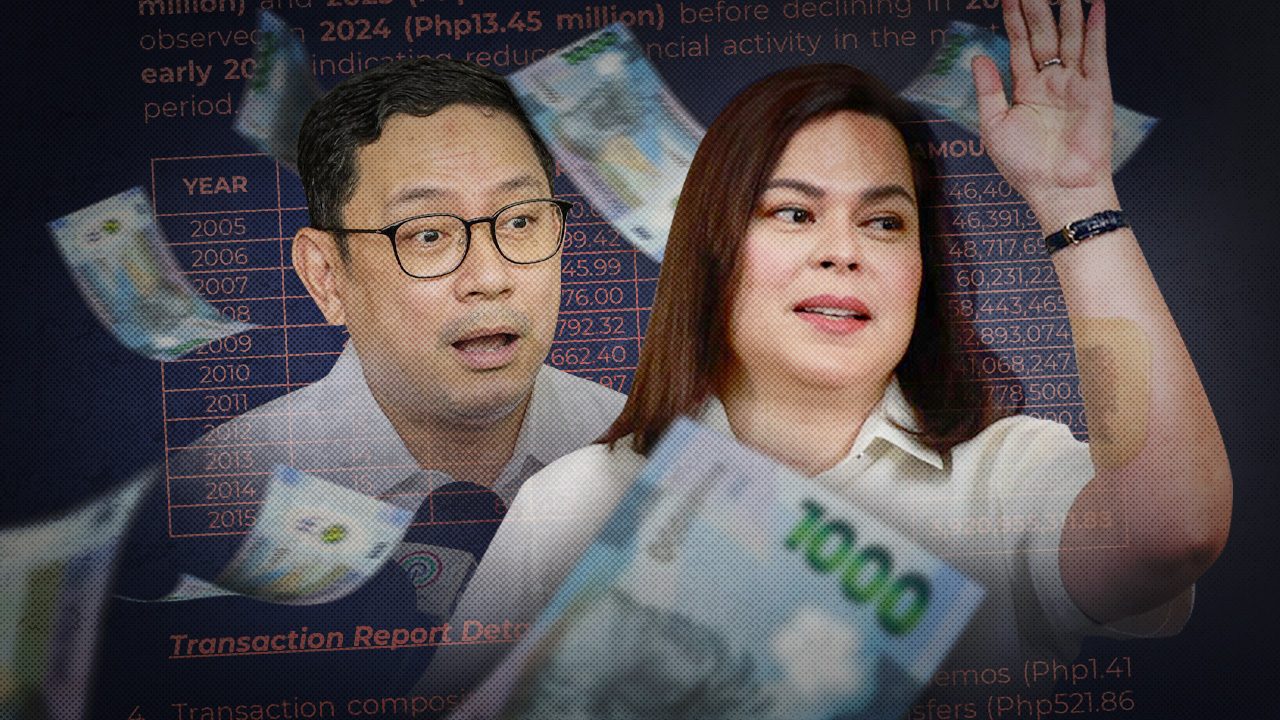
Graphics by David Castuciano/Rappler
A BPI system bug allegedly inflated transactions linked to Manases Carpio, Vice President Sara Duterte’s husband, to more than P2 billion, prompting the bank to ask the AMLC to delete 13 records
AT A GLANCE
- BPI requested the Anti-Money Laundering Council to delete 13 transaction reports linked to Vice President Sara Duterte's husband due to a system bug that caused incorrect reporting of amounts.
- Significant discrepancies were found, with some reported amounts being corrected from millions to below the P500,000 reporting threshold, which should not have triggered CTRs.
- Despite BPI's corrections, P4.4 billion in suspicious transactions remained.
This is AI-generated. Read the article for full context. Report any errors.
If the Bank of the Philippine Islands’ (BPI) records are to be believed, some eye-popping transactions linked to Vice President Sara Duterte’s husband, Manases Carpio, may not have been quite so eye-popping after all.
BPI wrote the Anti-Money Laundering Council (AMLC) in April asking it to delete 13 covered transaction reports (CTRs) after discovering that a “system bug” had caused incorrect amounts to be reported, according to a document earlier obtained by Rappler.
In the April 6, 2026 letter addressed to then-AMLC officer-in-charge Arnold Kabanlit, BPI said a “system bug from a source application system resulted in inaccurate amounts on the said records.”
After checking the transactions, BPI said several of the corrected amounts actually fell below P500,000, meaning they should not have been filed as CTRs at all. (READ: EXPLAINER: What makes a transaction ‘covered’ or ‘suspicious’ under AMLA?)
Under the Anti-Money Laundering Act, banks generally have to report transactions exceeding P500,000 within one banking day. A CTR is triggered by the amount and does not by itself mean that a transaction is suspicious or illegal.
Some of the discrepancies in BPI’s letter were huge.

Among the entries that can be read clearly in the copy reviewed by Rappler, an amount initially reported at around P269 million was corrected to P300,000. Other entries appearing to show transactions worth hundreds of millions of pesos were likewise revised to amounts below the P500,000 reporting threshold.
The document explicitly refers to transactions involving Carpio, using table headings including “number of MCs [Manager’s Checks] in favor of Manases” and “amount of check issued to Manases.”
In the letter, BPI said its technical team resolved the issue, and asked AMLC to delete the erroneous CTR records.
The correction surfaced again on Monday, October 5, as prosecutors began putting AMLC’s financial records before the Senate impeachment court.
Private prosecutor Mae Divinagracia referred to the BPI error in offering AMLC Executive Director Ronel Buenaventura’s testimony, but argued that billions in suspicious and covered transactions remained even after the bank corrected its records.

“Even after a bank corrected its own error, P4.4 billion in aggregate transactions remained,” Divinagracia said on Monday. “P6.77 billion ang iniulat ng AMLC sa House noong Abril 2026. Sa kabila ng pagtatama ng BPI sa diumano’y sarili nitong pagkakamali sa sistema, P4.4 billion suspicious at covered transactions pa rin ang natitira.”
(Even after a bank corrected its own error, P4.4 billion in aggregate transactions remained. AMLC reported P6.77 billion to the House in April 2026. Despite BPI correcting what it said was its own system error, P4.4 billion in suspicious and covered transactions still remained.)
The defense, for its part, seized on BPI’s correction to argue that the AMLC figures should be treated with caution.
In a chance interview with reporters on Monday, the Vice President’s spokesperson Paolo Panelo said the P6.7-billion figure presented before the House had included transactions that BPI itself later said were erroneous. He claimed around P2.2 billion of the amount was being disputed by the bank due to a “glitch,” and accused the House justice committee of failing to disclose that qualification when the figure was first presented.
Panelo said the issue was “not fatal” to the impeachment case, but argued that it showed how “raw data from the AMLC can be misleading or inaccurate” if the underlying bank records are not first verified and placed in context.
This was ahead of AMLC Executive Director Ronel Buenaventura’s testimony on Monday on reports involving the couple and companies linked to them.
The prosecution is presenting the AMLC records as part of Article II of the impeachment case, which accuses Duterte of unexplained wealth and inaccurate declarations in her Statements of Assets, Liabilities, and Net worth (SALNs).
BPI’s appearance in the Duterte money trail is not entirely new. The bank also surfaced during the 2016 presidential campaign, when then-senator Antonio Trillanes IV alleged that then-Davao City mayor Rodrigo Duterte maintained accounts at BPI, including a Julia Vargas branch account jointly held with Sara. Rodrigo Duterte initially denied the allegation, later acknowledged having accounts at the Julia Vargas branch, but disputed Trillanes’ claim of the amounts that passed through them.
BPI at the time also denied that its systems had been breached and did not validate the transaction amounts publicly released by Trillanes. – Rappler.com
KioskNews shows a cleaned-up reading view extracted from the publisher’s page — the original always lives on their site, not ours.