‘Water yes, mining no!’: the 87-year-old farmer who became a nature hero in Colombia
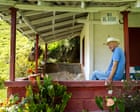
In the rural hamlet of Palo Cabildo in Colombia’s western Andes, 87-year-old farmer Porfirio Garcés tends to his anthuriums in the garden of his small house. He talks with passion about his vinyl record collection, which ranges from classical to pop music, but his main interest now lies elsewhere: his homeland, to which he feels a deep connection – and his desire to protect it.
Numerous water sources originate in the area, supplying not only Jericó, where Garcés lives, but also several neighbouring towns in the Antioquia region. A sign with a clear message hangs on the main porch of his property: “Yes to water.”
“We don’t want to wake to the roar of machinery drilling into and destroying our land, destroying the poetry of the landscape,” says Garcés. “We must defend our water sources. Without water, we will die of thirst.”
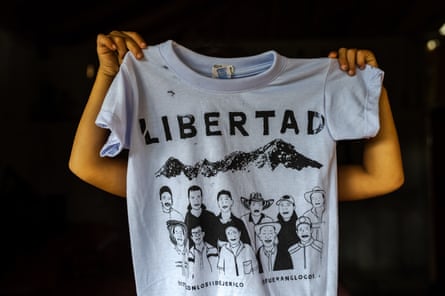
Since last year, Garcés and 10 other local farmers have faced formal charges for opposing the Quebradona copper mining project, promoted by the multinational AngloGold Ashanti through its subsidiary Minera de Cobre Quebradona. He has since become a symbol of the resistance movement against Quebradona in Jericó.
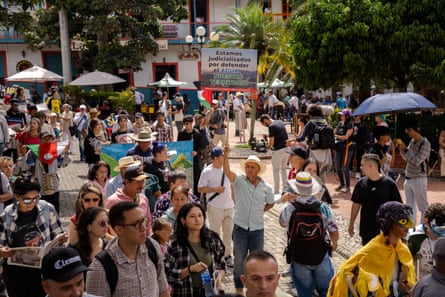
Social protests in support of the “Jericó 11” gained strength in August as the nature defenders awaited new court hearings. “Water yes, mining no! Water yes, mining no!” the crowd chanted before the hearings, which postponed sentence until March 2027.
The charges against the 11 farmers are “simple” kidnapping (the moving of someone against their will, without factors such as ransom or serious bodily harm), aggravated theft and assault. Although the judge at the initial hearings on 13 May 2025 rejected the prosecutors’ request to keep the 11 farmers under house arrest, they are still awaiting trial.
AngloGold Ashanti arrived in the region 15 years ago to extract copper in an area traditionally known for agriculture, where crops such as coffee, plantains, cassava, beans and corn are cultivated. Its first exploration licence was granted in 2007, covering nearly 8,000 hectares (about 19,800 acres).
This initial stage was extended for 11 years – the maximum permitted by Colombia’s mining code – after which the company consolidated the properties to apply for an exploitation licence to start extraction. However, in 2019, the National Environmental Licensing Authority archived the application due to lack of technical information, requiring the company to conduct new studies before it could begin mining.
In August, Colombia’s National Mining Agency approved an extension of the exploration phase at Quebradona until 8 December 2027. Mining has not yet begun, as the company still needs to address social and environmental concerns and complete additional studies, but Abelardo de la Espriella, Colombia’s far-right president since August, has aggressively prioritised expanding oil, gas and mineral extraction, including fracking, as a core part of his economic platform.
Last month, 281 local organisations signed an open letter declaring AngloGold Ashanti and Minera de Cobre Quebradona unwelcome entities (“entidad no grata”), and arguing that the project endangers the environment, water sources and Jericó’s local agricultural economy. Many campaigners feel AngloGold Ashanti is using the lawsuit as an attempt to suppress dissent over the Quebradona project.
The kidnapping charge arose in 2023 on public land owned by the municipality of Jericó, which is designated for safeguarding underground water sources. According to the community, mining employees entered the land without authorisation to carry out excavations. In response, the farmers say they went to the site to halt the works and alerted the police, the ombudsperson’s office and the mayor’s office to request the workers’ removal. After this, the employees filed complaints alleging they were held against their will.
after newsletter promotion
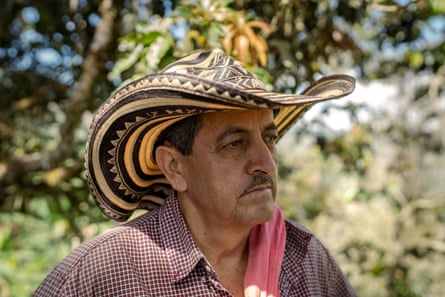
Gustavo Arboleda, 62, another of the farmers facing charges, says the community became concerned about the direct impact on their water resources after the company installed an exploration drilling platform on the La Fea stream, which provides water to the area. That event, he says, sparked their resistance campaign.
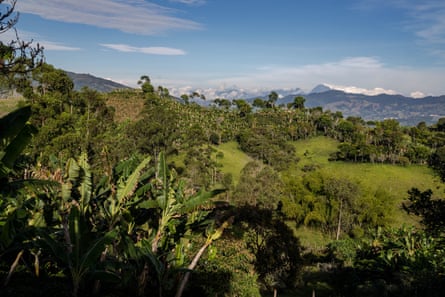
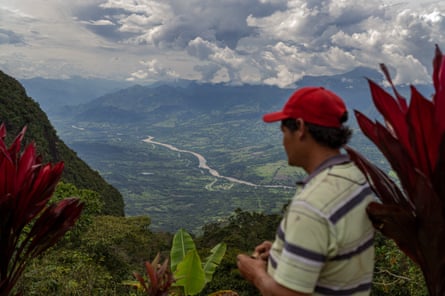
The rural village of La Soledad sits on the mountain where mining is planned and where most of the accused live. Gustavo says its name honours the Piaya cayana bird, locally known as soledad. From the village, you can see the Cauca River basin, one of the nation’s major waterways.
“Since the mine had not completed its studies to obtain exploitation permits, it started bringing in machinery at night and paid some farmers to rent land. We noticed and did not let the machinery in; that was when we received further charges,” Arboleda says.
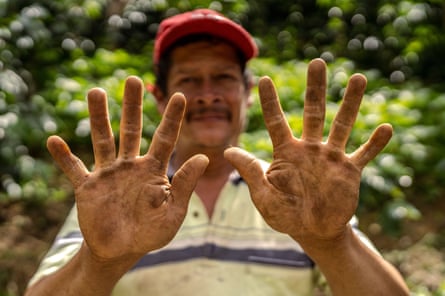
Rodolfo Tobón, 44, also facing charges, lives in La Soledad with his family on a farm where he grows cassava, bananas, plantains, coffee and beans, crops that ensure subsistence for his household and the wider region. “This land is very fertile; whatever is planted grows,” he says. “This is life – not just for us, but for many more people.”
Tobón, who is president of the village’s community action board, questions how the company has engaged with them since it arrived. He says local people do not want to see Jericó turned into a mining town, “because mining has never existed here”.
“When the mine arrived, they didn’t say they were a mining company. They used other methods, saying they would conduct soil studies to see what could be produced in Jericó,” he says. “Later on, we realised it was for large-scale mining. The company acted wrongly; they didn’t arrive stating exactly what they were going to do.”
AngloGold Ashanti has publicly said its Quebradona project fully complies with Colombian law and does not encroach on restricted zones. In a three-page statement to the Guardian, the company says its activities pose no threat to local water sources, citing environmental studies by Colombian authorities showing no impact on groundwater or surface water.
It also says protests and actions by the activists are illegal and disruptive, prompting it to file criminal complaints for kidnapping, theft and personal injury, and highlights its commitment to dialogue and transparency with local communities.
“We believe in frank, open dialogue, free from clandestine or malicious methods, and regret narratives that unfairly affect our reputation and that of our employees,” says AngloGold Ashanti.
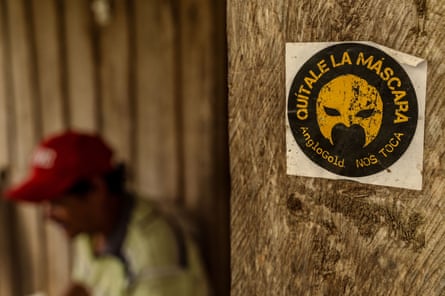
In 2025, the company also announced the Quebradona Biodiversity Initiative, aiming to regenerate more than 2,500 hectares (6,000 acres) of Indigenous tropical dry forest and high-mountain forest in Antioquia and to restore ecosystems affected by land use.
Although water still flows abundantly through Antioquia’s mountains, the Jerico 11 believe that only collective action can prevent drastic changes to their environment. Argiro Tobón, another of the accused farmers, says they are trying to preserve their way of life and landscape by keeping their region focused on food production.
“We take care of the forests, we take care of nature, and we take care of the water,” he says.
KioskNews shows a cleaned-up reading view extracted from the publisher’s page — the original always lives on their site, not ours.