DOJ reports five pending espionage-related cybercrime cases
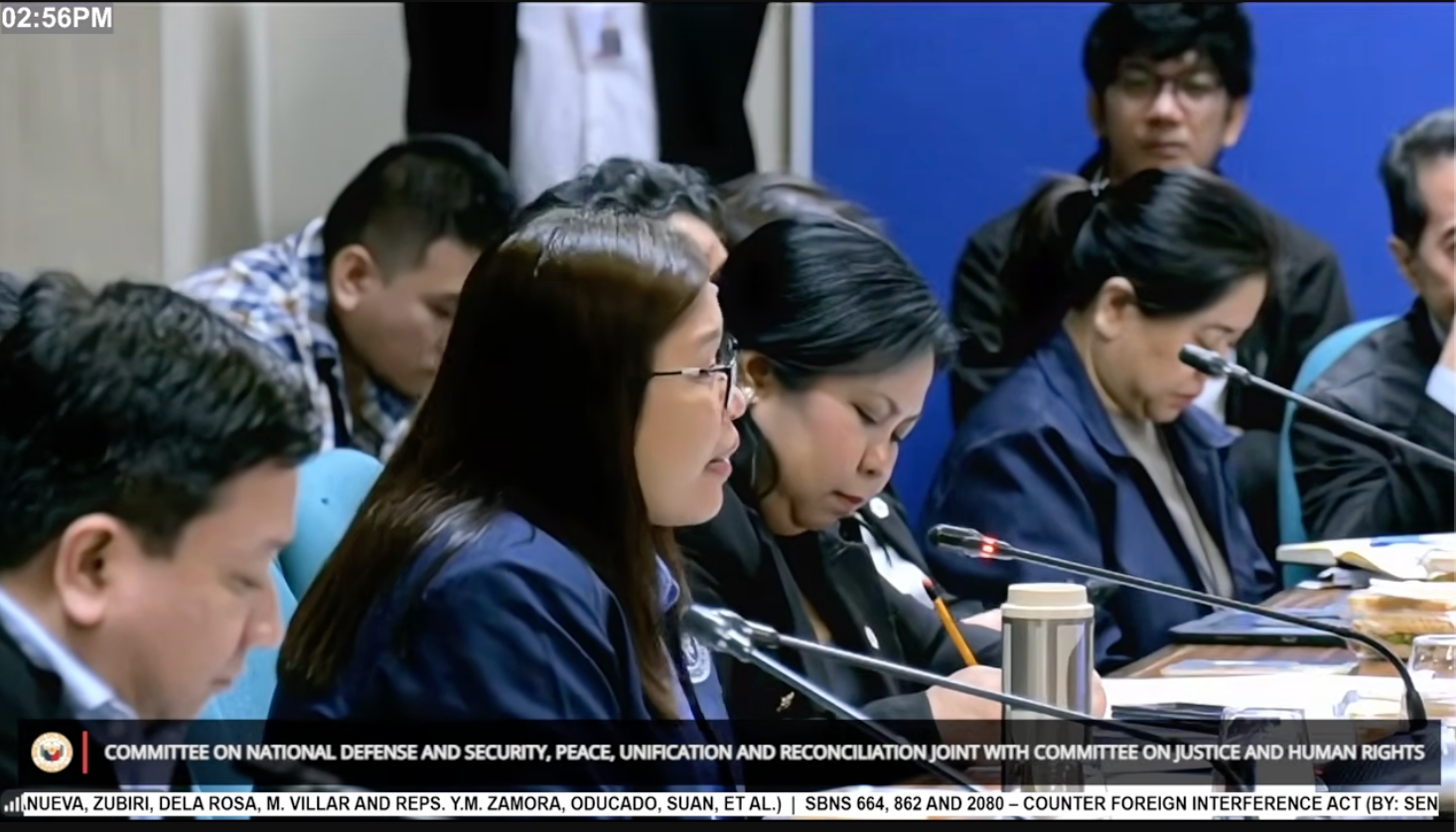

MANILA, Philippines — At least five espionage-related cybercrime cases are pending before regional trial courts (RTCs) in Makati, Pasay and Manila, a Department of Justice official said Thursday.
During a Senate hearing on proposed measures to update the country’s espionage laws, DOJ Senior State Counsel Fretti Ganchoon corrected her earlier statement that no espionage cases had been filed in the past three years.
“I did say that based on the matrix that … we don’t have a pending espionage case. But last year, in 2025, we do have, and we will submit an updated matrix, Mr. Chair,” she said.
Article continues after this advertisement
“My understanding was these are cybercrime-related cases, but it also says that it’s espionage, cybercrime-related cases in relation to espionage, Mr. Chair. So there would be at least five pending cases before the RTCs in Makati, Pasay and Manila involving espionage in relation to cybercrime, Mr. Chair,” Ganchoon added.
FEATURED STORIES
NEWSINFO
NEWSINFO
NEWSINFO
READ: A new anti-espionage law finally in the works
Ganchoon explained that prosecutors pursued the cases under the Cybercrime Prevention Act, or Republic Act No. 10175, because of the methods allegedly used to commit the offenses.
The disclosure came as senators and government agencies discussed the need to modernize the country’s espionage laws.
Espionage is the practice of spying or using spies to obtain information, particularly about a foreign government’s plans and activities.
Article continues after this advertisement
Senate President Pro Tempore Vicente “Tito” Sotto III, chair of the Senate Committee on National Defense and Security, Peace, Unification and Reconciliation, noted that existing laws were crafted to address traditional wartime threats.
He said these laws may not adequately address peacetime foreign interference, cyberattacks and the illegal disclosure of sensitive government information, creating gaps in the legal framework.
Article continues after this advertisement
During the hearing, government agencies also discussed shortcomings in existing laws.
The National Intelligence Coordinating Agency backed tougher penalties for espionage, while the DOJ recommended a graduated system of penalties, saying punishment should be proportionate to the nature and gravity of the offense.
Senate President Sherwin Gatchalian, meanwhile, raised concerns about potential espionage risks involving government procurement of hardware and software, as well as possible overlaps in agency responsibilities under the proposed Counter-Foreign Interference Act.
Your subscription could not be saved. Please try again.
Your subscription has been successful.
The DOJ committed to submitting an updated list of espionage-related cases as lawmakers continued discussions on refining the proposed measures. /das
KioskNews shows a cleaned-up reading view extracted from the publisher’s page — the original always lives on their site, not ours.