Jack Jedwab: October 7 proved why western idealism won’t solve Mideast conflict
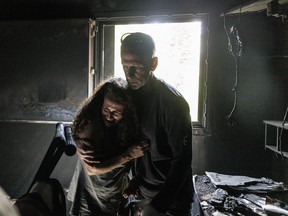
On Oct. 7, 2023, Hamas-led terrorists crossed into southern Israel and carried out the deadliest terrorist attack in the country’s history, while Hamas and other armed groups simultaneously fired rockets into Israel.
Sign In or Create an Account
Many of those murdered and kidnapped that day were among the Israelis most committed to peaceful coexistence with the Palestinians — people who believed that proximity, economic ties and human contact could eventually produce something better than permanent conflict.
For all the global shock and outrage generated by Israel’s subsequent military campaign, a major military response after October 7 should have been fully expected. No Israeli government could plausibly have treated the attack as simply another episode in a longstanding conflict.

Columnist Jesse Kline keeps you up to date with what’s happening in Israel and the effects of antisemitism on life here in Canada. Friday mornings.
By signing up you consent to receive the above newsletter from Postmedia Network Inc.
A welcome email is on its way. If you don't see it, please check your junk folder.
The next issue of Channel Israel will soon be in your inbox.
We encountered an issue signing you up. Please try again
Israel was going to act forcefully to dismantle Hamas’s military capabilities, particularly after a Hamas leader vowed to repeat October 7 “again and again.” The devastating consequences that followed do not alter the fact that a forceful Israeli response was entirely foreseeable.
For the many Israelis who were already deeply concerned about the dangers along their borders and the adequacy of existing security arrangements, October 7 became a devastating reminder of what can happen when assumptions about security prove catastrophically wrong.
In a country where many communities lie only a few kilometres from openly hostile populations and armed groups, such concerns are not abstractions but immediate realities.
October 7 sent many Israeli organizations whose stated mission is to promote peace and coexistence into a state of free fall and rendered wholly untenable their argument that the attack should serve as some kind of wake-up call for Israelis.
October 7 was a massive setback in an already deeply strained relationship between Israelis and Palestinians, which made the prospects for peaceful coexistence even more remote than they previously appeared.
Recent surveys of Israeli and Palestinian attitudes confirm just how profound that setback has been. Pew Research’s spring 2026 poll found that only 17 per cent of Israelis believe “a way can be found for Israel and an independent Palestinian state to coexist peacefully with each other.” Fifty-six per cent said it could not.
Among Palestinians surveyed in the West Bank and east Jerusalem, 68 per cent said peaceful coexistence was not possible. For the first time in Pew’s polling, a majority of Israelis took that position.
These findings expose the central problem that every proposed solution to the conflict must confront: an extraordinary collapse of confidence among the people who would actually have to live with whatever arrangement is devised. The war in Gaza has added more fear, grief and mistrust to a conflict already saturated with all three.
Many Canadians appear to grasp just how difficult the conflict has become to reconcile. A September Leger survey found that only 14 per cent of respondents believe the Israeli-Palestinian conflict is reconcilable, compared with 58 per cent who considered it irreconcilable and 28 per cent who don’t know.
Yet some of the discussion taking place within North American universities remains strikingly disconnected from these realities. In certain classrooms and academic forums, one might come away with the impression that the principal obstacle to peace is simply a lack of political will or expertise in governance, and that the conflict awaits only the correct formula for dividing and sharing the land.
The disconnect becomes particularly pronounced when solutions devised thousands of kilometres away are presented as though Israelis and Palestinians would move readily toward reconciliation if only they embraced the preferred vision of the concerned outside experts.
There is a certain intellectual conceit in assuming that societies carrying generations of trauma, insecurity and incompatible historical narratives are merely being held back by their failure to recognize what an academic seminar explains.
There may eventually be another opening. Reconciliation is not permanently impossible. But October 7 and the war that followed represent an enormous setback for coexistence and added another layer of collective trauma to a conflict already burdened by fear and mistrust.
Realism about how far Israelis and Palestinians have moved apart is a necessary starting point for understanding just how difficult the road to peace has become — and what would have to change before meaningful compromise is once again possible.
Until then, regrettably, the region is more likely to see more domes, higher walls, stronger fences and greater separation than the dismantling of the barriers that divide Israelis and Palestinians.
National Post
Join the Conversation
This website uses cookies to personalize your content (including ads), and allows us to analyze our traffic. Read more about cookies here. By continuing to use our site, you agree to our Terms of Use and Privacy Policy.
KioskNews shows a cleaned-up reading view extracted from the publisher’s page — the original always lives on their site, not ours.