Sabah’s next big question: Expand KKIA, or build a brand-new airport?
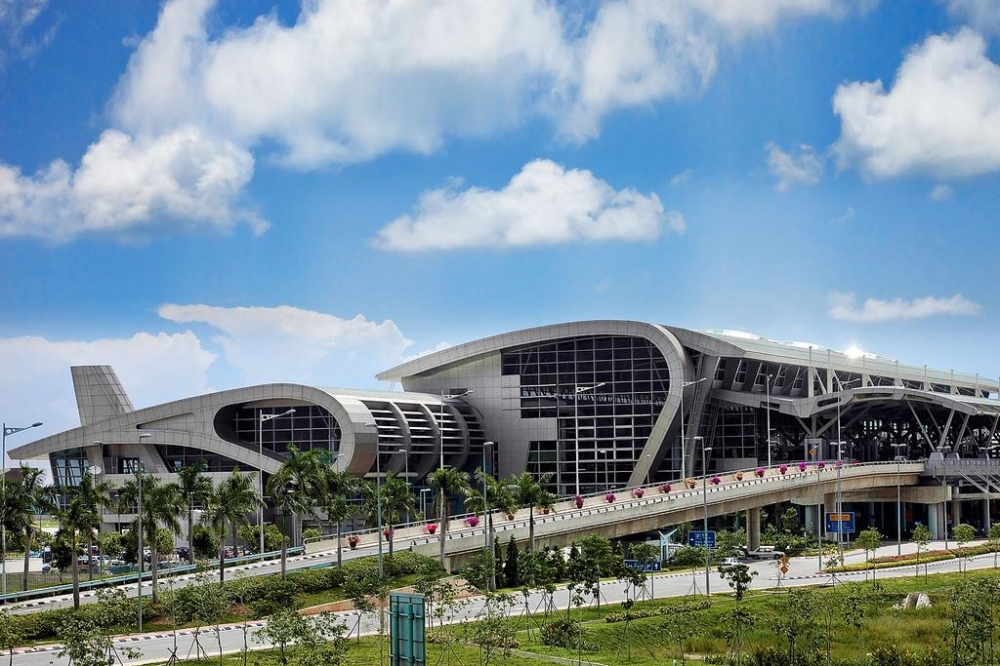

Sabah’s long-term aviation needs require careful consideration of whether Kota Kinabalu International Airport (KKIA) should be expanded at its existing site or replaced by a new airport at another location. — The Borneo Post pic
First Published: Monday, 09 Nov 2026 1:47 PM MYT
KOTA KINABALU, Nov 9 — Sabah’s long-term aviation needs require careful consideration of whether Kota Kinabalu International Airport (KKIA) should be expanded at its existing site or replaced by a new airport at another location.
The two proposals were discussed by aviation experts during a public forum titled ‘The Future of Kota Kinabalu International Airport: Retain, Expand or Relocate?’, organised by the Chartered Institute of Logistics and Transport (CILT) Malaysia Sabah Section at Sabah International Convention Centre (SICC) here on Saturday.
Airport, Airline and Civil Aviation Strategy Consultant Edward Clayton said several options could be considered to increase KKIA’s capacity, including constructing a second runway, adopting an alternative runway configuration or developing a separate relief airport.
He said KKIA had recorded steady passenger growth of about 4.1 per cent annually over the past 21 years since 2005, with passenger numbers reaching approximately nine million last year.
“Are we limited to 4.1 per cent per annum? Is that the capacity that it is supposed to be? Are we happy with 4.1 per cent growth every year?” he asked, questioning whether existing infrastructure was restricting Sabah’s aviation potential.
Clayton said a second runway extending into reclaimed land was one possibility, although it would involve challenges related to construction costs, environmental impact, runway spacing, surrounding terrain and operational procedures.
“An alternative runway configuration could also be considered, but the surrounding mountains and geographical constraints would require further investigation.
“Another option was to develop a separate relief airport to provide operational resilience when KKIA’s runway was unavailable. However, its viability would depend on passenger demand, investment and the distance between the two facilities.”
He stressed that expanding KKIA would involve more than adding runway capacity, as rising passenger numbers would also require larger terminal facilities, additional aircraft stands, taxiways and improved air traffic management systems.
Meanwhile, former Civil Aviation Authority of Malaysia (CAAM) chief executive officer Datuk Captain Chester Voo urged Sabah to consider developing a new airport elsewhere to accommodate its long-term aviation and economic ambitions.
Using the analogy of a growing family outgrowing a small studio apartment, he said KKIA had served Sabah well for about 45 years, but its location and surrounding development could limit future expansion.
“It is our home. It is our capital, state capital airport. It’s great. There’s nothing wrong with it,” he said, while stressing that the key question was whether the existing site could meet Sabah’s future needs.
Voo cited geographical constraints, including the surrounding terrain and Gaya Island, as factors to consider when assessing runway safety, aircraft departure paths and future operational capacity.
He also highlighted the importance of operational resilience, citing a runway closure in September that disrupted airport operations and demonstrated the risks of relying on a single runway.
“An airport is not just about planes taking off and landing,” he said, adding that a new facility could accommodate aircraft maintenance, repair and overhaul (MRO), cold-chain storage, cargo sorting centres and warehouses.
Such facilities could strengthen Sabah’s aviation and logistics industries, particularly its seafood export sector, which he said faced limitations due to the lack of dedicated cold-chain facilities at airports in the state.
Voo also proposed an airport-city or aerotropolis concept incorporating hotels, restaurants, commercial developments and other businesses to generate wider economic opportunities.
He said the existing KKIA site could potentially be redeveloped for commercial, tourism or other urban purposes if airport operations were eventually moved, given the rising value of land around Tanjung Aru and its surrounding areas.
However, he stressed that any proposed new site would require careful assessment of accessibility, terrain, airspace, flood risks, environmental considerations and weather conditions.
“Ideally, airport access should be within about 45 minutes.”
On estimated costs, Voo said developing KKIA with a second runway and a relief airport could require RM10 billion to RM15 billion over six years, while building a new airport could cost about RM10 billion over a comparable period.
He cited the relocation of operations from Subang Airport to Kuala Lumpur International Airport as an example of planning for long-term aviation capacity. — The Borneo Post
KioskNews shows a cleaned-up reading view extracted from the publisher’s page — the original always lives on their site, not ours.