What Is Wrong With Us: When a peaceful election quietly becomes a sad ending for honest businesses
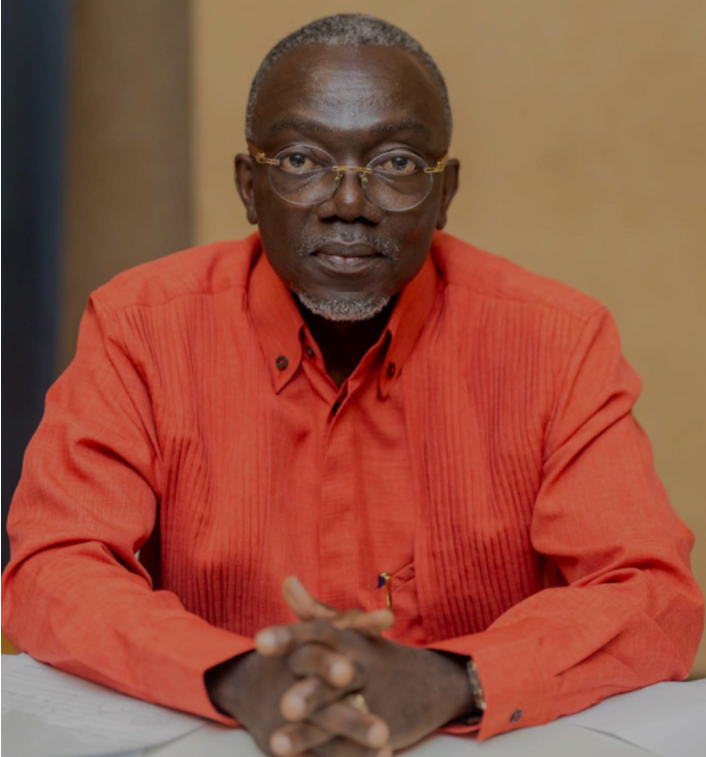
Ing. Professor Douglas Boateng Chartered Director (UK) • Chartered Engineer (UK) • Fellow Institute of Directors (UK) • Fellow Ghana Institution of Engineering
By Ing. Prof. Douglas Boateng, Chartered Director UK | Chartered Engineer UK | Fellow, Institute of Directors UK | Fellow, Ghana Institution of Engineering | Governance, Industrialisation and Supply Chain Strategist | Founder, Boardroom Governance Summit | Founder and Scriber, NyansaKasa (Words of Wisdom)
Ghana’s democratic transitions rightly inspire admiration. It is therefore all the more unfortunate, and deeply worrying, that each change of government can leave committed entrepreneurs unpaid, loyal workers uncertain and promising enterprises struggling to survive.
Twenty Years to Build, One Election to Unsettle
Imagine spending twenty years building a company. You employ engineers, accountants, technicians, drivers and young graduates, invest in equipment and training, and borrow from a bank to execute a government contract won through proper procurement. The work is completed, the institution accepts delivery and your invoice is submitted. Then an election takes place, a new administration assumes office, and the payment that should have settled your obligations suddenly becomes uncertain while your contract is reviewed. The bank, however, does not recognise political transitions as a reason to suspend interest, your employees do not stop eating because a new minister has been sworn in, and the electricity company has shown no inclination to supply free power while the state decides whether it approves of the political colour of your company’s owner.
A Democracy We Celebrate, an Economy We Unsettle
Ghana deserves genuine pride in its democratic record. Since 2008 it has witnessed peaceful transfers of power in 2009, 2017 and 2025, demonstrating that political authority belongs to citizens rather than to permanent rulers. Yet democracy becomes economically expensive when each change of government ushers in a commercial winter, in which legitimate obligations of the state are frozen, questioned and delayed, and businesses perceived to have worked with the outgoing administration find themselves under a cloud of suspicion. We change governments through the ballot box, but too often we behave as though legitimate businesses must also change their identities, loyalties and commercial histories. NyansaKasa (Words of Wisdom) warns that “a nation cannot build a sustainable private sector when every election threatens to become a commercial earthquake.”
Scrutiny Is a Duty, Not a Weapon
None of this suggests that incoming governments should accept every contract signed by their predecessors. Fraud must be investigated, inflated contracts challenged, unlawful procurement punished, and no undelivered work should ever be paid for merely because someone presents an invoice. After the Finance Minister announced in April 2025 that contractor payments would await an audit of outstanding claims, the Ghana News Agency reported in March 2026 that of roughly GH¢68.7 billion examined, GH¢45.4 billion was validated, GH¢8.1 billion was rejected for irregularities and GH¢13.3 billion required further justification. Those figures expose two truths that must be held together: the state must never pay fraudulent claims, and it must never destroy legitimate businesses while hunting for fraudulent ones. NyansaKasa (Words of Wisdom) counsels that “when dishonesty is found among some contractors, justice requires identifying the dishonest, not suffocating everybody.”
An Audit Without a Clock Becomes a Sentence
The same figures carry a quieter message, for roughly two thirds of the claims examined were found to be valid, which means that many honest firms waited for money they had genuinely earned. An audit is a necessary instrument of public accountability, but it must come with deadlines, transparent procedures, a fair opportunity for contractors to respond and a mechanism that releases verified payments promptly, even while disputed portions are resolved. Without those safeguards, a tool designed to protect public money can inadvertently destroy the very enterprises that generate the taxes, jobs and growth on which public money depends.
The Bank Never Changes Government
Consider an illustrative engineering firm owed GH¢10 million for completed and certified work, financed by a loan costing 25 percent a year. If the full amount remains outstanding for twelve months, simple interest alone consumes GH¢2.5 million, and when the state eventually pays the original invoice without compensation for delay, the firm has received its money while losing a quarter of its value. Some contracts do provide for interest, but no supplier can assume that interest will accrue automatically on a delayed public invoice. In effect, the state enjoys an interest free loan funded by businesses borrowing at commercial rates to deliver public services, which is not industrialisation but the quiet transfer of fiscal risk from government to its most dependable partners.
When One Invoice Waits, Many Families Wait
A contractor is never simply an individual collecting government money. Behind every company stand employees, subcontractors, transport operators, insurers, equipment suppliers and the households they support, so that one delayed payment becomes unpaid wages, reduced spending, distressed loans, repossessed equipment, departing skills and falling tax receipts. The World Bank’s most recent Enterprise Survey of Ghana identified access to finance as the single obstacle firms cited most frequently, and one can imagine what happens when scarce, expensive credit meets unpredictable public payment. NyansaKasa (Words of Wisdom) observes that “a government that delays payment to a productive business may save cash today while destroying tomorrow’s jobs, taxes and investment.”
When Party Colours Become Credit Ratings
There is a further, more delicate dimension. In polarised political environments, an entrepreneur who lawfully won a contract under one administration may be presumed to belong to its party, and a photograph with a former minister can become a commercial liability. It would be unfair to claim that every delayed payment or contract review is politically motivated, and each case deserves proper investigation. Yet even the perception that commercial survival depends on political proximity is corrosive, because it rewards networking over competence, encourages firms to seek protection rather than productivity and tempts entrepreneurs to fund political relationships as insurance against future exclusion. NyansaKasa (Words of Wisdom) reminds us that “when a company must change political colours to survive, the nation is no longer rewarding enterprise but political camouflage.” No company should need a political godfather to be paid for lawful work, and no political connection should protect a company that has defrauded the state.
A Global Problem With Known Remedies
Ghana is hardly alone. Nigeria has wrestled with disputed public liabilities and stalled infrastructure payments, while South Africa’s Treasury rules require public institutions to settle valid invoices within thirty days, an obligation still too often honoured in the breach where small businesses are concerned. The European Union’s Late Payment Directive generally obliges public authorities to pay within thirty days and entitles creditors to statutory interest and a fixed compensation for recovery costs when they do not. Whatever their imperfections, the principle they embody is clear: a public institution must never treat delayed payment as a free source of working capital.
Governments Pass, the Republic Remains
The principle Ghana must recover is constitutional as much as economic. A government serves for a limited term, but the state continues; a minister changes, but the ministry remains; a president departs, but the Republic endures, and lawful obligations of the state do not evaporate because a different party occupies the seat of government. Contracts may lawfully be terminated and unlawful agreements challenged, but a properly executed and legally enforceable commitment cannot become optional with each electoral cycle. Investors read these signals carefully, pricing political risk into every bid or avoiding public work altogether, and in the end it is the taxpayer who pays the premium. NyansaKasa (Words of Wisdom) cautions that “political power is temporary, but the credibility of the state must survive every transition.”
Both Sides of the Ledger Must Be Honest
Responsibility does not rest with incoming governments alone. Outgoing administrations must not commit future taxpayers to spending without authorisation, budgetary provision or a proper assessment of value for money, and the International Monetary Fund’s review of Ghana’s 2024 fiscal slippages pointed to commitments made outside established financial management systems and spending pressures ahead of elections. Public officials must not certify work that was never done, and contractors must not inflate invoices and then demand payment simply because a document bears an official signature. The solution therefore has two inseparable halves: stop creating unlawful liabilities, and pay lawful liabilities predictably, for one without the other will never restore confidence.
Rules That Outlast Elections
Ghana should enact a binding prompt payment framework under which certified and undisputed invoices are settled within thirty days, subject to narrowly defined exceptions, with interest accruing automatically on qualifying public obligations when that deadline is missed. A digital national register of contracts and payments should record approvals, values, certified work and outstanding balances. Government commitments should be independently reconciled before and after every election, so that no incoming administration discovers billions in undisclosed obligations and no contractor must prove all over again that work was completed. Disputed claims deserve independent and affordable resolution within fixed timelines, the undisputed portion of any invoice should be paid without delay, and ministries that repeatedly create unfunded commitments or withhold verified payments without lawful justification should face institutional and personal accountability. Banks can then finance verified government receivables against transparent payment schedules rather than political assurances.
The Mindset Shift That Must Come First
Rules alone will not suffice without a change of heart. Political leaders, public servants, citizens and the media must learn to see competent local businesses as national assets rather than party trophies, judging every contractor by legality, performance and value for money, never by perceived political association. An inclusive economy is one in which a firm can serve successive governments of different persuasions with the same professionalism, and be paid with the same reliability, because its loyalty is to the Republic and its contracts are with the state. NyansaKasa (Words of Wisdom) observes that “a nation cannot build industries for fifty years with a political memory of only four.”
What Is Wrong With Us?
We celebrate peaceful transfers of power while overlooking the economic wreckage that sometimes surrounds them, praise entrepreneurs while exposing them to unpredictable payment, and speak passionately about growth led by the private sector while allowing the state to become an unreliable customer. We ask businesses to create jobs, pay taxes and train young people, and then expect them to survive prolonged uncertainty without financial protection, which is curious arithmetic for any nation that dreams of industrialisation. NyansaKasa (Words of Wisdom) offers the final reflection: “When governments change, leaders, policies and priorities may change, but the state’s duty to honour legitimate commitments must never change.” A country should be able to change its government without forcing its businesses to restart their lives, and until we accept that this is not a favour to contractors but a foundation of economic civilisation, we must keep asking ourselves the same uncomfortable question: what is wrong with us?
ABOUT THE AUTHOR
Ing. Professor Douglas Boateng is a pioneering international industrial, manufacturing and production systems engineer, governance strategist and Pan-African thought leader whose work continues to influence boardroom thinking, supply chain transformation and industrialisation strategy across the continent and beyond. As Africa's first appointed Professor Extraordinaire in Supply Chain Management, he has long championed the integration of procurement, value chain development, industrialisation and governance into national and continental development agendas. An International Chartered Director and Chartered Engineer, he has received numerous lifetime achievement awards and authored several authoritative books. He is the scribe of the globally acclaimed NyansaKasa (Words of Wisdom). His work rests on the conviction that Africa's transformation — and the protection of its children — will come through deliberate action, strong institutions and leaders willing to build for generations they will never meet.
© 2026 Ing. Prof. Douglas K. Boateng. All rights reserved.
DISCLAIMER: The Views, Comments, Opinions, Contributions and Statements made by Readers and Contributors on this platform do not necessarily represent the views or policy of Multimedia Group Limited.
Tags:
DISCLAIMER: The Views, Comments, Opinions, Contributions and Statements made by Readers and Contributors on this platform do not necessarily represent the views or policy of Multimedia Group Limited.
KioskNews shows a cleaned-up reading view extracted from the publisher’s page — the original always lives on their site, not ours.