Cook This: 3 recipes from Weeknight Vegetarian, including polenta chips with saucy chickpeas
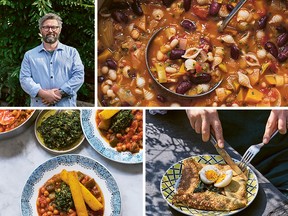
Our cookbook of the week is Weeknight Vegetarian by Joe Woodhouse.
Sign In or Create an Account
Jump to the recipes: chard and cheddar galettes, squash minestrone and polenta chips with saucy chickpeas.
Joe Woodhouse dedicated his third book, Weeknight Vegetarian (Kyle Books, 2026), “to anyone who cooks from scratch.” We’ve lost some intuitiveness around food, the connections with the people who grow it, what we’re using and how we’re using it, says the London-based photographer and cookbook author. Taking the time to cook, whether for yourself or others, “is a sacred practice.”
In Weeknight Vegetarian, Woodhouse offers plenty of plant-centric inspiration. “To use an ingredient in a different way, or even if it’s cutting it in a different way, so it behaves a little bit differently, or cooking something that you wouldn’t really cook.”
He strikes a rare balance in the book. Woodhouse understands the time pressures cooks are under, so accessibility is at the forefront — but so is embracing the enjoyment.
“The main thing for me is actually people cooking from scratch,” he says. “With all of my recipes, it’s not too many ingredients, not too big of processes. It’s just, you follow the recipe, and it should get you to a pretty tasty place.”
The recipes in Weeknight Vegetarian represent a range of commitment, from “assembly jobs (mostly)” to meals “worth the washing-up.” From the “mix and make” chapter, the batter for his chard and cheddar galettes comes together quickly in a blender — or a mixing bowl. The rest requires boiling eggs and a frying pan. Other recipes may require more time, but they’re offset by a streamlined process, such as being made in one pot. “So it’s not creating a mountain of washing up, and you can have fun while you’re doing it.”

Woodhouse is an advocate of batch cooking, which can go a long way in relieving the pressure of weeknight meals. He refers to the practice as “the über-hack.” Cook some beans, grains or potatoes on the weekend, and lean on them for the coming week.
The feeling of being hungry and strapped for time, and then remembering you have leftovers, or you’ve batch-cooked some beans, “is one of the best in the world,” says Woodhouse. “You’ve got this nourishing, wholesome meal ready, and it’s just a case of quickly heating it up.”
On Saturdays, he asks his son to pick a bag of dried beans, which they soak overnight. On Sundays, while the family is having breakfast, Woodhouse puts them on to cook. They’ll then make recipes around those beans for the week.
“It’s quite nice just linking it back in and (reinforcing) that connection to food,” he says. “There’s no stress, but then you’ve done that, and you’ve got all the bean liquor as well, which is full of nutrients, and you can use that to add into your pasta sauces or your stews. I think you’re helping out your future self.”

Makes: 4 large galettes
100 g (3 1/2 oz) buckwheat flour
1 1/4 cups (300 mL) whole milk
9 eggs
1 tbsp flavourless oil,
plus more for cooking
1 onion, finely chopped
200 g (7 oz) mushrooms, torn or
finely chopped
400 g (14 oz) chard, leaves stripped and torn, stalks finely chopped
1-2 tbsp Dijon mustard
150 g (5 1/2 oz) mature cheddar cheese, or another cheese you
like, grated
15 g (1/2 oz) mix of herb leaves, such as parsley, dill, chervil and chopped chives (optional)
Salt and black pepper
4 tbsp crème fraîche,
to serve (optional)
Either in a mixing bowl with a whisk or in a blender, combine the flour, milk and 5 of the eggs with a good pinch of salt. Add the oil and whisk or blend until smooth. Set aside.
Put the remaining 4 eggs in a saucepan and cover with water. Bring gently to a simmer. Allow to bubble away for 3 minutes, then turn off the heat, cover the pan and leave to stand for 5 minutes. Remove and shell the eggs under running cold water. Set aside.
Put 2 tablespoons of oil in a large frying pan (I use a 30-cm/12-inch one). Add the onion with a pinch of salt and cook until translucent, 10-12 minutes. Now add the mushrooms and chard stalks and cook for a further 3-5 minutes until softened. Add the leaves and cook for a further 2 minutes until wilted. Taste and season with salt and pepper. Remove from the pan and set aside.
Wipe out the pan. Add a splash of oil and heat over a medium-low heat. Add one-quarter of the batter, roll the pan to evenly disperse the batter and cook gently for 1-2 minutes until just set. Brush with mustard. Add one-quarter of the cheese evenly, then spoon in one-quarter of the greens mix. In the pan, fold in the sides of the galette: either 4 to make a square, or 3 for a triangle. Remove to a plate. Cut a boiled egg in half, place in the middle and garnish with black pepper. Scatter with herbs and serve with crème fraîche, if you like. Repeat to cook and fill the remaining galettes. You can make these to the filled-and-folded stage and keep them warm in a low oven, if you want to serve them all at once.

Serves: 4 generously
2 tbsp olive oil
1 onion, roughly chopped
2 celery sticks, sliced
2 small carrots, chopped
1 bay leaf
1 rosemary sprig
3 garlic cloves, sliced
1 leek, cleaned and roughly sliced
400 g (14 oz) can of plum tomatoes
500 g (1 lb 2 oz) prepared squash
or pumpkin, cut into cubes
1.5 L (2 3/4 pints) water
2 x 400 g (14 oz) cans of beans (borlotti/cranberry, red kidney, cannellini/white kidney beans or a mix), or 250 g (9 oz) dried beans, soaked overnight or for 8 hours, cooked and drained
100 g (3 1/2 oz) pasta (ideally small shapes, such as shells)
15 g (1/2 oz) parsley, leaves picked
and finely chopped
Salt and black pepper
To serve:
Grated hard cheese, such
as manchego or pecorino romano
Extra virgin olive oil
Lemon wedges
Crusty bread
Set a large saucepan that will fit everything over a medium heat with the olive oil. Add the onion, celery and carrots with a good pinch of salt and cook for 8-10 minutes until beginning to soften. Add the bay, rosemary, garlic and leek and cook for a further 3 minutes.
Now add the tomatoes and crush them up a little with a wooden spoon. Follow with the squash or pumpkin, pour in the measured water and bring to a simmer. Cook for 7-10 minutes. Then add the beans, adding the liquid from the cans if using canned (if using dried beans, just add an extra 300-400mL/10-14fl oz of water), and the pasta. Return to a simmer and cook until the pasta is al dente, according to the packet instructions, though it will keep cooking after you take it off the heat, so err on the only-just-cooked side.
Stir in the parsley, then check and adjust the seasoning with salt and pepper. Serve with grated cheese, extra virgin olive oil, lemon wedges to squeeze over and crusty bread.
Serves: 4
Olive oil, for greasing and frying
800 mL (1 1/3 pints) vegetable stock
1 tbsp dried oregano
200 g (7 oz) quick-cook polenta
2 small onions, roughly chopped
3 garlic cloves, sliced
2 peppers (any colour), cored, deseeded and roughly chopped
1 tbsp hot paprika
400 g (14 oz) can of plum tomatoes
2 x 400 g (14 oz) cans of chickpeas, or 1 large (700 g/1 lb 9 oz) jar
Salt
Grated hard cheese, such
as manchego or pecorino romano, to serve (optional)
For the green sauce:
25 g (1 oz) parsley, leaves picked
and finely chopped
2 tbsp drained capers, chopped
6-8 cornichons, finely chopped
2-3 tbsp red wine vinegar (or other vinegar works fine),
plus more to taste
Line a small baking tray with nonstick baking paper and rub lightly with oil all over.
Bring the stock to a bubble with the oregano in a saucepan. Rain in the polenta while stirring with a whisk. Cook out over a medium-low heat for 3-5 minutes, whisking all the while. Pour into the prepared baking tray and put in the fridge to chill and set; 15-30 minutes should be fine.
Meanwhile, preheat the oven to 220C/200C convection (425F), Gas Mark 7. Put a baking tray inside to heat up.
Put 2-3 tablespoons of oil in a frying pan over a medium heat. Follow with the onions and a good pinch of salt and cook until beginning to soften, 6-8 minutes. Add the garlic, peppers and paprika and cook for 2-3 minutes, then add the canned tomatoes with their juice, crushing up the tomatoes a little with your wooden spoon. Rinse out the tomato can with about half its volume of water and add to the pan, followed by the chickpeas and their juice. Bring to a simmer and cook for 10-15 minutes.
Cut the polenta into chunky (or however you want; see recipe introduction) chips and dress them lightly with oil. Carefully remove the hot baking tray from the oven and space the polenta chips out evenly on it. Bake in the oven for 20-25 minutes, turning after 15 minutes, until crisp.
Meanwhile, mix all the green sauce ingredients together. Taste and add salt and more vinegar, if needed.
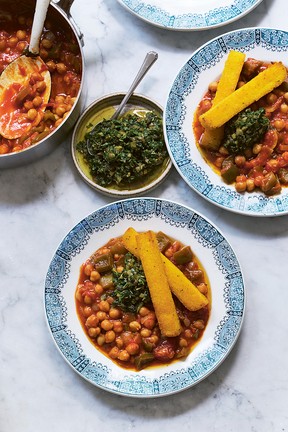
Serve the chickpeas with the polenta chips on top, scattered with grated cheese, if you like, and the green sauce on the side.
Recipes and images excerpted from Weeknight Vegetarian by Joe Woodhouse. Published by Kyle Books, 2026.
Join the Conversation
This website uses cookies to personalize your content (including ads), and allows us to analyze our traffic. Read more about cookies here. By continuing to use our site, you agree to our Terms of Use and Privacy Policy.
KioskNews shows a cleaned-up reading view extracted from the publisher’s page — the original always lives on their site, not ours.