Ranulph Fiennes’ stepson appeals for funds to ‘locate and safeguard’ the explorer

The stepson of Sir Ranulph Fiennes has launched a crowdfunder to pay for “specialist legal advice” in an attempt to locate the explorer, who hasn’t been seen in public for more than two years.
Alexander Millington-Cotes, 31, has set a target of £55,000 for the fundraiser, to enable him to instruct lawyers to “locate and safeguard” Fiennes.
Millington-Cotes’ mother, Louise, from whom he is estranged, has lasting power of attorney in relation to Fiennes’ care, which her son wants to see revoked.
Friends and family are growing increasingly concerned for the welfare of the renowned expedition leader, who is 82 and has Parkinson’s disease.
It is understood that Louise, Fiennes’ second wife, has installed him in a succession of care homes where he has not been allowed to receive visitors.
According to the Telegraph, the former soldier had previously spent time in a care home in Wales under a pseudonym. It reported a watchdog had concluded his living arrangements amounted to a deprivation of his liberty because his wife had failed to ensure adequate legal safeguards were in place.
The newspaper also said that Fiennes, widely considered the world’s greatest living explorer, had spent time in another care home in London, where visitors were apparently asked to sign non-disclosure agreements by Louise, 59, before being allowed to see him.
Arabella McIntyre-Brown, sister of Fiennes’ late first wife, Ginny, said she was so concerned about his welfare that she checked into the London home for a week in an attempt to speak to him. She told the Telegraph that he expressed a wish to see his friends.
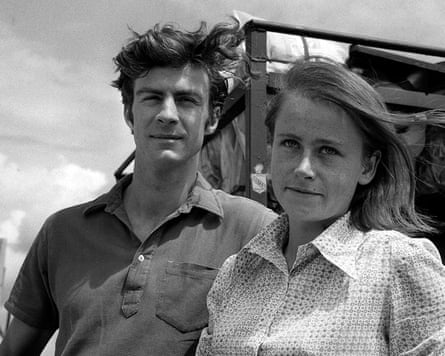
Millington-Cotes’s crowdfunder had raised almost £3,000 on Saturday afternoon. He told supporters: “Ran has spent his entire life pushing boundaries for others and representing the best of human endurance. Now, he needs us to fight for him.”
He added that donations would cover “specialist legal representation and advice”, court fees and the cost of “determining [Fiennes’] exact location, to be shared with the relevant authorities”.
Millington-Cotes said he had a difficult relationship with his mother, who told him he was unwelcome at the family home two years ago.
About this time, Fiennes, the first person to cross Antarctica on foot, failed to appear at a gala evening organised in his honour at the Royal Geographical Society in Kensington, west London.
Instead, he delivered a brief, prerecorded message from home, saying he was “not well enough” to attend in person. He has not been seen publicly since.
Millington-Cotes alleged that he had been forced to visit his stepfather in secret after the breakdown of his relationship with his mother.
“Since being asked to leave the family home and not come back, I can only imagine the amplification of Ran’s difficulties and isolation,” he said.
“His isolation would consist of being effectively annexed in the other end of the house, with relatively minimal contact.
“I remember him gleaming the occasional times I would appear unannounced with some sweet treats, which I’d had to haul with me as I climbed over the seven-foot industrial entrance gate.
after newsletter promotion
“The last time I saw Ran was when he whisked me away while I was walking up the drive on one of my infrequent visits, sadly neither him or I realised that it may be the last time we’d see and hug one another.
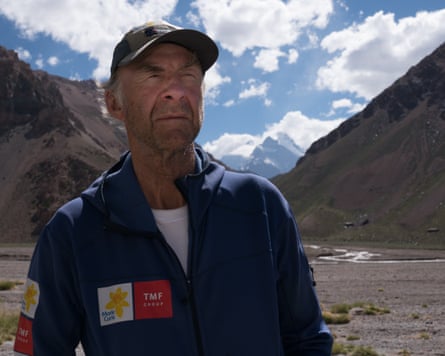
“This is the moment he told me he was proud of me, a sweet moment in my memory.”
He said that, over the past two years, he had “tried multiple avenues” in an effort to locate his stepfather, whom his mother married in 2005.
Ginny, to whom Fiennes was married for 34 years, had died of cancer the previous year. Louise gave birth to a daughter, Elizabeth, in 2006, Fiennes’ only biological child.
While Millington-Cotes described his stepfather as “a man of immense heart, kindness, and selflessness who supported me for years”, he said his strained relationship with Louise had caused him “great pain and distress”.
“Upon learning from other friends and family that Ran was considered missing, I put aside my own pain and immediately felt anger,” he said. “Anger that similar experiences I’d had were now being cast on to Ran. A man for as long as I could remember was completely selfless, kind, and abided by an excellent moral code.”
He added that he had visited various care homes hoping to find Fiennes “to have a simple conversation with him, or to be able to take him for a brief coffee”, but had so far been unsuccessful and had “left with a feeling of dismay and a slightly emptier heart”.
Millington-Cotes said that any excess funds would be donated to Marie Curie and the British Heart Foundation, favoured charities of Fiennes.
KioskNews shows a cleaned-up reading view extracted from the publisher’s page — the original always lives on their site, not ours.