How Telugu Cinema in 2026 turned the fight for identity into a factory setting
Martin Scorsese once said that cinema is a matter of what is in the frame and what is out. By that measure, Telugu cinema in 2026 knows exactly what to put in the frame: blood, a dialect, a machete, a marginalised hero and a villain who deserves what is coming to him. What it has left out of the frame, consistently and across major releases this year, is the one thing that separates a film from a product. A reason to tell the story that goes beyond the reason to sell it.
The template, stripped to its bones, goes something like this. Take a period setting, preferably somewhere between the 1870s and the 1990s. Place in it a hero who belongs to a community that history forgot: a Dalit, an Adivasi, a lower-caste labourer, someone from a famine-stricken village or a settlement that does not appear on government maps. Give him a cause: usually, it involves protecting his community, his sisters, his wife, his mother or all of them at once. Place a feudal landlord, a colonial officer, an upper-caste patriarch or an institutional villain on the other side. Add bloodshed, not the restrained, purposeful kind that serves the story, but the kind that involves at least one mandatory beheading sequence, preferably in slow motion and preferably with a background score loud enough to rattle the seats in the next screen. Let the hero destroy the oppressor and restore the dignity of his people. Roll credits. Repeat with the next star.
This template has been reproduced so many times in 2026 that listing the films feels less like compiling a filmography and more like taking inventory at a factory.
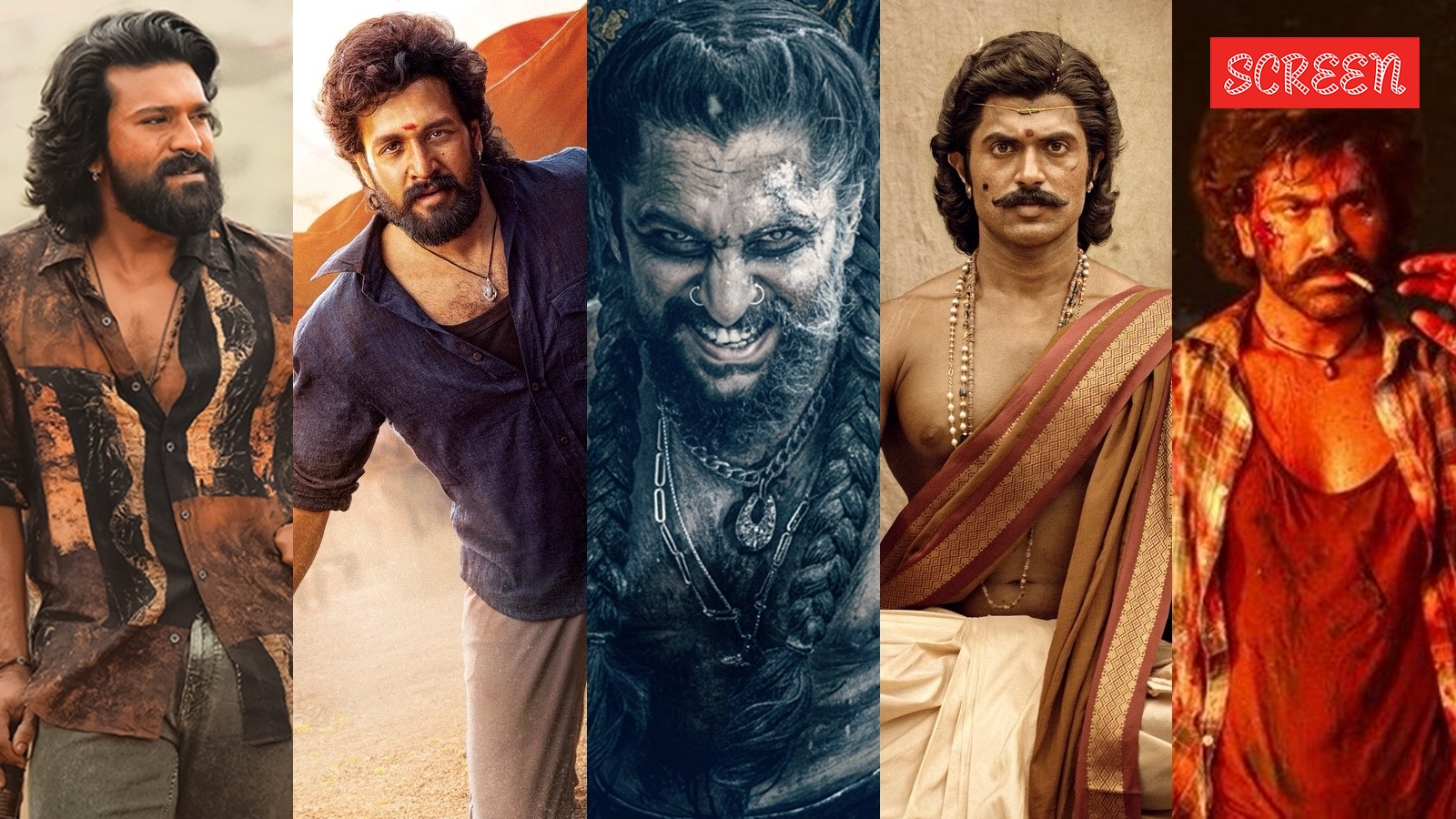
Ram Charan starred in Peddi, directed by Buchi Babu Sana and set in 1980s rural Andhra Pradesh. He played a labourer from a village that does not officially exist in government records. The residents face social discrimination, economic exploitation and violence from neighbouring upper-caste landlords. The community has no legal identity, no official name, no railway connection. How Peddi fights to change that, eventually through sport, forms the core of the film. But beneath the spectacle, the structure was familiar: an oppressed community, a physically gifted hero who rises from within it, and a climactic confrontation that restores dignity through a combination of personal sacrifice and violence.
Nani starred in The Paradise, directed by Srikanth Odela and set in 1980s Secunderabad. He played the leader of the Savaari community, a nomadic, marginalised tribe of roughly 5,000 people living in a slum colloquially known as Paradise. The community battles discrimination and fights for citizenship under his character’s guidance. Srikanth Odela previously directed Dasara, set in the coal mining belt of Singareni in Telangana, another film about a marginalised community in a specific landscape fighting an entrenched power structure. The directorial instinct was identical both times: oppressed community, charismatic leader from within, violent confrontation with the system.
Akhil Akkineni starred in Lenin, directed by Murali Kishor Abburu. The story begins in 1976 in Srirampuram, a fictional village in Chittoor district of Andhra Pradesh, with its main narrative unfolding in the 1990s. He played an orphan taken in by the household of the village head who grows up to find himself trapped in a cycle of generational bloodshed, faction feuds and rigid social hierarchies. Life in the village revolves around the annual Bharatham Jatara, a festival dedicated to Draupadi, and the film draws structural and thematic parallels with the Mahabharata. While the setting was different from the other films on this list. The architecture underneath was not. A young man from a disadvantaged position, bound by affection and duty, taking on the entrenched order of a village that runs on old codes and unspoken hierarchies.
Vijay Deverakonda starred in Ranabaali, directed by Rahul Sankrityan and set in the 1870s in the Rayalaseema region during the British Raj. He played Singanamala Kapin Bobbili Ranabaali, a warrior born with a spiritual prophecy determining his destiny, who grows up to confront a British commissioner during one of the most devastating famines in the history of the Madras Presidency. The film argued that British colonial policies and the forced export of grain worsened the suffering of the people far beyond what the drought alone could have caused.
The villain here was not an upper-caste landlord but a colonial officer, and the oppression was imperial rather than feudal. But the shape of the story was identical: a man from a suffering community, a system designed to crush his people, violence as the only available language of resistance, and a hero who carries the weight of an entire region on his shoulders.
And now, released on Friday, Sharwanand’s Bhogi, directed by Sampath Nandi and set in 1962 Adilabad on the Telangana-Maharashtra border. He plays Ganga, a young man living under the Patel-Patwari feudal system in a fictional village called Boggulakunta. Young girls disappear from the village after every new moon night. A powerful landlord controls the village, under Patel-Patwari feudal system. How Ganga uncovers the truth and fights back forms the story.
That is five major Telugu releases in a single year, starring five of the industry’s prominent leading men, all set in the past, all featuring a hero from a marginalised or oppressed background, all built around the narrative of one man standing up against a system that exploits his community, all featuring significant violence. Ram Charan fought upper-caste landlords. Nani fought systemic discrimination. Akhil fought village factions and old codes. Vijay Deverakonda fought the British Empire. Sharwanand fought feudal lords. The opponents changed, the costumes changed, the story did not.
There is nothing inherently wrong with telling stories about caste oppression, colonial exploitation, feudal violence and marginalised communities. These are, in many ways, the most important stories Indian cinema can tell. The question is not whether these stories should be told. The question is whether Tollywood is telling them because they matter or because they have become the safest commercial bet in an industry that seems terrified of trying anything else.
None of this is an indictment of the actors. Every leading man on this list showed up and did the work. The physical transformations were real, and the emotional commitment was visible in close-up after close-up. In isolation, each of these performances would be worth admiring. The problem is that individual brilliance cannot rescue a structural failure. The performances were the best thing about each of these films. They were also not enough to disguise the fact that each of these films, at its core, had the same exhausting template.
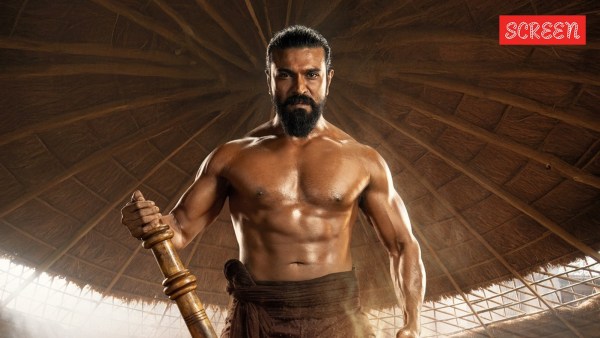 Ram Charan, who trained for over sixteen months, adopted a wrestler’s physique for Peddi built through kushti drills (Credit: @PeddiMovieOffl/X)
What Pushpa started in 2021 was genuinely interesting. Sukumar took a red sandalwood smuggler from a lower-caste background and built a character study around power, humiliation and the desperate need for respect in a world that refuses to give it. The film worked because Pushpa Raj was not a saviour. He was selfish, violent, petty and obsessed with proving his worth not to uplift his community but to satisfy his own wounded ego. The caste identity was inseparable from the character. It informed every decision he made, every confrontation he sought, every humiliation he refused to forget. The film was about a specific man in a specific place, not a generic representative of an oppressed class. That specificity, that refusal to turn the character into a symbol, is what made Pushpa resonate far beyond the Telugu-speaking audience.
What followed has been the opposite of specificity. The Pushpa template was stripped of its complexity and reduced to its most commercially viable components: period setting, caste or tribal identity, victimhood as motivation, violence as spectacle, and a hero who single-handedly uplifts an entire community by the climax. When Ram Charan does it in Peddi, the saviour complex overwhelms whatever political sincerity the film begins with. When Nani does it in The Paradise, the tribe exists primarily as a backdrop for the star’s heroism. When Akhil does it in Lenin, the Mahabharata parallel gives it a literary sheen, but the structure underneath is factory-issued. When Vijay Deverakonda does it in Ranabaali, the execution drowns in the same slow-paced, violence-heavy storytelling that has become the industry default. When Sharwanand does it in Bhogi, the result is the year’s weakest version of a formula that was already running on fumes.
The mandatory head-chopping deserves its own discussion because it has quietly become its own genre within Telugu cinema. There was a time when a decapitation on screen was a climactic moment, a point of no return that the story built towards with dread, purpose and consequence. In 2026, it is a checkbox on the production plan. The violence is no longer in service of the story, the story is in service of the violence. And when that inversion happens, the people whose real historical suffering these films claim to represent become not characters with interior lives but props in someone else’s commercial calculation.
The saviour complex is the other half of the problem. In nearly every one of these films, the hero does not simply fight for himself. He fights for his entire community: his women, elders, village and people. The community exists to be saved. The women exist to be protected or avenged. The villain exists to be destroyed. Nobody in these stories has a life that extends beyond their function in the template. The hero is brave and villain is cruel. At the end, the community is grateful for the hero. The audience is expected to whistle.
The industry needs to sit with a simple question. If you removed the caste identity, the period setting, the rural landscape and the head-chopping from these scripts, would there still be a story worth telling? Would there still be a character worth following? Would there still be a reason for the audience to stay in their seats for three hours? If the answer is no, then the caste identity is not the subject of the film, it is the packaging. And packaging the lived suffering of millions of people as a commercial formula is a problem far more serious than any opening weekend number can justify.
Telugu cinema has always been at its best when it has told stories that only it could tell. Stories rooted in its languages, its landscapes, its social fault lines, its contradictions. The stories of caste, land, famine and power across Telangana, Andhra Pradesh and Rayalaseema are genuinely among the richest material any film industry in the world has access to. No other industry can tell these stories with the same authenticity, the same dialect, the same mud under its fingernails. But richness requires craft, it requires the willingness to treat your characters as human beings rather than vehicles for a formula. It requires directors who understand that showing oppression and making the audience feel oppression are two entirely different skills, and that the second one is what separates cinema from content.
What Scorsese meant by what is in the frame and what is out was not just a technical observation about camera placement. It was a philosophy of selection. Of knowing what matters enough to show and what to leave to the audience’s imagination. Telugu cinema in 2026 has put everything in the frame, but left out the thing that cannot be manufactured from a checklist: the feeling that this particular story, about these particular people, in this particular village, needed to exist.
KioskNews shows a cleaned-up reading view extracted from the publisher’s page — the original always lives on their site, not ours.