America’s AI bubble is a Ponzi scheme
America’s AI bubble is starting to look like a Ponzi scheme. Artificial intelligence companies increasingly rely on a data centre boom that allows them to raise more money from debt markets.
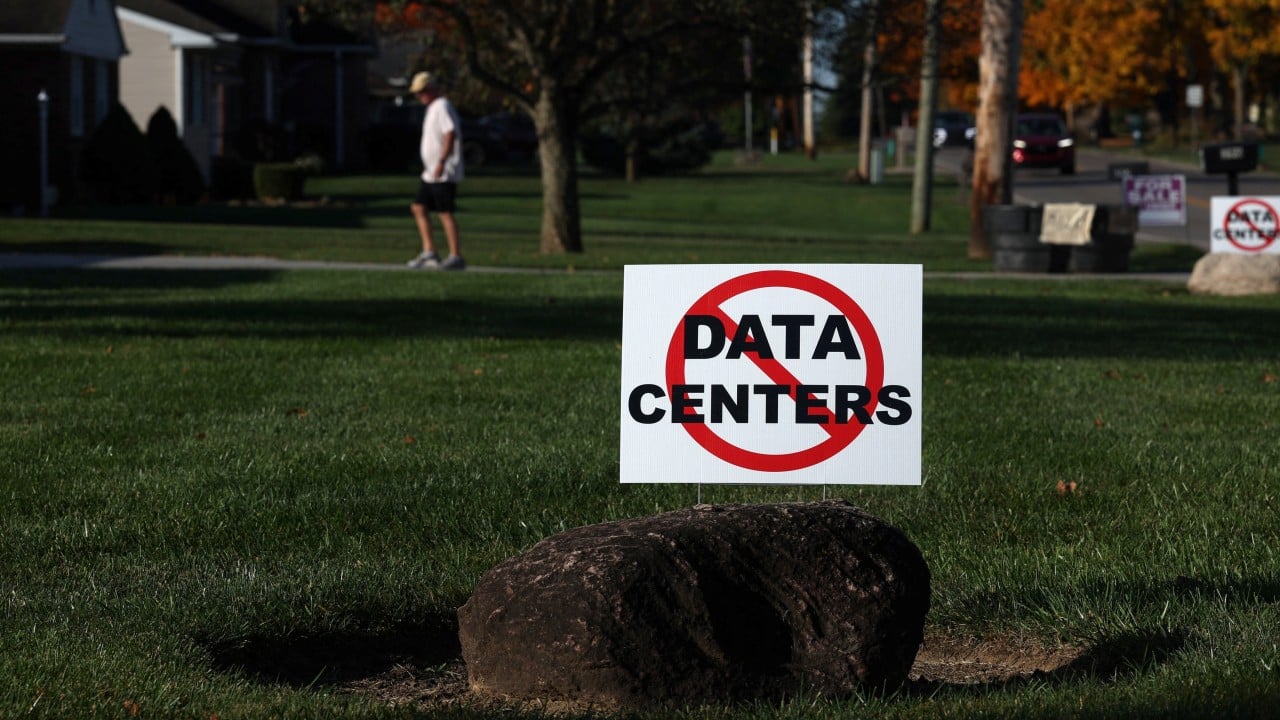
But the midterm elections have swept in state governments sceptical of a mass data-centre buildout. Without the data centres to raise debt, chips don’t ship and the circular financing among AI companies might face a short circuit.
Market bubbles grow out of excessive investor optimism, which can accelerate technological development but also lead to waste. Like in a Ponzi scheme, there may be a large pool of misled investors. How many informed market insiders truly buy the claim that these AI firms are worth trillions of dollars?
Profitability matters. Silicon Valley’s AI offerings are still overwhelmingly proprietary while cheaper open-source Chinese models are set to dominate the market. Businesses that see AI as essential will seek technology they can own.
The insane decision would be to choose dependency, feeding tokens into the vending machines of the US’ AI shops while hoping they won’t be screwed.
Meanwhile, AI’s productivity promise remains debatable. Other than the Magnificent Seven, America’s top tech companies, AI has delivered “zero financial payoff” to the S&P 500 companies – in other words, leaving 493 leading firms out of the bonanza – according to asset management firm Apollo Global Management. The “tokenmaxxing” usage binge feeding AI revenues is set to peter out.
That agentic AI will do everything we don’t want to do is a fantasy – and tricks people into feeding trillions to the AI scam.
Circular financing is behind the revenue boost the Magnificent Seven have been able to display. It starts with deals to sell chips to data centres, current and future, financed by hundreds of billions in off-balance-sheet debt. This debt is backstopped by the AI companies through long-term leasing or purchase agreements. These hyperscalers are essentially purchasing their revenues through debt.
But as the roll-out of data centres across the United States drives up the price of water and electricity in communities, a backlash has grown. The voters have spoken and the state leaders they have chosen are expected to respond by slowing down data centre construction.
Before the election, the AI hyperscalers were expected to spend more than US$1.3 trillion on infrastructure next year, boosting revenues and keeping the financing flowing. A drastic slowdown will hurt bottom lines across the board.
For Anthropic and OpenAI, which are preparing their initial public offerings, the funding injection is more important than ever, even as their IPO valuations have fallen.
Other than the Magnificent Seven, America’s top tech companies, AI has delivered ‘zero financial payoff’ to the S&P 500 companies – in other words, leaving 493 leading firms out of the bonanza
The money flowing into the AI bubble is not just from credulous individual investors. Pension funds, mutual funds, private equity, insurance companies and other institutions have been pouring money into AI. Many of those who decided to back the AI bet are doing it with other people’s money – and earning fees for it. They have an incentive to keep their gravy train going. This is one reason the AI bubble has lasted so long.
The line between high finance and daylight robbery has become blurred. Remember the bailout after the 2008 global financial crisis? Highly paid bankers took highly paid risks until those risks destroyed the economy. Then they got the US government to bail them out. The lesson here? It’s possible to get away with murder.
American voters are fed up. They just voted out Republicans in droves over the cost of living. They did the same to Democrats two years ago. They will probably repeat the cycle two years later. What Americans are facing is a systemic problem and they should be asking questions.
Firstly, why, when the US is a net oil exporter, do Americans pay higher prices at the pump when global oil prices rise? Exporting shale crude while importing heavy crude that legacy refineries find more profitable to process only shifts household income into oil profits.
Secondly, why, when the US has several times more arable land per capita than China, is food still so expensive? Farmland consolidation has been enabled by financial capital but this also drives a focus on producing commodities for the global market.

Thirdly, how can housing be unaffordable when the US is so vast? Interestingly, regulations that make it harder for people to build their own homes also protect profits for financial capital in the housing sector.
The roots of this financial capitalism can be traced back to the abandonment of the dollar’s gold peg in 1971. The first bout of money printing was a failure; the economy was prone to inflation. In the 1980s, weakening labour unions, deregulation and free trade eased inflationary tendencies and kick-started financial capitalism. The repeal of the Glass-Steagall Act in 1999 turbocharged it. The 2008 crisis produced quantitative easing: rocket fuel for financial mania.
The AI bubble is only the latest scam to create paper profit on the back of financial capital too large for the real economy to support. The con, in effect going back four decades, will only end when inflation surges to absorb the excess money printed. A burst AI bubble may get us there.
KioskNews shows a cleaned-up reading view extracted from the publisher’s page — the original always lives on their site, not ours.