REEL SUCCESS STORIES: Calling a wrap on the gender gap: Mentoring makes movie magic for women in TV
Although the lack of gender parity in the film and television industry is a global trend, the underrepresentation of women in behind-the-scenes roles in South Africa is alarmingly high.
Reports like Gender Matters in the SA Film Industry, based on a study by the National Film and Video Foundation (NFVF), highlight the continuing challenges in bridging the gender gap. As for ownership of and leadership in production houses, women are in a minuscule minority.
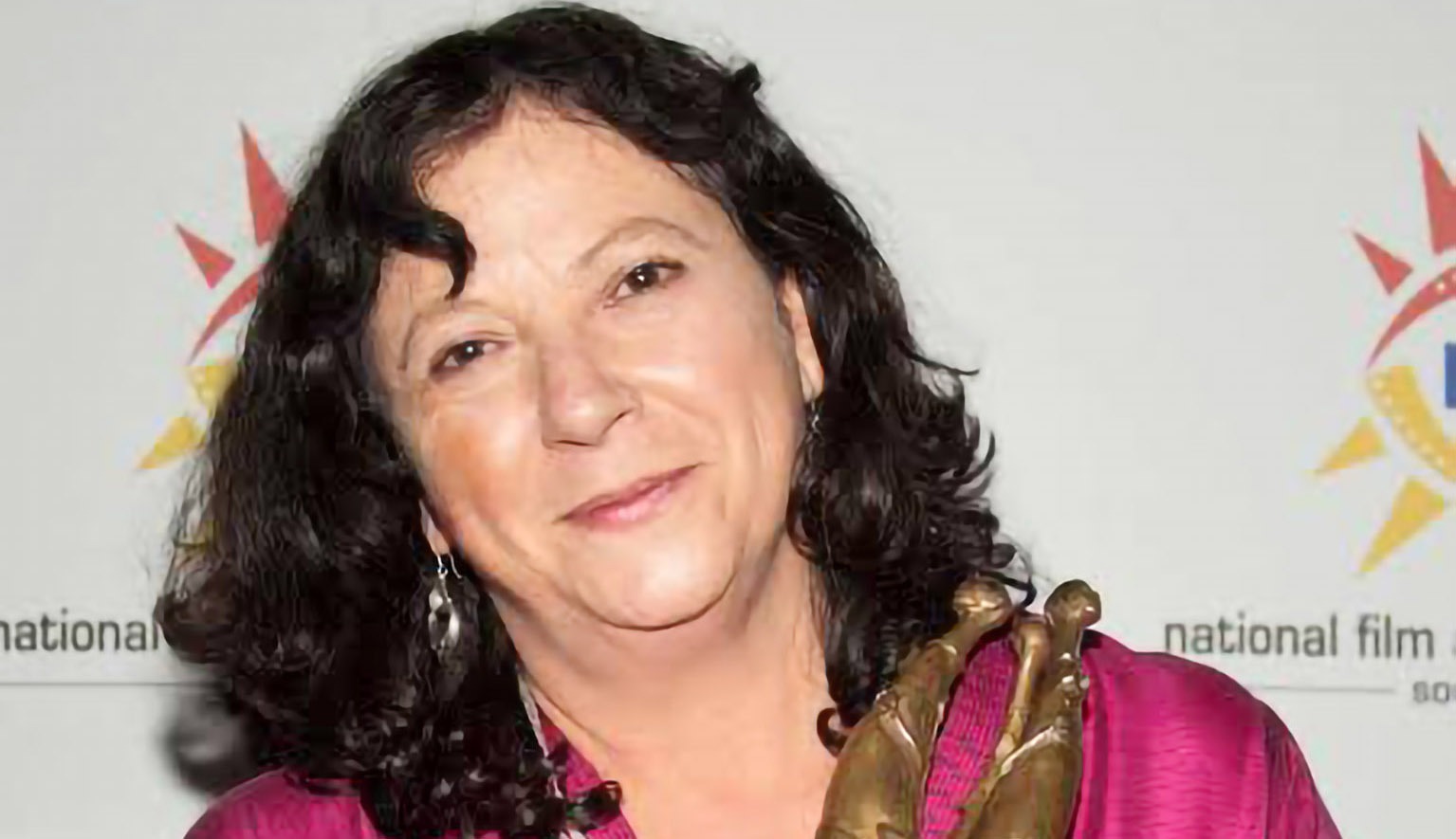
Enter one of the few South African women owners, the award-winning Harriet Gavshon, who, in 1993, co-founded Weekly Mail Television, which morphed into Curious Pictures before becoming South Africa’s leading film and television production company, Quizzical Pictures. After 28 years of leadership, her role has now shifted from founder-owner to creative director.
Gavshon believes that women have been locked out of the director’s chair, citing data tracking South African feature films released nationally as showing only 11% of films had female directors, and only 16% were written by women.
“While initiatives like the NFVF Female Filmmaker Slate have boosted indie and short film numbers, women remain vastly underrepresented in high-budget commercial cinema and prime-time telenovela directing,” she said.
The business side of South African media remains highly unequal in every area:
Women trail behind men in economic decision-making, specifically financial management and executive producing;
The division of labour on sets remains highly gendered and few women hold technical crew positions; and
Sound engineering, lighting and camera departments remain overwhelmingly male, with women typically working in wardrobe and make-up.
Editing, Gavshon said, is one of the few technical spaces women occupy, but men still dominate the post-production sector.
Her solution, implemented over the past three decades, is an active programme of mentorship and internship. She speaks enthusiastically of the 100 people who have had their start in the industry by interning at Quizzical Pictures and gone on to become experts in their fields.
/file/attachments/2996/10reyka_951272.jpg)
“Mentorship and the ability to learn on the job through internship is crucial. It gives young people the chance to get on their feet in a safe and nurturing environment. When I finished university, I lay on my bed for six months until someone got me up and offered me a job. Everyone needs that first push to get them going,” Gavshon said.
Here are four women who are at the top of their game in male-dominated areas of the industry, who credit internship and mentorship for their success.
Belief in potential
Tammy Lewis-Houghting (44) is a line producer. She manages the budget and schedule, hires crew and runs the daily physical operation of a film or TV production – including completing the project within budget.
Her motto is “Bring others with me”. She tries to open doors where she can, shares knowledge freely, champions talented people and creates environments where young women feel they belong.
/file/attachments/2996/10TammyHeadshot2_749163.jpg)
“Someone once did that for me. I have to do the same for others.”
That someone, she said, was Gavshon. “I was in my final year of university, finishing off a BA in media studies at Wits University when Harriet reached out with the opportunity to intern on Hard Copy [a television series set in a newsroom]. That experience became the foundation of my entire career.
“Quizzical gave me my first real opportunity and, more importantly, they trusted me with meaningful responsibility from the beginning… I was encouraged to learn, ask questions, take on responsibility and become a valued part of the team.
“That early belief in my potential gave me the confidence and experience to build the career I have. Today [I have] two decades of experience across scripted and non-scripted television as well as feature films.”
Pointing out the importance of having women in positions of authority, she said: “Without question, Harriet Gavshon has been my greatest role model and mentor throughout my career. From the very beginning, she showed me what was possible as a woman in this industry. She demonstrated that you could build an exceptional career while also having a family and a life outside of work, without compromising on either.”
Lewis-Houghting believes that although production has traditionally had strong female representation, decision-making at the highest levels has not always reflected that.
“The South African industry has become more professional, internationally competitive and technically advanced, with local crews being recognised globally for their talent. Our biggest challenge remains sustainability – we need more consistent local productions, more investment in developing talent and stronger pathways for young people entering the industry,” she said. “I’ve been fortunate to work for several companies that genuinely invest in developing women.”
Balancing act
Mthatha-born Olwethu Maduna (33) went from being an intern at Quizzical Pictures to a Netflix-ready production accountant. This unicorn has broken the trend in which men largely manage the money on film and television productions.
Her high-powered job means that she is the financial backbone of a film production, managing financial resources in service of the production’s creative vision; forecasting and managing risk and cash flow; and adapting on the fly to an industry that very rarely sits still.
“Once cameras roll, the job shifts into a constant, high-pressure balancing act: tracking every rand spent against budget, flagging creeping costs before they become crises and making sure crew, cast and suppliers are paid,” Maduna said.
/file/attachments/2996/olwethu_446974.jpg)
Her job hunting accidentally ended in the film industry when she was offered an internship placement through the NFVF, which landed her at Quizzical Pictures in 2017.
Maduna is candid about the role mentorship played in her rise. The accountant at Quizzical at the time took her under her wing, guiding her through every step of her early development and encouraging her to stay curious and open to learning.
That guidance, Maduna said, was foundational, and she credits the wider culture at Quizzical, in which experienced colleagues are consistently willing to share knowledge, as the springboard for what followed.
Less than a year into her time at Quizzical, personnel shifts saw her stepping into the role of acting financial accountant, a vote of confidence for which she is grateful.
On gender dynamics, Maduna said full-scale productions still skew male in most departments, but in her own experience she felt seen and valued. “My opinion carries real weight.”
Maduna said she felt she had truly “arrived” in the role while working on Marked, a gripping South African Netflix crime thriller that was the first large-budget production entrusted to her.
“Working on Netflix productions specifically shifted my approach. They bring production accountants into the budgeting phase, giving us a seat at the table early. It makes the budgeting process considerably less fraught,” she said.
Since completing her degrees in financial and business management at Nelson Mandela University and Unisa in 2016, Maduna has watched the South African film and television industry transform. “Local production companies are now turning out work that competes and streams internationally,” she said.
Opening doors
Mmapula Letsoalo (38) never set out to become an editor. Music was the original dream and she began by studying sound engineering, concentrating on post-production. In the edit suite, two women mentors, award-winning story editor Melanie Jankes Golden and writer-director Amanda Lane, helped her find her own creative voice.
Her path to Quizzical Pictures started with a cold call to ask about internships. After an interview, she was steered towards editing, shadowing experienced film editors Gugu Sibandze and Warwick Allen. She got her break on the 2013 TV series Intersexions. From there, her career blossomed.
“My proudest moment was my breakthrough editor role on Is’Thunzi, the Mzansi teen drama series. Then came the Netflix 2022 series Savage Beauty, where getting the music editor credit opened doors for me. I went on to work on the Netflix Nigeria series Far From Home.”
/file/attachments/2996/10MmapulaLetsoalohoriz_278507.jpg)
Letsoalo has worked on the extremely successful local series currently on Netflix, The Polygamist, as well as on the internationally acclaimed series Reyka.
“I’d like to see more women move into VFX, compositing, online editing and final mix,” she said. “These areas are still something of a boys’ club.”
Writing right through it
Gillian Breslin (48) is regarded as one of South Africa’s best scriptwriters, contributing to numerous series, soap operas, comedies, dramas and telenovelas for different production houses.
She began her writing life as an intern at Quizzical Pictures while studying journalism at Rhodes University, because the company’s strong history of documentary filmmaking matched her interest in documentary television. When she finished her degree, she joined the company in its public relations department, but said that she was “very bad at it”.
/file/attachments/2996/1020260724_1444171_896548.jpg)
“Quizzical is good at identifying specific talents and so I transitioned from PR to production, ending up producing a show called L’Atitude. It was an incredible experience.
“We followed Lebo Mashile, a young poet, as she traversed South Africa. That experience, perhaps more than anything, shaped my approach to scriptwriting. I was exposed to cultures and communities I’d never heard of. I was encouraged to learn and understand without judgement – an approach that still underpins my writing.”
Her most prominent credit is as head writer on The Girl from St Agnes, a hugely successful Showmax series.
Breslin described her trajectory: “I was trying to figure out my future, having moved from producing to directing reality, which didn’t feel like a natural fit. Harriet asked what I wanted to do as my next project and I said I’d love to try writing.”
That was how it began, a career that has earned her many South African Film and Television Awards and accolades for being an outstanding writer in the industry.
She credits the many women mentors who took her under their wings: the late producer Nantie Steyn, who showed her what it took to run a production; Minky Schlesinger, the head writer of 4Play, who taught her how to handle writers; and Stephanie Coetzee, a line producer, among them.
“Encouragingly, we’re seeing more women moving into management and head writing positions, and there’s been a rise in the number of female writers and directors. As a result, we’re moving towards a more realistic portrayal of women on screen,” she said.
But there are still challenges for women everywhere, not just the television industry: “Getting talked over in meetings, not being taken seriously, getting accused of being too emotional or difficult when you stand your ground,” Breslin said.
She added: “My gender has never been a barrier to my employment. And as I’ve got older, I’ve realised that I’d rather be difficult than invisible.” DM
This story first appeared in our weekly DM168 newspaper, available countrywide for R35.
KioskNews shows a cleaned-up reading view extracted from the publisher’s page — the original always lives on their site, not ours.