Star Wars Just Fixed One Of The Last Jedi's Most Controversial Moments

Once head of Screen Rant's Star Wars coverage, Tom's career began as a fan of the fantasy and sci-fi genres, and his love of major franchises has ultimately led to a decade-long career. He'd had the privilege of interviewing writers, authors, directors, actors, stunt coordinators, and VFX artists on a staggering number of his favorite franchises, including Star Wars, the MCU, Stranger Things, Halo, Foundation, and more. He's conducted set visits in the UK, attending major comic cons in New York and London, and reported at Star Wars Celebration 2023 as press. You can find him on Twitter @TomABacon, on LinkedIn @tabacon, or on Muckrack under tombacon.
Tom has a wide range of interests, and he continues to serve his university as a volunteer chaplain. He's heavily involved with his local church, and anyone who checks him out on Twitter will swiftly learn he's into British politics too.
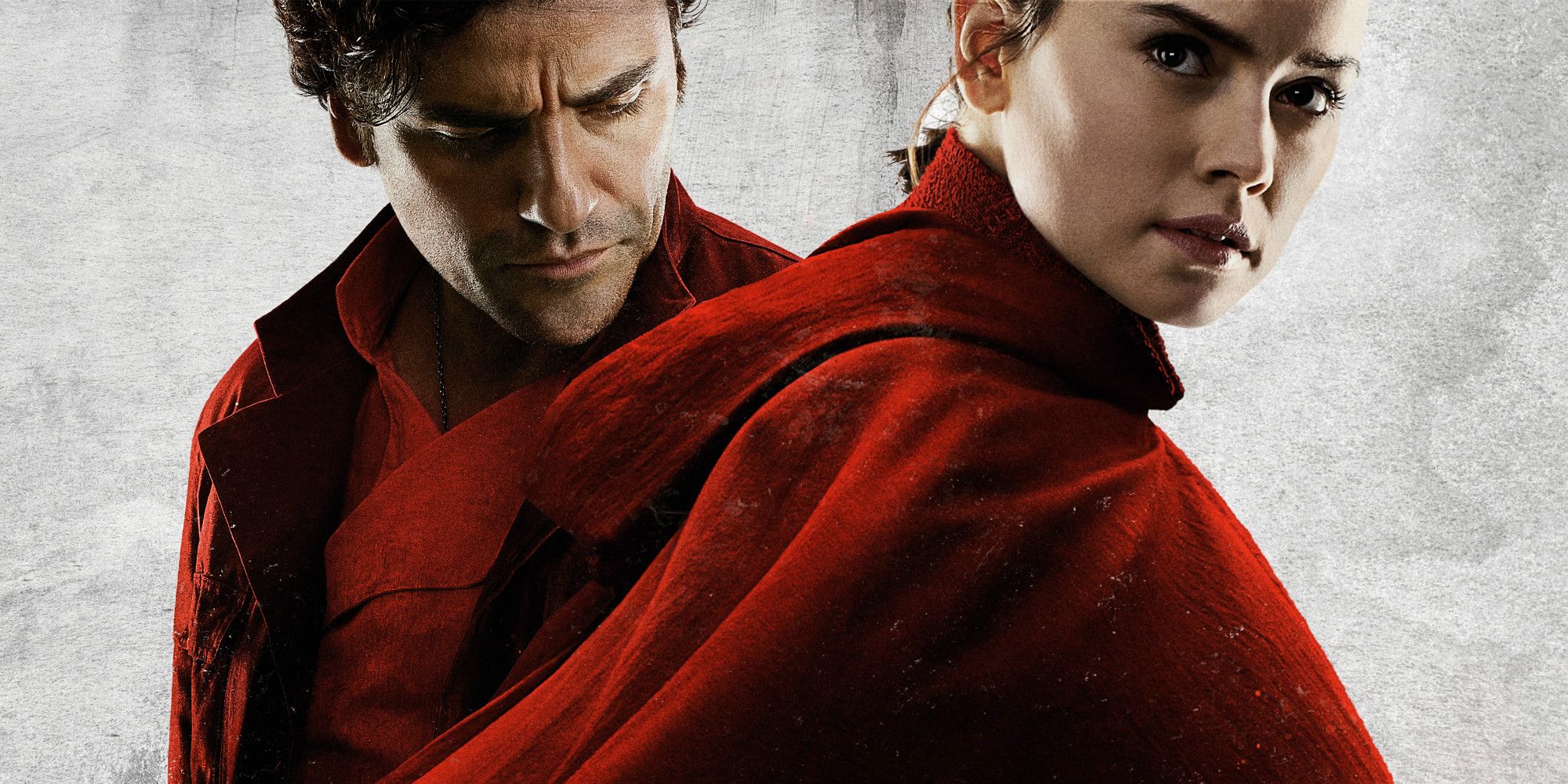
As beautiful a movie as Rian Johnson's Star Wars: The Last Jedi may have been, it was also incredibly controversial. Looking back, I remain convinced the issue was mainly to do with marketing; trailers for The Last Jedi were stunning, but they suggested the movie would play the various Star Wars tropes straight. Instead, Johnson deliberately subverted them, which meant some of the audience found it jarring. The subversions started from the very beginning, when Poe Dameron trolled First Order General Hux as a military strategy.
The Poe Dameron scene was much less controversial than some of Johnson's other choices (the internet became particularly incensed by Supreme Leader Snoke's death and Luke Skywalker's exile). Hux actor Domhnall Gleeson has admitted he was surprised at Hux's comedic turn, and he asked Johnson to find a way to preserve Hux's darker edge. But, nine years later, Star Wars has subtly rewritten the scene to make it so much more effective.
There's A Reason Poe Dameron Used That Strategy Against General Hux

Chris Kempshall's Star Pilots is an unusual book, in that it's supposed to be something of an in-universe textbook describing the lives of starfighter pilots and their role in the Galactic Civil War and the conflict with the First Order. It's supposedly written by Wedge Antilles, the Rogue Squadron leader who led Luke Skywalker himself to battle on many occasions. And, delightfully, it contains Wedge's reflections on the events of The Last Jedi.
According to Wedge, the Resistance had noticed a psychological flaw in the First Order that they had already exploited on several occasions. First Order commanders had an odd confidence in their own superiority, a naive belief in their own abilities and those of the First Order. Wedge speculates the First Order absorbed this from the Empire, with none of the Imperial Remnant's survivors ever stopping to reflect on the fact they'd lost the Galactic Civil War.
"The First Order did not have nearly as much to be arrogant or cocky about as the Empire did, so it is interesting to me how self-assured a lot of their military apparently were, given they'd not won the sorts of victories to deserve it. Poe mentioned how easily a lot of the First Order were to goad into initiating combat—something that Black Squadron apparently attempted on Ovanis. Underlying this must have been the fact that First Order pilots wanted to be goaded and allowed to attack an enemy they believed to be inferior. It's not hugely surprising that First Order star pilots had egos and believed themselves to be the best—there was plenty of that in the Galactic Civil War, on both sides. But the ease with which the First Order could be provoked made them highly predictable. And predictabiity in warfare gets you killed."
The point is this: Poe was able to goad Hux so easily because he knew the general would have the kind of ego typical of First Order culture. Poe was able to predict exactly how Hux would respond, needling him with tremendous skill.
Poe's "Victory" Over D'Qar Cost Far Too Much
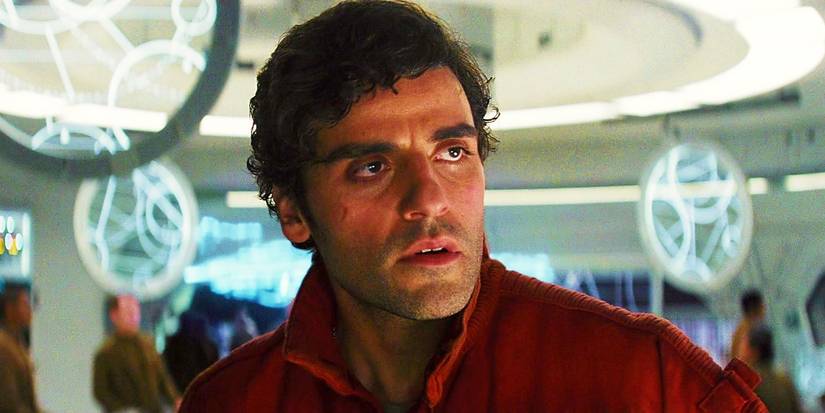
But that doesn't mean Poe's strategy went well. He successfully predicted Hux's actions, goaded and mocked him, and destroyed a First Order dreadnaught. He accomplished this at great cost, because the Resistance lost its entire bomber fleet in the attack. "While knocking out a major First Order capital ship provided a tactical benefit," Wedge notes, "the loss of so many pilots in an action that General Leia Organa had already forbidden was a significant blow to the Resistance's military and to the morale of their personnel."
Poe rightly acknowledged his failing by the end of The Last Jedi, but Wedge had a different perspective. In his view, Poe's mistakes came from gaps in his training; he had been taught by leaders from the Rebel Alliance (including Wedge himself), and that group didn't have a bomber fleet.
"Perhaps if myself and others had trained the next wave of pilots—like Poe—for the likelihood of one day undertaking this kind of escort duty in a target-rich environment, then many more of those bombers and their crews may have survived the battle. There are always lessons to be taken from every engagement and, across a war, they can provide evidence as to what a military is doing right and is good at, while also brutally highlighting what we did badly. I think D'Qar is an example of how the experiences from the Rebel Alliance overly influenced the training programs and tactics of the New Republic, and good bomber crews paid for that with their lives."
Wedge isn't absolving Poe of responsibility for his decisions. Instead, he's putting Poe's mistakes in a wider context; he's recognizing the fact bombing runs simply weren't a strategy New Republic (and therefore Resistance) pilots were trained for. Little wonder this went so badly.
I can't help smiling at the smartness of this idea. This was the first time Star Wars had ever shown a bombing run; in fact, the opening scenes led to a heated debate on whether it was even possible to do a bombing run in space, given there's no gravity (the film itself explained this, but many seemed to find that unsatisfying). Star Pilots turns this into an actual part of the plot, explaining why neither the First Order nor the Resistance really knew how to successfully conduct or defend against a bombing run.
Star Wars has always been so much more than a mere movie franchise. Star Pilots is the wider franchise ats its best, a tremendous book that adds so much more depth to the movies and TV shows. In reality, it's written by Chris Kempshall, a real-world historian and Star Wars fan who's already written some excellent books (including The Rise and Fall of the Galactic Empire, a history of the Empire itself). It's great to see Star Wars continue to shape and reshape its film plots nine years later.
KioskNews shows a cleaned-up reading view extracted from the publisher’s page — the original always lives on their site, not ours.