7 Great Comics To Read After Watching Resident Evil

Hannah is a senior writer and self-publisher at ScreenRant. There, she focuses on writing news, features, and list-style articles about all things comics, books, anime, and manga. She works as a freelance writer in the entertainment industry, focusing on video games, anime, and literature.
Her published works can be found on Screen Rant, FinanceBuzz, She Reads, and She Writes.
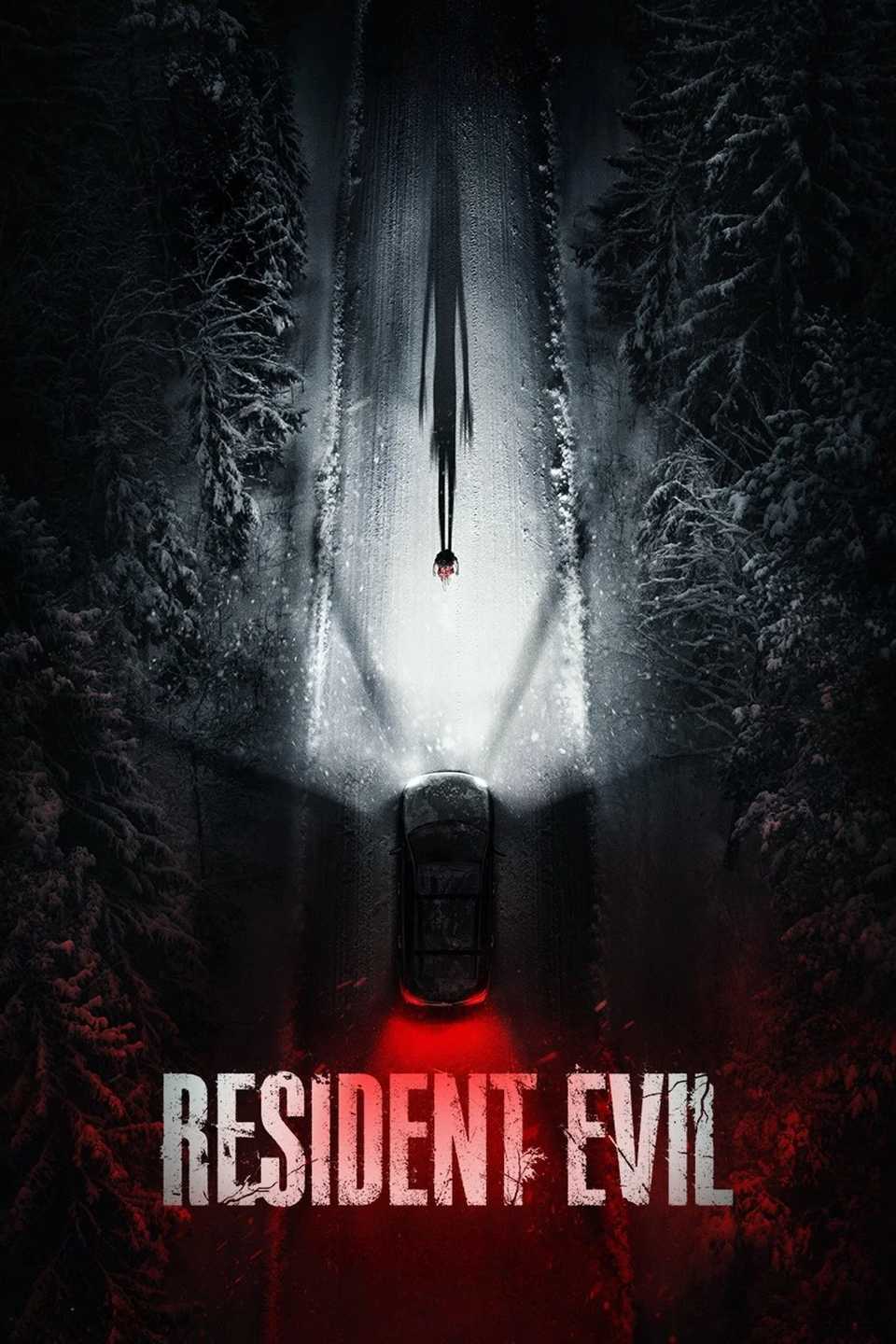
Zach Cregger and Austin Abrams' Resident Evil brings the game franchise back to its survival-horror roots with an original story centered on Bryan Hodukavich, a medical courier trapped in a nightmare during one chaotic night. Released in theaters September 18, 2026, the film uses recognizable Resident Evil ideas like an outbreak, infected creatures, scarce resources, and a fight to stay alive, while giving viewers an utterly lovable new protagonist to follow.
That makes comics a natural next stop, especially for readers who want more outbreak fiction rather than another movie adaptation. The seven books and series below mix licensed Resident Evil material with zombie comics that focus on claustrophobic survival, escalating infection, dangerous monsters, and ordinary people forced to make impossible decisions. Some closely mirror the games, with an honorable mention of the Resident Evil: CODE: Veronica manhua that is also worth checking out, while others show how differently a familiar outbreak formula can work in comics.
7 Resident Evil: The Official Comic Magazine

For the closest match to the franchise’s earliest survival-horror atmosphere, start with Resident Evil: The Official Comic Magazine. WildStorm published five issues between March 1998 and February 1999, and the anthology mixes adaptations and side stories connected to the first two games with original tales. Because the stories are not part of the games’ main continuity, readers can approach the collection as a strange alternate snapshot of the franchise at the height of its Raccoon City era.
The anthology format also makes this an especially good choice for fans who enjoyed the 2026 film’s constantly shifting threats. Instead of building one giant monster to fight, the comics jump between investigations, monsters, and doomed encounters, producing the same feeling that almost anything could be waiting around the next corner. It is also a time capsule for the visual language that helped define late-1990s Resident Evil, with military hardware, zombies, Umbrella intrigue, and grimy survival-horror imagery. The short-story structure also means readers can sample several interpretations of the franchise without committing to a long run.
6 Resident Evil: Fire & Ice

Resident Evil: Fire & Ice is another WildStorm project, but it trades the anthology structure for one continuous story. The four-issue comic ran from December 2000 to May 2001, with Kris Oprisko and Ted Adams writing and Lee Bermejo and Mark Irwin providing the art. Set after the Raccoon City incident, it follows a new S.T.A.R.S. Charlie Team tasked with dealing with Umbrella’s bioweapon aftermath.
That premise makes Fire & Ice especially useful for viewers who liked seeing Bryan thrown into a crisis without being one of the franchise’s established heroes. The comic does not simply recycle Leon, Chris, or Jill as the main attraction; instead, it expands the world through characters dealing with the consequences of a catastrophe. Its four-issue length also makes it an easy weekend read for someone who wants another compact dose of monsters, conspiracies and bioweapon horror. The post-Raccoon City setting also gives the story a useful sense of aftermath rather than another origin-from-scratch outbreak.
5 Resident Evil: The Marhawa Desire

Naoki Serizawa’s Resident Evil: The Marhawa Desire takes the outbreak formula into a very different environment with the elite Marhawa Academy. The manga was released in five collected volumes in English by VIZ Media and serves as a prequel to Resident Evil 6. The story follows characters including Ricky Tozawa and scientist Doug Wright as a zombie outbreak turns an isolated school into a pressure cooker.
The school setting creates the kind of escalating containment nightmare that works so well in Resident Evil. Students become liabilities, information is incomplete, and the infection keeps changing the rules. Reviews of the early volumes specifically note the series’ fast-moving zombies, graphic action, and mystery surrounding how the outbreak spreads. For fans of Bryan’s increasingly desperate fight through a collapsing city, Marhawa Desire offers another story where surviving the next few minutes matters more than understanding the bigger picture. The manga also makes the isolation itself part of the horror, because escape is never as simple as getting through a single locked door.
4 Resident Evil: Infinite Darkness – The Beginning

Fans who want something more modern should pick up Resident Evil: Infinite Darkness – The Beginning. TOKYOPOP collected the five-part comic into a 128-page graphic novel in 2024. Written by Keith R. A. DeCandido, it takes place before the 2021 animated series and follows Leon Kennedy as he investigates a bombing involving the Carnegie Museum of Art, only for a corpse to rise during an autopsy.
Although Leon is a familiar franchise hero, the story still has the investigative, outbreak-centered structure that defines the series. A terrorist cult, a mysterious virus, and reanimated bodies push Leon into a case that grows beyond a single crime. That combination makes the comic a strong bridge between Cregger’s film and the broader Resident Evil universe, particularly for readers who want a more direct mix of detective work, biological horror, and sudden zombie attacks. It also supplies a compact modern Resident Evil mystery for readers who prefer one complete graphic novel rather than hunting down older issues.
3 Resident Evil: Heavenly Island

Resident Evil: Heavenly Island takes the franchise somewhere that feels very different from Raccoon City while preserving its familiar survival-horror machinery. The five-volume manga, created by Naoki Serizawa, moves the action to a remote island where a seemingly glamorous resort becomes the setting for another biological nightmare. Claire Redfield also plays a major role, connecting the story directly to the established games.
The isolated resort makes Heavenly Island especially interesting after the 2026 movie because its characters are surrounded by danger with limited options for escape. Rather than relying exclusively on traditional zombies, the manga incorporates infected creatures and grotesque mutations, giving it that same Resident Evil escalation where surviving one monster does not mean the next threat is any easier. The tropical setting also provides a huge contrast to the series' usual urban environments.
2 The Last Zombie

Brian Keene's The Last Zombie is especially worth recommending to readers who want a protagonist caught between the mission and the infection itself, just like Bryan Hodukavich. The series follows Dr. Ian Scott and a group traveling through a post-zombie-apocalyptic America while trying to deliver a vaccine. Ian is already infected, with the vaccine delaying the disease's progression, meaning the team's apparent solution to the catastrophe is walking alongside them in increasingly unstable form.
That setup makes The Last Zombie an especially strong follow-up for anyone who connected with Bryan's perspective in the 2026 Resident Evil. Ian is not some invincible action hero who simply eliminates every threat in his path. His physical condition is another problem the group has to manage while dealing with raiders, harsh environments and the collapse of civilization. The collected story is divided into five-volume arcs, including Inferno, Neverland, Before the After, and The End.
1 Crossed

Garth Ennis and Jacen Burrows' Crossed is an extremely violent outbreak comic, so it belongs firmly in the recommendation category for mature readers. Avatar Press launched the series in 2008, with its initial story following survivors after a contagion spreads across the world and causes infected people to become dangerously violent. Unlike traditional zombies, the Crossed remain physically capable humans while losing their inhibitions and becoming aggressively homicidal.
That distinction gives Crossed a very frightening relationship with the outbreak concept. There is no simple rule that the survivors are safe as long as they avoid slow-moving corpses, and the infection turns familiar people into immediate threats. The original series began as a nine-part monthly story, with the franchise subsequently expanding into numerous additional series and webcomics. It is considerably harsher than Resident Evil, but readers specifically looking for relentless outbreak horror may find its premise compelling.
- Release Date
- September 18, 2026
- Runtime
- 90 Minutes
- Director
- Zach Cregger
- Writers
- Shay Hatten, Zach Cregger
- Producers
- Asad Qizilbash, Carter Swan, Miri Yoon, Robert Kulzer, Roy Lee, Zach Cregger, David Minkowski
KioskNews shows a cleaned-up reading view extracted from the publisher’s page — the original always lives on their site, not ours.